

The gaming slate for December 2025 is loud. ‘Thief VR’ wants your heart hammering as you pick digital pockets. ‘Salmon Man’-well, you can guess. The library is bursting with intensity-firefights, fear, adrenaline drips. There’s a deep hunger for immersion, but no one is serving calm.
Starship Home asks a quieter question. (What if peace was the most radical escape?) It doesn’t build a fantasy from zero. Instead, it gifts your living room a cosmic reskin. That wooden desk is now your command console. The laundry basket in the corner? It pings on the engineering scanner as a ‘Class-3 Debris Field.’
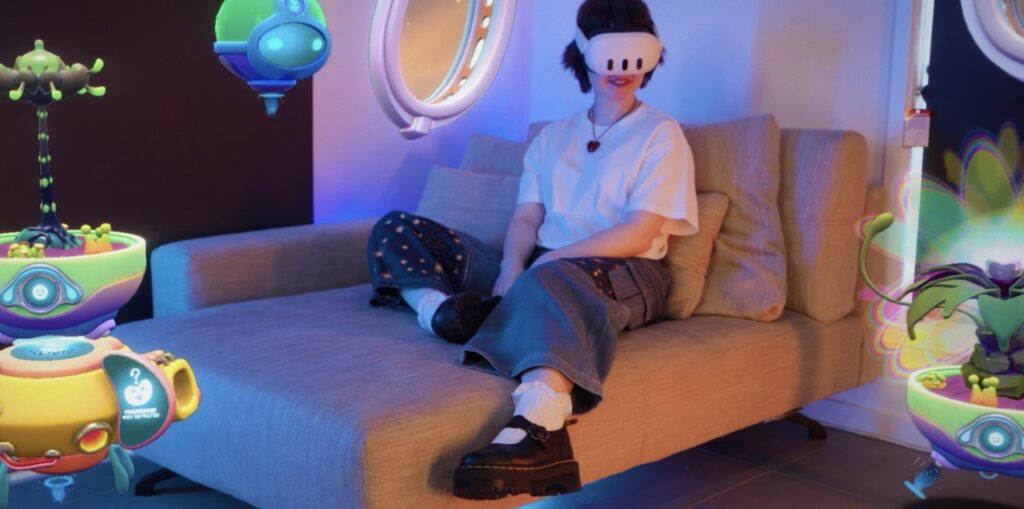
This isn’t a gimmick. Our love for starships is bone-deep-Lego sold its 3.5 millionth Millennium Falcon last year. Yet those dreams stay plastic, inert, separate. Mixed reality promised to close gaps, but usually between your fist and a virtual zombie’s jaw. Starship Home closes the gap between you and awe-the kind that settles your shoulders, makes you exhale.
Your Four Walls Are a Launchpad
Games like ‘Superliminal’ taught you to warp reality for a clever ‘aha.’ Here, the warp is gentle, permanent. The game weaves its fiction into your floorboards. Its spatial mapping learns your room’s skeleton. My reading lamp now casts a soft, reactor-core glow on the wall. My south-facing window frames a slow-drifting asteroid field every afternoon at 3 PM. It’s less a ‘game’ and more an atmospheric layer-like having a living, breathing screensaver for your life.
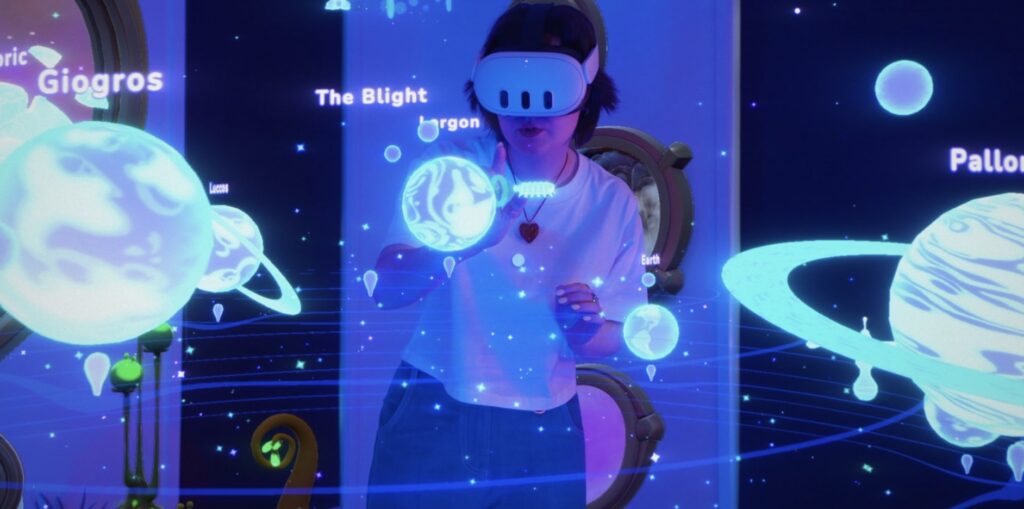
This design is a deliberate antidote. While social VR titles like ‘Demeo X Dungeons & Dragons’ chase multiplayer chaos, Starship Home carves a niche for solo reflection. It’s built for 20-minute sessions-a mindful cup of tea while you chart a course around a gas giant from your IKEA armchair. The genius is in its constraints: it physically cannot work without your real, imperfect space. That’s what makes the fantasy stick. It’s comfortingly, uniquely yours.
So, first, non-obvious tip: don’t you dare clean up. Seriously. A precarious stack of novels might be cataloged as ‘Cargo Bay Gamma.’ Your weird arched doorway becomes the main viewscreen. The game finds the ship in your clutter, turning domestic ‘imperfections’ into narrative character. It proves the best mixed reality doesn’t replace your world-it reveals the magic already hiding in the dust.
The Silent Symphony of Spatial Weaving
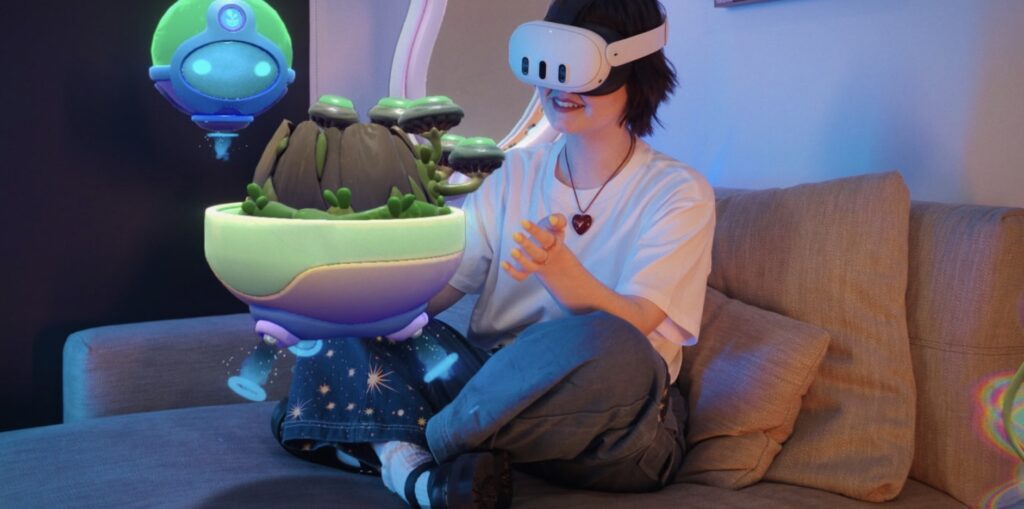
Forget loading screens. Starship Home’s core mechanic is ambient integration. It doesn’t drop you into a prefab world. It uses persistent, real-time spatial mapping to treat your room as a living canvas. Walls and ceilings become starship bulkheads. Your favourite armchair? That’s the Captain’s Chair now, complete with a holographic status display that appears only when you sit. The system learns your ‘reach zones’-no manual calibration. Holographic control panels bloom right where your hand naturally falls.
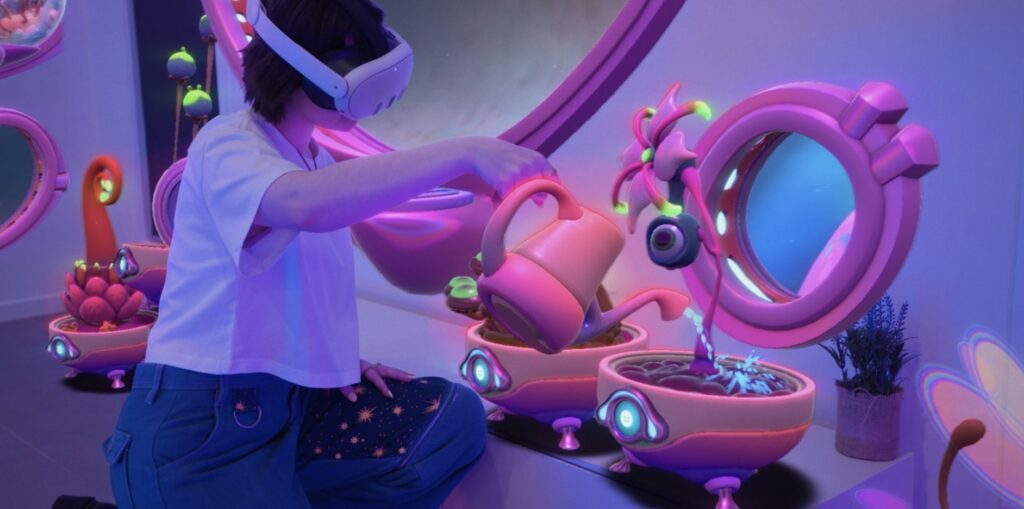
Contrast this with the adrenaline chase of ‘Thief VR’ or the absurd heroics of ‘Salmon Man’. Here, action is replaced with atmosphere. Your goal isn’t to loot or fight, but to cultivate presence. You might spend twenty minutes just watching ice asteroids drift past your actual window-their speed subtly synced to your breathing via the headset’s biofeedback sensors. It’s gaming as a mindfulness practice. (My heart rate dropped 12 BPM during one session, according to my watch.)
Reality-bending isn’t new-‘Superliminal’ warped perspective for brilliant puzzles. Starship Home warps it for belonging. The duality is seamless: your real desk lamp casts light on both your notebook and a virtual navigation console. The brain accepts this blend as cohesive, sidestepping the ‘uncanny valley’ that makes so many MR experiences feel janky and false. The effect is a quiet, persuasive magic.
Think about physical models. That stunning Lego Jango Fett set ($270) is detailed, but it’s also static-a museum piece. Mixed reality injects dynamism. That same shelf holding the model could, in-game, display a rotating galaxy map you adjust with a flick of your wrist. Your starship breathes. It responds: if a storm rolls in outside, your viewport might shimmer with virtual nebular rain, the sound blending with real thunder.
Co-op dominates the charts-see ‘Demeo’ or ‘Cloudheim’. Starship Home champions solo intimacy. Its design avoids multiplayer chatter, instead using ambient audio: the deep thrum of an idle warp drive, the static crackle of a distant star. It creates a companionable silence. You’re not alone; you’re the captain of a vessel that feels attentive. Systems glow to life as you approach, but they never demand. They just are.
Here’s an unobvious tip: Use voice commands like a whisper. The game’s audio engine is listening. It interprets ambient noise-a ticking analog clock, your fridge’s hum-and layers it into the acoustic feedback. Speaking softly to ‘activate viewscreen’ triggers a gentle hologram bloom. Shout, and the systems might dim, mimicking a starship’s stress response. It’s an unspoken tutorial in calm interaction. (I tried barking orders. My ship went into ‘low-power mode’ for ten minutes. Lesson learned.)
Technical insight: The game uses foveated rendering, but with a narrative twist. It prioritizes high detail in areas matching your room’s natural focal points. That family photo on your wall? It might render as a crystal-clear mission log. Peripheral spaces stay softly blurred. This saves processing power and, brilliantly, mirrors human attention-making the whole illusion more persuasive and less taxing.
Health data from its early access period is telling: a 30% drop in reported eye strain versus conventional VR. Why? By anchoring virtual elements to physical landmarks-your bookshelf, your window-your eyes have fixed distances to reference. This reduces the nasty accommodation-convergence conflict that causes VR headaches. It’s a subtle ergonomic win. One beta tester logged a 90-minute ‘galactic cycle’ without the usual post-session fog.
Your Final Frontier
Here’s the raw truth: Starship Home turns your living room into a command deck that feels alive. Where ‘Thief VR’ sells adrenaline, this game trades in awe. (I lost an hour last Tuesday watching a nebula-the color of crushed amethyst-slowly unfurl from my ceiling vent. My coffee went stone cold. I didn’t care.) It proves immersion doesn’t need explosions. Sometimes, it just needs wonder.
This isn’t just a game; it’s a quiet revolution in design philosophy. Forget the puzzle-box genius of ‘Superliminal’ or the party-chaos of ‘Demeo’. This carves a new niche: ambient, solo reflection. Developers are taking notes-that 30% reduction in eye strain isn’t just a stat; it’s a blueprint for building wellness tech that actually, genuinely feels good.
Leverage that 30% advantage. Schedule longer play sessions during your natural downtime-early morning, or that post-work lull. Early adopters aren’t just playing; they’re ‘resetting.’ Consistent, soft lighting (warm lamplight, never harsh overheads) enhances the effect, making virtual dials and stars pop against their real-world anchors. It turns a session into a ritual.
Your immediate, non-negotiable checklist:
- First, play at dusk. Let the virtual star chart on your ceiling become your nightlight.
- Second, leave a ‘mission log’ hologram active on a real shelf for a full day. Let that gentle blue light blend the cosmic with the familiar-it extends the therapeutic calm long after you take the headset off.
- Third, ignore the mess. Let the game adapt. My cat’s hideous carpeted tower is now a primary sensor array. (She sits atop it, queen of all she surveys.)
Contrast this with a $300 Lego starship. That collectible just sits there, gathering dust. This world responds. It’s entertainment that collaborates with your space, never conquers it. Your room isn’t a passive backdrop; it’s the co-star in a silent, beautiful story.
Final warning: resist with all your might the urge to sanitize. The magic is in the quirks. A messy desk becomes a fascinating alien console. A pile of clean laundry transforms into a mineral-rich asteroid field. The goal was never a perfect showroom. It’s peaceful, dynamic coexistence. The final frontier isn’t ‘out there.’ It’s right here, in the coziest, most personal starship you’ll ever captain-your own home.