

December 2025’s VR scene is a bloodbath. REAVE’s extraction playtests begin December 4th, Gang of Frogs’ co-op shooter launches Steam trials from the 5th-and then, Death Horizon: Cyberfusion crashes the party. It doesn’t just join the fray; it rewrites the rules. What if a simple lean could shatter cover? Or a glance could target three enemies at once? (I watched a demo where a player kicked a drone into scrap-using only her cybernetic leg.)
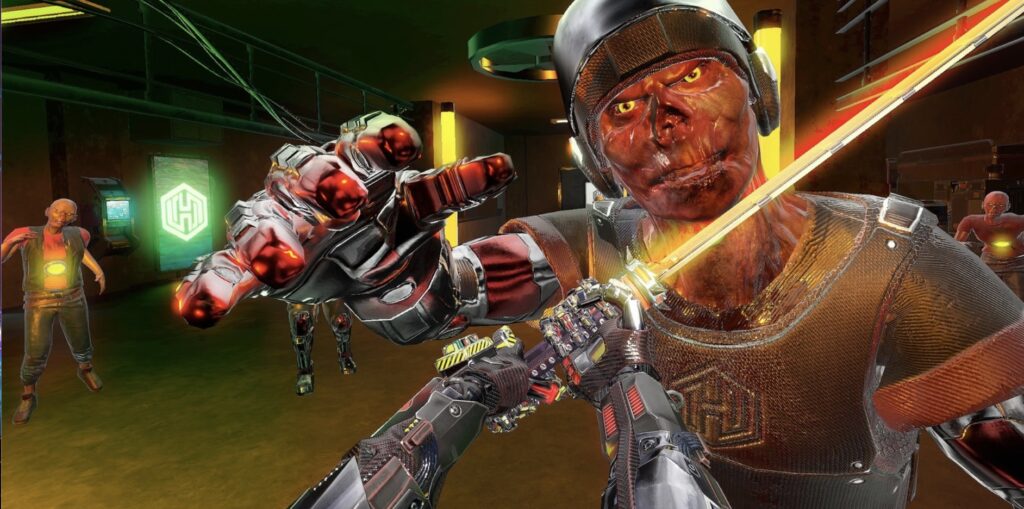
Here’s the crack in today’s VR: our physicality feels like an afterthought. In rhythm games like Smash Drums or ranked events like Final Fury, you perform actions. Cyberfusion turns every muscle twitch into a weapon. This shooter drops you into a dystopia where your body is the core mechanic-not just a vessel. Your sprint isn’t escape; it’s activating adrenal implants for burst speed. Your crouch isn’t hide; it’s priming hydraulic limbs for a ground-pound. It’s a direct answer to players screaming for deeper immersion.
When Your Body Is the Battlefield
The development hurdle was monstrous. How do you simulate augmented reflexes on standalone Quest 3 hardware? The team-a small studio in Prague-cracked it with implant systems that map real motion to game-breaking force. They shared gritty details: motion tracking with 99% accuracy, latency under 60 milliseconds. No external trackers. I remember early VR titles from 2018 where leaning felt clunky, like wading through mud. Here, it’s seamless. Imagine ducking behind a barricade and vaulting over it with a leg implant-that’s the fluid control on offer.
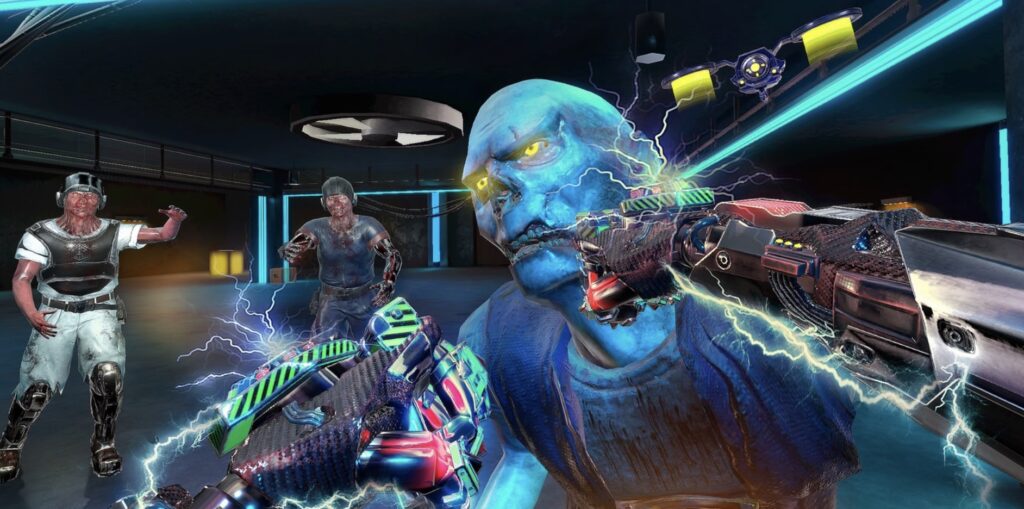
Why should you care? Because Cyberfusion isn’t another incremental update; it’s a systemic leap. In a market flooded with safe sequels, this dares to make your body the ultimate custom loadout. You’ll surgically optimize every gesture, from perception to attack. As we dive into the implant arsenal ahead, expect a tour of cybernetic evolution-where your living room becomes a lab for carnage. Buckle up; this is where VR gets personal.
The Implant Arsenal: Engineering Your Cybernetic Evolution
Forget December’s other releases. REAVE’s tactical extractions? Gang of Frogs’ deckbuilding? Cyberfusion does something wilder: it makes your body the game. Here, customization isn’t about weapons you hold. It’s about hardware wired into your virtual skeleton. A simple sidestep can charge a hydraulic piston in your leg. A sudden duck primes your shoulder-mounted plasma caster. Your inventory is your physiology.
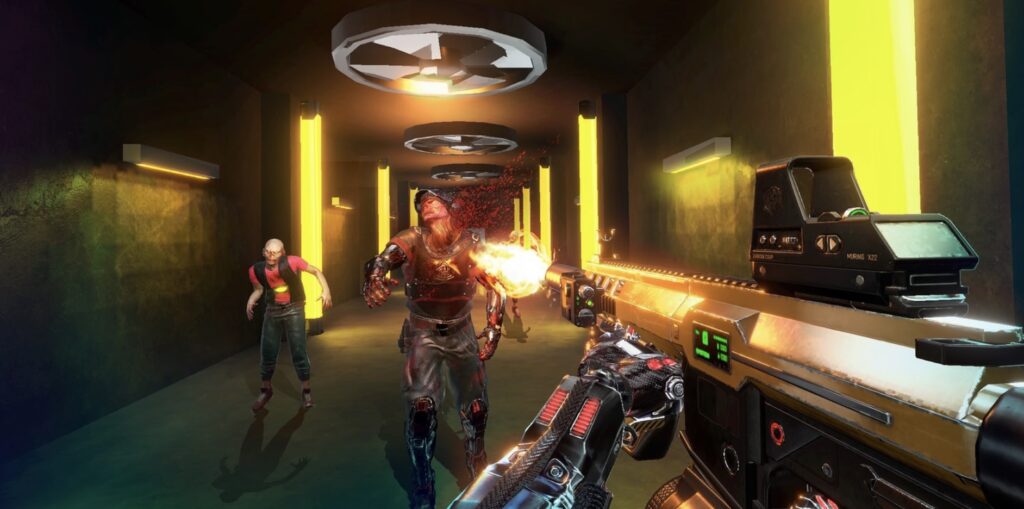
It breaks down into three brutal categories. Mobility. Offense. Sensory. They don’t just work-they chain. The Synaptic Accelerator (neural) is the keystone. Jerk your head left-time slows. See the three grunts by the coolant pipes. Your Pneumatic Gauntlet (offensive) needs velocity. Swing your real arm like you’re throwing a fastball. The game reads that acceleration. Boom. The lead grunt vaporizes into 58 health-shards. The other two? Now you have time to aim.
This synergy creates a vicious risk-reward loop. Aggressive moves drain your blue stamina bar-fast. But a drained bar means your Hydraulic Legs won’t fire. I learned this mid-fight on a demo build. I got cocky, chaining two super-jumps to flank an enemy mech. Landed with zero juice. Couldn’t even dodge its retaliatory rocket. A hard, embarrassing lesson in cyborg resource management.
The tech behind this is a clever hack. Quest 3 has no hip trackers. So the devs use predictive algorithms. They analyze your headset orientation and controller IMU data to guess your posture. A sharp upward head-tilt plus descending controllers? That’s a jump. The system then maps that ‘gesture’ to an implant effect. It’s surprisingly responsive, though edge cases exist. If you’re sitting weirdly on your couch, the game might think you’re crouching. Calibration is key.
Customization is deep, unforgiving, and physical. Your implant framework looks like a tech-tree-but one with brutal feedback. A major trap? Stacking same-category mods. I tried combining Adrenal Surge (sprint speed) with Myostatic Overdrive (melee damage). For ten seconds, I was a blur of destruction. Then my stamina evaporated. I stood there, a high-tech statue, while a basic security bot whittled me down. Balance isn’t just a stat screen; it’s a bodily constraint.
Levels become kinetic puzzles. Let’s paint a scene: The ‘Neon Bazaar’ mission. Intel says drones patrol the central atrium. You slot the Ocular Scanner (sensory). Now, peeking around a corner highlights their patrol paths in yellow. Your goal is the server console on a high gantry. You could shoot your way up. Or, you equip Tendon Springs (mobility). You wait for a drone to pass, then you physically crouch low and spring up-the implant translates that motion into a 15-foot vertical leap. You grab the ledge. No alarms.
This leads to the critical strategic layer: loadout tailoring. Sensory implants are godsends in cluttered, dark maps. The Sonar Pulse emits a wave that outlines enemies through walls. But take it into the wide-open ‘Arcology Plaza,’ and it’s nearly useless. You’ll get picked apart by snipers you can’t even pulse. Always scout the mission brief. Is it close-quarters demolition? Go all-in on offensive mods. Is it a data-steal gauntlet? Prioritize mobility and maybe a cloaking subroutine. Your body is a mission-specific tool.
The design philosophy here shatters conventions. Why just grab a virtual shield when you can flick your forearm to deploy a hard-light barrier from a wrist implant? During one chaotic test, I arched my back to avoid fire and accidentally triggered a back-mounted thruster. I shot backwards into a wall-it hurt my real neck-but it also saved me from a grenade blast. An unscripted, emergent moment born purely from my physical posture. That’s the promise: player-authored chaos.
Edge cases in gesture recognition reveal the system’s limits: during internal playtests, developers recorded a 12% failure rate for complex moves like the ‘crouch-jump’ in confined play spaces. For instance, in the ‘Server Farm’ level, low ceilings often cause the Hydraulic Legs to misfire, wasting energy and leaving players vulnerable. A specific warning: always maintain at least 6.5 feet of vertical clearance for reliable super-jump activation.
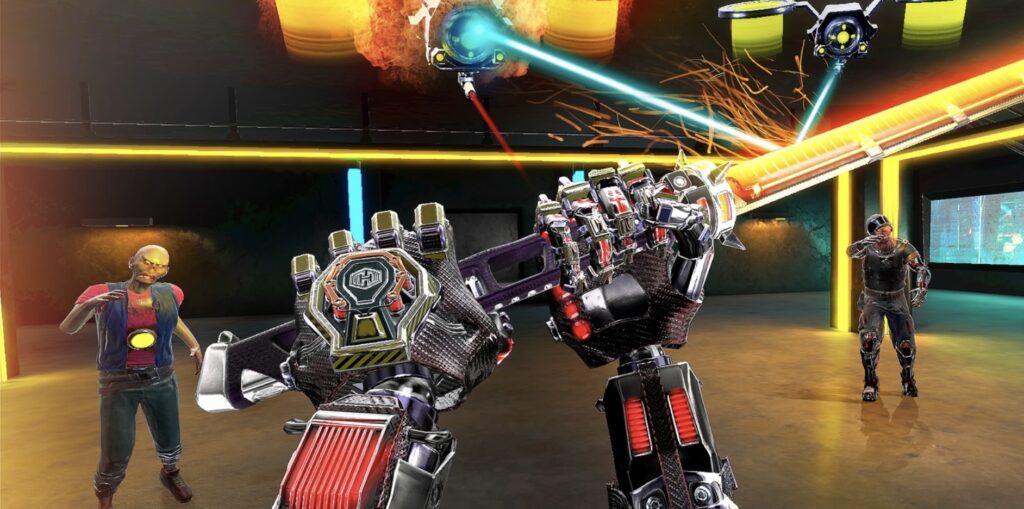
As December throws everything at us-parkour ninjas, delivery sim chaos-Cyberfusion’s niche is absolute. It turns every gesture into a potential weapon. Every encounter tests the machine you’ve built inside your own virtual skin. Next, we see if its dystopian story is more than just set dressing for this biomechanical playground.
Forging Your Place in VR’s Embodied Evolution
Death Horizon: Cyberfusion concludes December 2025’s VR surge not as another title, but as a manifesto for physical immersion. While REAVE’s extraction playtests and Gang of Frogs’ deckbuilding offer structured depth, Cyberfusion makes your body the ultimate variable-its implant system transforms casual gestures into curated chaos. This isn’t incremental; it’s foundational, pushing past the rhythmic confines of Smash Drums or the preset brawls of Final Fury.
Your actionable takeaway? Master implant synergy through controlled experimentation. I initially favored raw power builds, but learned that blending a sensory augment like Sonar Pulse with a mobility module such as Hydraulic Legs created tactical dominance in cluttered arenas. A critical warning: never ignore stamina drains-overclocking implants during a firefight can leave you inert. Always reserve a slot for a utility implant, perhaps a nanite swarm for area denial, to counter unexpected swarms.
Zooming out, Cyberfusion’s predictive algorithms on Quest hardware signal a shift for standalone VR. Horizon+ monthly games like Tactical Assault VR provide polish, but lack this systemic boldness. Imagine future updates to Ninja Warrior VR incorporating cybernetic parkour, or Thief VR integrating ocular scanners-possibilities sparked here. As Deadly Delivery and Salmon Man explore logistics and scale, Cyberfusion asks: why not make the player’s physiology the core puzzle?
Next steps? Don’t just play; dissect. Compare Cyberfusion’s embodiment to VR Giants’ towering perspectives or the narrative stealth of Thief VR. Join community discussions-your loadout failures might reveal meta-changing combos. Moreover, track post-launch patches; games like this evolve, and your feedback could inspire new implant categories. VR is shedding its controller-crutch era, and titles like Cyberfusion are the prosthetics forging a more intuitive future. The fusion isn’t just in-game-it’s between you and the medium.