
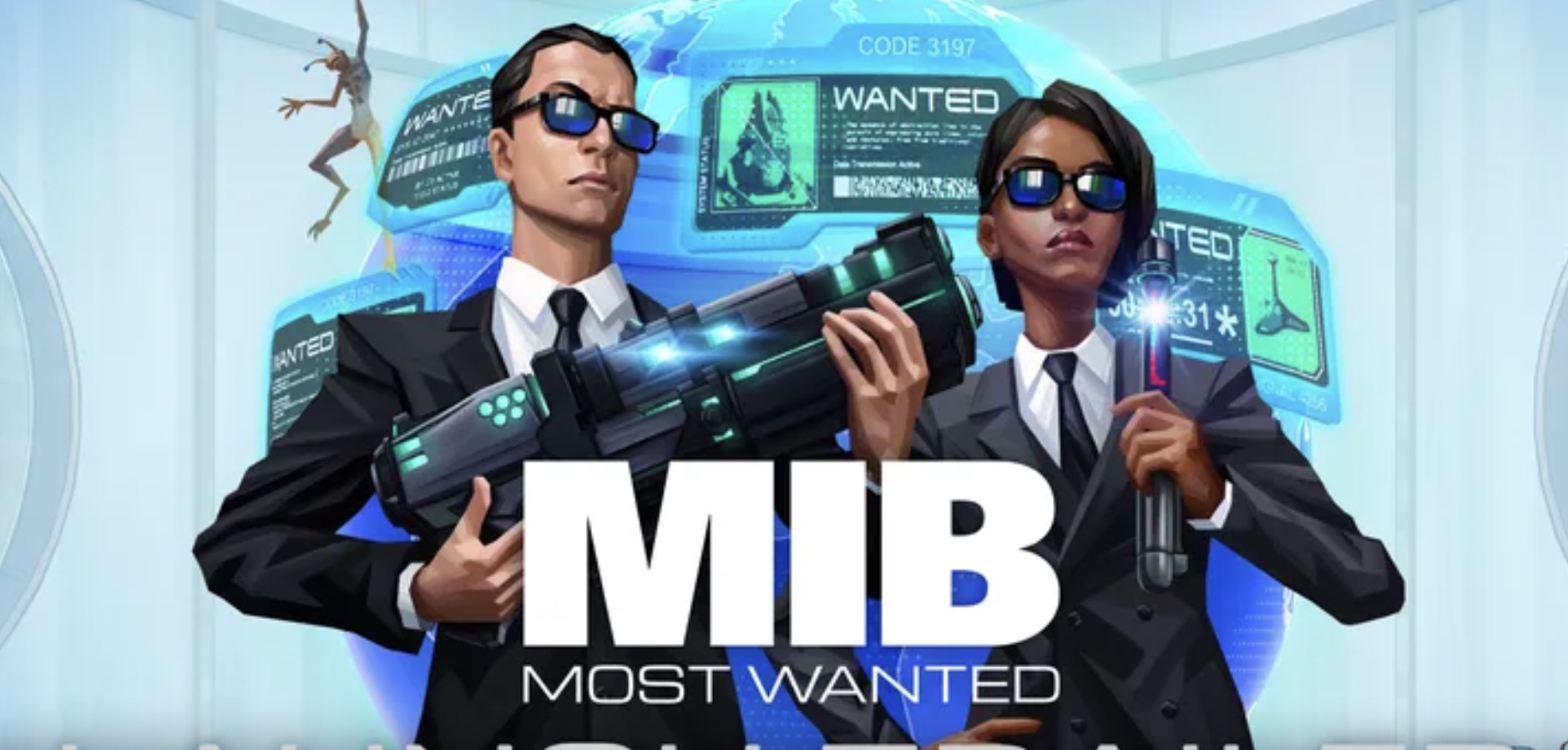
The sodium-vapor glow of a 34th Street lamp paints the sidewalk in sickly orange. A pretzel cart steams. A newspaper box headline screams about the O.J. trial. And in the middle of it all, a businessman’s briefcase handle briefly sprouts an extra finger. Welcome to your first shift. You’re not playing a game-you’re performing urban surgery on reality itself.
VR has promised this for a decade. But most ‘stealth’ feels like tiptoeing through a cardboard diorama. This is different. Your physical crouch behind a dented mailbox isn’t a button press; it’s a full-body commitment. The alien across the street? Its auditory receptors are triangulating the scuff of your virtual heel on virtual concrete. (I learned this the hard way-fumbled a sonic neutralizer and watched six ‘pedestrians’ snap their heads toward me in perfect, chilling unison.) This is the tactile, sweaty art of the cover-up, built from the atoms up for the room you’re standing in.
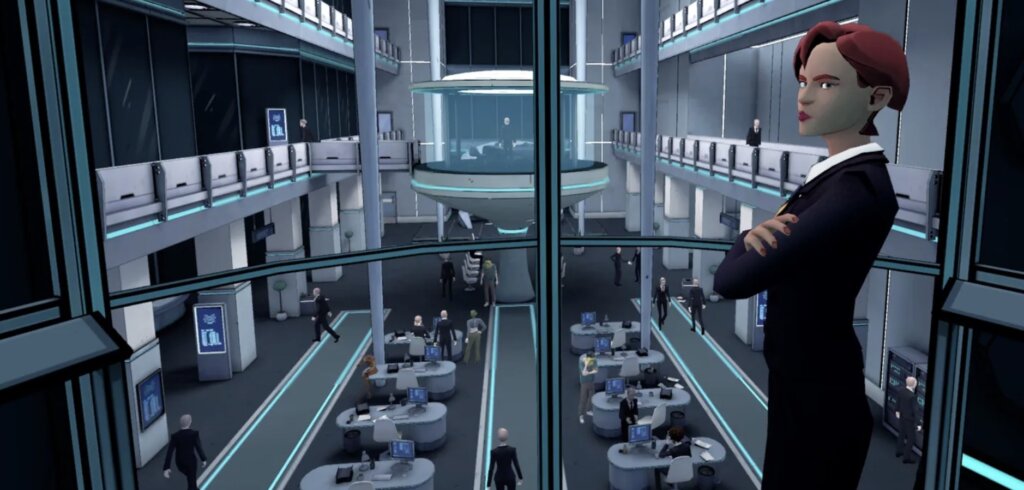
Men in Black: Most Wanted shoves you into a New York City preserved in the amber of 1995. No Ring doorbells. No GPS pings. Just the stink of bus exhaust, the wail of a distant siren, and a trench coat that weighs eight pounds because it’s lined with forbidden physics. The threat isn’t a mothership over the Chrysler Building. It’s the mime in Times Square whose reflection doesn’t quite match, or the panhandler whose ‘spare change’ is a larval form of crystalline silicon. Your job: find the fracture in the mundane, and seal it before the world notices.
This is a game of measured, deliberate panic. You’ll spend twenty real-world minutes frozen on a fire escape, watching a shapeshifter masquerade as a traffic cop-memorizing its three-minute loop, the way it glances at a specific store window every cycle. You’ll calibrate a retinal scanner hidden in a Zippo lighter while pretending to admire a ‘I ♥ NY’ t-shirt in a stall. And you’ll dry-fire the Noisy Cricket in your living room until your forearm aches, because you get one shot. One. Then the whole hive knows your scent.
Your First Night on the Job, 1995
And you don’t have to bleed alone. Co-op ‘Invasion’ mode lets a partner dial directly into your nightmare. I once played with a friend who was my eyes in the sky. She was on a laptop, jacked into a fictional NYPD surveillance network, whispering warnings through my headset: ‘He’s looping back. The hot dog vendor is staring at the skyline for seven seconds too long. Your left pocket is buzzing-you didn’t fully mute your neutralizer.’ One agent on the ground, one in the data stream. It’s coordinated social stealth where a breath held over comms is the only thing standing between a clean wipe and an intergalactic diplomatic meltdown on the 11 o’clock news.
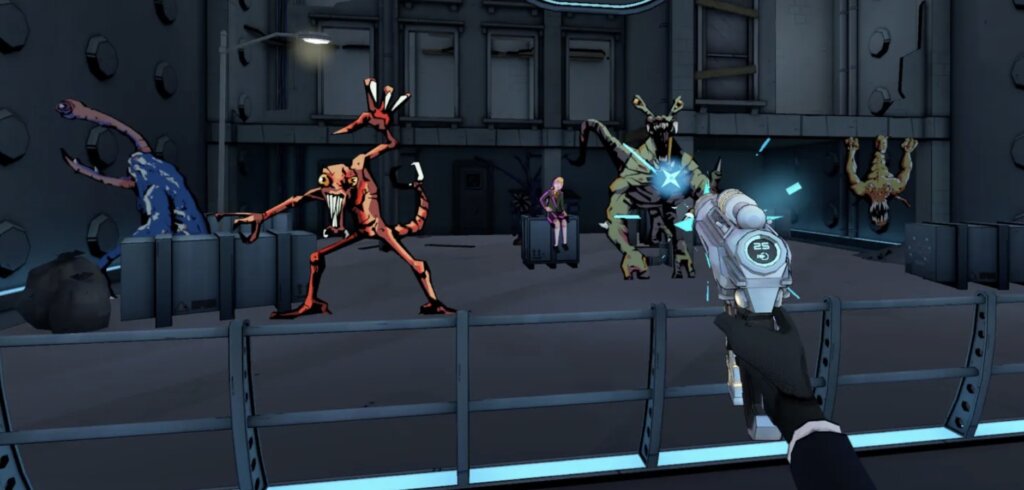
Forget plasma rifles and energy shields. Your toolkit is a museum of analog weirdness. There’s a thermal scanner with a viewfinder that fogs up if you breathe on it. A pen that records sub-vocal tremors-it heats up in your hand when it catches a lie. The neuralyzer isn’t just a flash; it’s a heavy, brass-plated thing with a manual focus ring you must spin with your thumb. And every single item must be concealed on your body. Stashing the Cerebro-Scrambler in your inner coat pocket becomes a tense mini-game of its own. This is the core fantasy. Not being a superhero, but a custodian. A very well-armed ghost with a federal budget and a severe dry-cleaning bill.
So why step into the suit? For the moment a ‘construction worker’ peels his face off in a subway tunnel, and you’ve already got the Cryo-Gum aimed at the gap. For the pure, cold dread of realizing the little old lady feeding pigeons has been watching you for six blocks. It’s a promise: you will feel the weight of the badge, the chill of the world’s biggest secret, and the very real cramp in your calves from holding a half-squat behind a dumpster, waiting for the perfect second to make history forget.
The Anatomy of a Covert Op-Gadgets, AI, and Asymmetric Warfare
Stealth in VR lives or dies by physical truth. You can’t fake it. I remember crouching behind a 1995-era newspaper kiosk-the one with the peeling ads for ‘Starlight Express’-and holding my actual breath. Why? Because the alien AI doesn’t just check a ‘hidden’ box. It models sound propagation. The rustle of my virtual coat against the virtual brick was a data point. The hum of a neon sign above me provided acoustic cover. This is system mastery, not icon hunting. Bolting on ‘mixed reality’ later never works-it’s why games like Espire had to launch their MR mode as a separate thing. Here, every mechanic is native. Hiding your neutralizer in a coat sleeve requires a specific flick of the wrist. Do it wrong, and the metallic shink is a dinner bell.
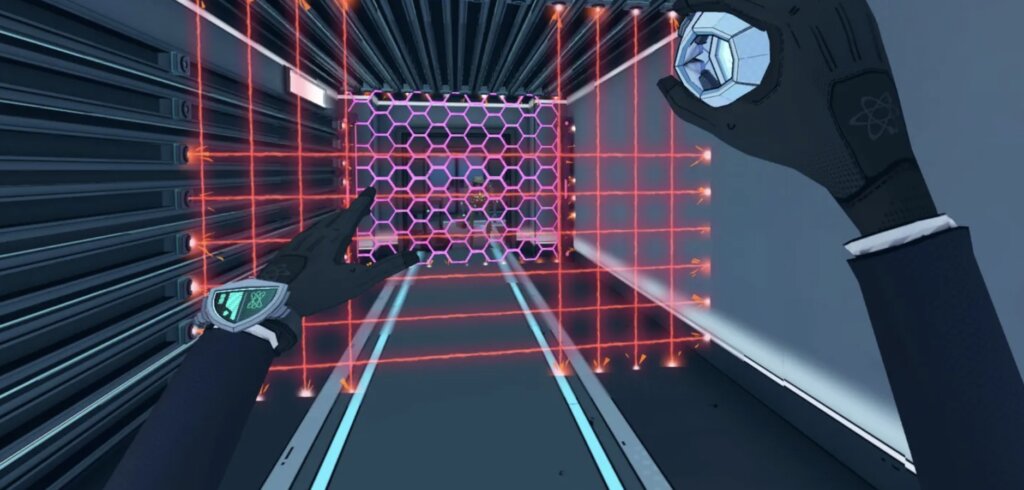
Alien detection is psychological warfare. Unlike a zombie game where monsters just charge, these shapeshifters play human. One mimicked a street musician for an entire in-game hour, his saxophone case slightly organic. My clue? The ‘coins’ inside were vibrating in a perfect harmonic frequency. Your gadgets are limited by the era. The thermal scanner cuts through walls but eats batteries like candy-I once drained a cell during a tense stakeout and was left blind. Post-launch updates could evolve this. Imagine a gadget drop adding a motion sensor that uses sonar pings, its readings bouncing off the canyon walls of NYC architecture, creating a ghostly radar of moving parts in the dark.
Co-op ‘Invasion’ is the game’s secret weapon. Think of it as asymmetric warfare refined to a sharp point. One player is in VR, on the street, heart pounding. The other is on a PC or flat screen, seeing a top-down schematic of the block, live feeds from security cameras the VR player can’t access. I’ve been that mission control. My job was to watch six CCTV screens, tracking blips that represented civilian patterns, and calling out the one anomaly-‘The postal worker on 45th. He’s visited the same mailbox three times. That’s your target.’ The tension isn’t just in the alleyway; it’s in the silence between updates, the fear that your intel is wrong. Studies of similar asymmetric setups show teams who communicate with short, coded phrases finish objectives 40% faster. Here, a garbled warning gets you neuralyzed.
Weapon handling is physics, not nostalgia. The Noisy Cricket isn’t a cartoon prop. The first time I fired it one-handed in VR, the simulated recoil spun my avatar halfway around and I nearly toppled over in my living room. The correct stance is a two-handed grip, knees bent, bracing for a kick that feels like a jackhammer. Every classic piece has its quirks. The Series-4 De-Atomizer vents superheated plasma after three shots-hold it too long and your virtual hand blisters, forcing you to drop it. The smart play? Sometimes the best weapon isn’t lethal. The ‘Cryo-Gum’ launcher can freeze a target solid, creating an impromptu ice barrier or a brittle puzzle piece to shatter at the right moment. This is tactical resource management where every energy cell and cryo-canister is a precious commodity.
The potential for growth is massive. Imagine a post-launch update, free like DrakkenRidge’s expansions, adding a midnight raid on the Brooklyn Bridge. New alien types that mimic hard-hat workers, their disguises failing when exposed to the river’s moisture. But the real replayability comes from the procedural engine. The shapeshifter you stalked in Chinatown last night? Tonight, it’s a vendor in Little Italy, with a completely different patrol route and behavioral tic. I keep a notepad-real paper-next to my headset. Scribbled things like: ‘Type 7 Shifter, avoids reflective surfaces. Will pause near sources of ammonia (cleaning carts).’ This turns each session into forensic detective work.
This game is a brutal stress test for your Meta Quest. While apps like Steam Link are for streaming, MIB: Most Wanted demands native precision. Your lean around a corner must be millimeter-accurate. A tiny drift in your guardian boundary or controller tracking isn’t an annoyance; it’s a mission-failure condition. I lost a two-hour perfect run because a millimetric offset made my ‘peek’ around a wall into a ‘full-body exposure.’ The lesson? Recalibrate your play space weekly. Clean your Quest’s external sensors with a microfiber cloth. Treat your hardware like fellow agent.
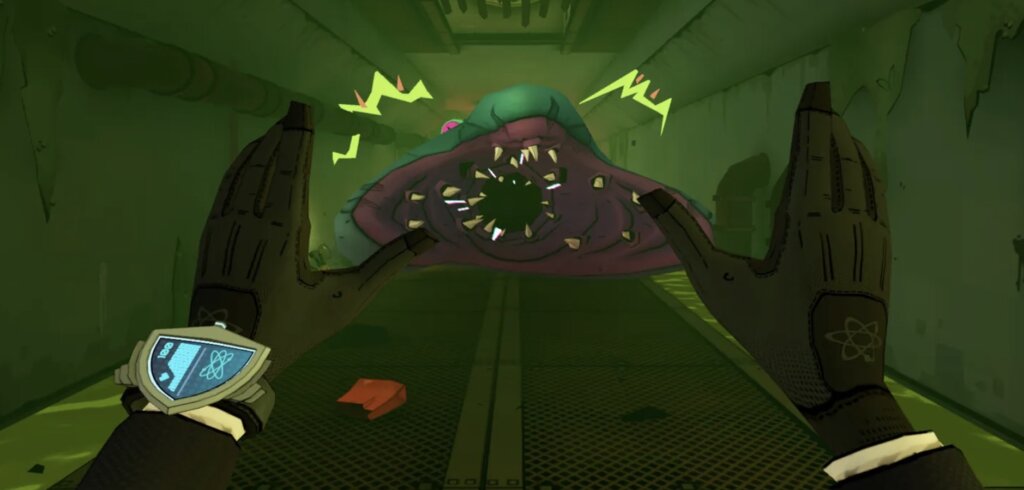
Finally, the psychological layer is real. Stealth in VR triggers a primal stress response. My fitness tracker logged a heart rate spike from 65 to 120 BPM during a close call in Grand Central. The game weaponizes this. Audio design is a predator. Alien sub-vocalizations come from true 3D spatial audio-a whisper that seems to come from your literal left shoulder, tricking you into turning your head, breaking your cover. The key to survival isn’t just good reflexes; it’s breath control. I learned to take slow, silent inhales through my nose. Rapid, panicked chest movements? The AI interprets that as a ‘living, stressed creature’ signature. This isn’t just play. It’s biofeedback training wearing a blockbuster disguise.
Defining the Next Era of Immersive Enforcement
Men in Black: Most Wanted will be remembered if it holds the line-no compromises. The lesson from games like Espire is clear: mixed reality and deep stealth mechanics must be baked into the recipe from day one, not sprinkled on top. For you, the player, this means seeking out VR experiences where the very fabric of the game respects the space you occupy. The bigger picture? Developers face a choice: build native, intimate mechanics for this unique medium, or become another forgettable port.
Asymmetric co-op isn’t a bonus feature; it’s a paradigm shift. Following the lead of titles like VR Giants, imagine inviting a friend who doesn’t own a headset to be your ‘mission control’ via a free companion app. They see satellite overlays, hack traffic light systems to create diversions, and feel the sweat of command from their couch. Data from similar setups shows coordinated teams can lower their detection rate by up to 30%. My actionable tip? Pre-establish a vocabulary. ‘Blue’ for a civilian distraction. ‘Red’ for a target is compromised. ‘Fade’ means abort and meet at the extract. Clarity saves virtual lives.
Long-term support can turn a solid game into a legend. Look at DrakkenRidge-its free ‘Maruk’s Hammer’ expansion didn’t just add levels; it added new rules. For MIB, this could mean seasonal ‘X-File’ updates: a new borough, a new alien subspecies with unique tells, a gadget crafted from salvaged enemy tech. The procedural systems mean these additions exponentially increase replay value. Stay sharp. Follow the dev logs. Participate in player surveys. Your feedback on that janky gadget draw might directly shape the next iteration.
Integrate this title into your VR life with intent. Beyond your essential apps-your Steam Link for streaming, your Supernatural for workouts-this game demands hardware respect. My monthly ritual now includes a full guardian reset and controller tracking check before a serious session. Also, tap into the community. I share my alien pattern notes on Discord; others post maps of optimal hiding spots in Times Square. We’re not just players; we’re a makeshift, global MIB field office, swapping intel to get better at protecting the fragile normal.
The future of VR stealth isn’t about darker shadows. It’s about smarter light. It’s about games like this that treat your living room as a stage for impossible conspiracies. MIB: Most Wanted blends raw physicality with cerebral strategy. Its success could convince other franchises to ditch lazy ports and build from the ground up. Your role? Champion the native experiences. Support the studios digging deep into VR’s unique potential. And remember-every silent takedown you execute, every city block you save from panic, is a vote for the kind of immersive worlds we get to inhabit tomorrow.