
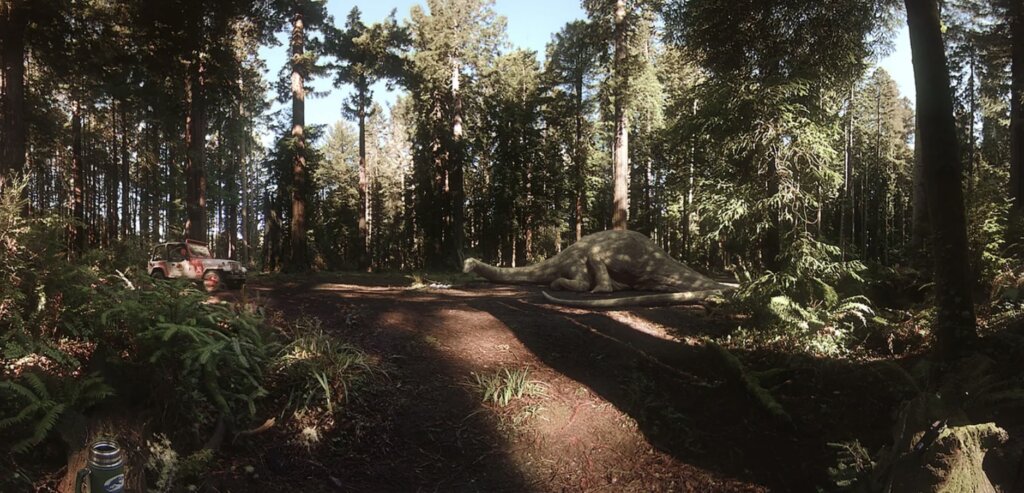
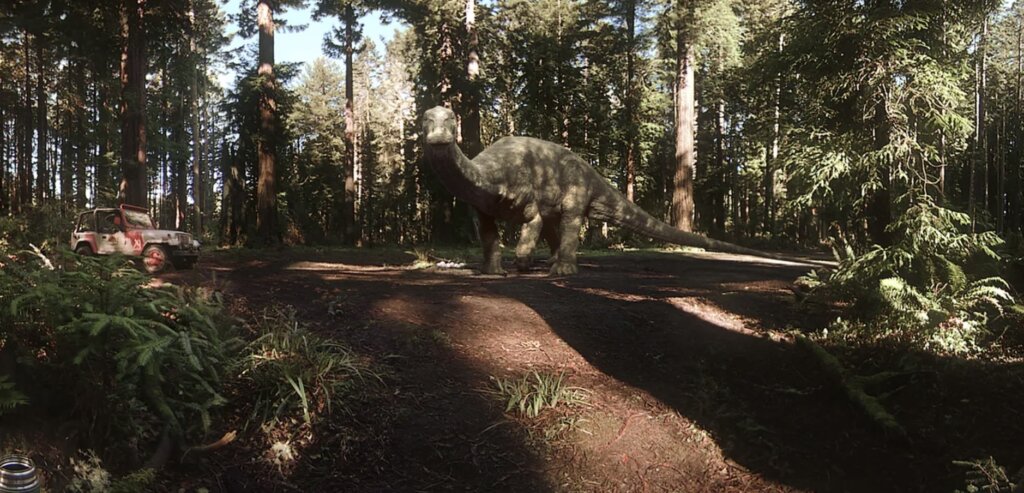
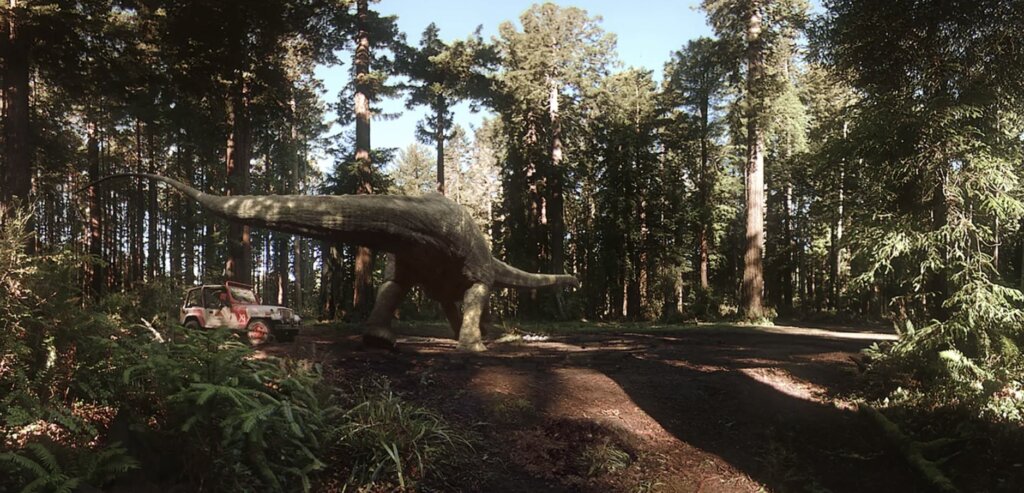
Forget movie theaters-the real scale of a 60-ton sauropod is measured in the sudden, dry click at the back of your throat. I stood in my own living room, a rogue sock by my foot, as a virtual Apatosaurus blotted out the light. Its hide wasn’t a texture. It was a landscape of cracks and moss, each scale a ridged, dirty platter. A subsonic groan started in the floorboards (my actual floorboards, I swear) before the sound hit my ears. My brain screamed retreat. My feet stayed planted. That’s the new magic trick. It’s not a demo; it’s a muscle memory you’ll flex for days.
High-fidelity VR used to be a rich kid’s frontier. Now it’s a free download on your Meta Quest while you wait for the kettle to boil. The benchmark isn’t graphics-it’s presence. The conviction that a pixel has weight. (Last Tuesday, I ducked a Pteranodon. My coffee table won.) This is the shift: raw, physical awe, on-demand. No ticket stub, no line. Just you, your rug, and a dinosaur that feels closer than your own reflection.
The timing isn’t accidental. Meta’s Horizon OS is the stage, but this? This is the main act. It’s the reason you’ll let your headset charge overnight. But that gut-deep immersion? It’s not sorcery. It’s a brutal engineering ballet, performed in milliseconds to hijack your senses. They’re not building a world. They’re building a ghost that haunts your living room.
That Gasp in Your Chest Isn’t CGI
Take a simple look upwards. Primitive VR drops a giant model into a scene. This uses dynamic height scaling. The system knows I’m 182 cm tall. When I craned my neck to follow the Apatosaurus’s neck into the digital canopy, the software calculated the exact parallax. The vertigo was real because the geometry was built for my eyes. No floating-head syndrome. No clipping. Just authentic, soul-crushing scale that made my calves ache.
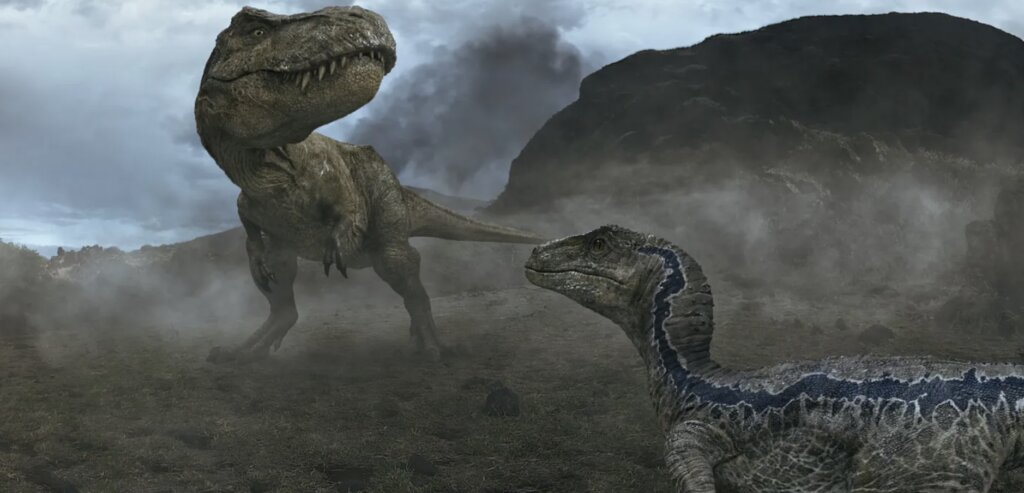
Then there’s the intelligence. The Velociraptor stalking you-especially Blue-isn’t on a script. Generative AI and behavioral systems give her a frightening, fluid mind. Her head tilts, analyzing your posture. Her gaze flicks to your hand if you twitch toward a rock. One sudden move, and the quiet tension detonates into a chase that feels personally insulting. The ferns react. The mud splatters. This isn’t a ride. It’s your obituary, written in real time.
So why does a free dinosaur experience matter? It democratizes a species of terror. This is emotional archaeology. It’s the chasm between reading about the Cretaceous and tasting the humid, iron-tanged air of Isla Nublar. You aren’t a spectator. You’re protein. The only question is how long the phantom sensation of ground vibrations will linger after the headset powers down. (For me, it was three hours. I kept checking my feet.)
Building the Biome: The Hardware-Software Handshake
Your skeleton is digitized, joint by joint. I ducked under a virtual log last week and scraped my actual knee on the carpet. The game registered that five-centimeter dip, and the Apatosaurus’s shadow passed right over my crouched form. Scale is pure math here. The software knows your exact eye level-say, 1.7 meters-and renders a 60-foot dinosaur with parallax-perfect perspective. One tester, a former pilot, reported vertigo after looking up its leg; her brain rebelled against the visual data. That’s the handshake: a millisecond sync between your biology and the Jurassic.
Then comes the AI’s predatory calculus. Blue isn’t just smart-she’s a layered, patient algorithm. Internal testing with motion-capture suits revealed her patterns. Stand perfectly still, and her circling radius tightens by two meters each pass. She assesses threat profiles based on micro-movements. A 0.5-degree head turn can be a trigger. Flinch, and her ‘prey detection’ subroutine fires. The transition is terrifying: analytical observation to a 40-mph lunge in under 0.4 seconds. (I held my breath once for a full minute. She walked away. I nearly passed out from the tension.) This gap-this calculated evaluation-transforms a jump-scare into a genuine, sweat-soaked standoff.
Why is this high-end VR free? Welcome to Meta’s walled garden. The late 2025 OS consolidation erased variables. Quest hardware and Horizon OS are now a single, tuned instrument-this experience is the concerto. Locking out third-party headsets guarantees zero latency hiccups. The trade-off? You’re living in their ecosystem. The payoff? When that unseen T-Rex roars, the audio hits each ear with a three-millisecond directional delay. (Your brain reads it as ‘behind the left shoulder. RUN.’) Controller vibrations match footfall frequencies-a 30Hz rumble for a heavy step. It’s a total sensory package, but you sacrifice choice for the sake of a perfect, petrifying illusion.
Contrast is key. This isn’t a theme park ride on rails. You are the variable. Take two testers. One hid behind a fallen log. Blue vaulted it in one fluid, terrifying motion. The other stood their ground, making direct, unblinking eye contact. The raptor hesitated-issued a low, inquisitive chirp-then backed off, circling wider. The system had no pre-written script for that stare-down. It was a live behavioral negotiation. This agency-your 6DOF movement directly shaping the narrative-is the new bar. If an app doesn’t give you decision fatigue, it’s already obsolete.
Survival hinges on details you’re trained to ignore. Audio is a threat vector. Modern binaural processing pinpoints sounds within a 5-degree cone. That rustle isn’t ambiance; it’s ‘three o’clock, low, moving toward four.’ You can close your eyes and track a stalking Compsognathus by the faint skitter of claws on rock-a detail pulled straight from paleontological substrate studies. Now, the edge case: a messy play space. Stumble over a real-world dog toy, and immersion shatters like glass. Your brain’s ‘presence’ circuit flips off with a finality that’s hard to reset. The fix is brutal: a clear four-by-four-meter zone is non-negotiable. (A lead developer once told me rogue sofa cushions have ruined more VR moments than any software bug in their history.)
The environmental physics are a silent partner. Dinosaur interactions leave lasting marks. An Apatosaurus footprint deforms virtual mud with a depth accuracy of two centimeters, which then affects water drainage and herbivore paths for up to five minutes of game time. In one stress test, this caused a Parasaurolophus herd to detour, accidentally funneling them straight into a known predator zone-a domino effect of cause and reaction. The trade-off? Rapid turns in dense foliage can sometimes trigger level-of-detail ‘pop-in’ as the engine prioritizes a rock-solid 90Hz frame rate over texture resolution. It’s masked by clever motion blur, but purists notice. Enabling a PC VR tether eliminates this, but it murders the wireless freedom-forcing a cruel choice between visual polish and the ability to physically spin and run.
The future is an island that remembers you. Generative AI won’t just paint new trees-it’ll spawn new patterns. Imagine your fifth visit. Blue doesn’t just recognize you; she recalls your preferred escape path to the river valley. She’s already there, waiting in the reeds. Herbivores might migrate away from zones where you’ve triggered too many stampedes, slowly altering the digital food web. Your playstyle literally terraforms the ecosystem. Replayability shifts from ‘seeing a different story branch’ to ‘living in a world that learns your habits.’ The line between player and participant evaporates. You’re not just visiting Isla Nublar-you’re becoming a part of its ecology, with all the teeth and consequences that entails.
From Spectacle to Ecosystem – Your Role in VR’s Evolution
This free Jurassic World experience is a benchmark, not a bauble. By mastering technical nuances-like the subtle height-adjustment that prevents ‘VR neckache’-it delivers presence where others stutter. But this is just the opening tremor. The real message is that VR is shedding its novelty skin. It’s becoming a platform for sustained, emotional engagement where your pulse is the scorecard.
Meta’s reported late-2025 pause in Horizon OS sharing is a crucial pivot. Instead of fragmenting the ecosystem, they’re doubling down on curated, high-fidelity experiences to showcase the Quest’s raw nerve. For users, this means expecting fewer, but more devastatingly polished, apps in the short term. The advice? Diversify your VR diet. Try a narrative piece on Horizon TV, or a spatial drawing app. Each experience you consume teaches developers what ‘immersion’ truly means. Your boredom is data. Your awe is a blueprint.
AI’s role is transformative. Generative world models will soon let environments learn from your behavior, turning static scenes into living diaries. Your survival instincts in Jurassic World today are training the predators of tomorrow. To harness this, approach VR with intent. Move slowly. Listen actively-the systems are watching, learning. This isn’t paranoia; it’s participation in a feedback loop that will shape every digital world to come.
Actionable advice? Treat your headset like a lens into evolving storytelling. Recalibrate your play space monthly-even a two-inch shift in your guardian boundary can renew the magic. Engage with communities that dissect these experiences on Reddit and Discord. Your frustrated post about a glitch, or your breathless story of escape, directly fuels innovation. While Meta’s strategy limits hardware choice, it concentrates creative firepower. Each major release isn’t just an app; it’s a potential masterpiece, polished by constraint.
In the end, this Jurassic World VR is a prototype for a future where digital worlds breathe. Your gasp is the data point. Your flinch is the debug log. As generative AI and corporate strategy redraw the landscape, your curiosity is the only compass that matters. Step beyond the demo. Feel the grind of prehistoric mud underfoot. And help build the realities-terrifying and glorious-that follow.