
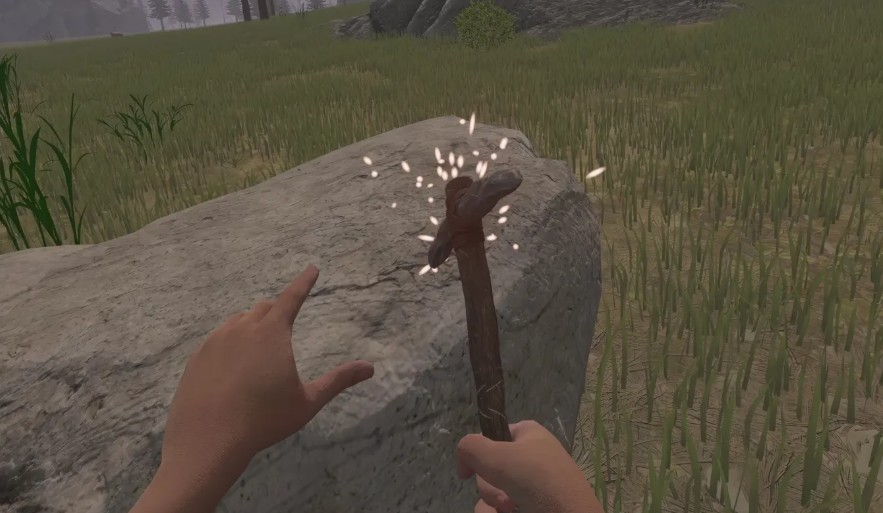
You don’t hear the wind first. You feel the weight-a cold, virtual heft settling into your palm. That crowbar isn’t an icon; it’s a promise of labor. Prying a corrugated panel from a skeletonized bus requires a full-shoulder heave. The sound-a metallic shriek-vibrates through your headset. Haptics jolt up your forearm. This isn’t a game you play. It’s a place you inhabit. And you’re sharing this air with fifty other souls. Each breath you hear in proximity chat could belong to your savior, your supplier, or the arsonist who’ll reduce your fortress to glowing embers by dawn.
Forget lonely VR survival sims. GRIM is a raw, breathing society. The real enemy isn’t some scripted beast-it’s the player whose campfire smoke you see curling from the next canyon. You build a base not for storage, but as a declaration. A four-story monstrosity of scavenged sheet metal and pure spite that broadcasts a single message for miles: ‘Try me.’ Raiding is a heart-pounding heist. You crouch in the long shadow of a rival’s watchtower, physically slapping magnetic charges onto a weak foundation joint. Your audio is maxed, listening for the subtle shick-click of a bolt-action rifle being readied somewhere above.
Why will this last where others failed? Look at the recent past. UNDERDOGS on PSVR 2 saw its multiplayer servers go dark last month-a ghost town in weeks. (A brutal, practical lesson.) GRIM bets on the Quest’s ecosystem: millions of active headsets, a critical mass of chaos. Your fortress will never be a museum piece. It’s a constant target. That relentless pressure-the gnawing certainty that someone, right now, is scouting your walls-is the entire point. It’s what turns a game into a world.
The Silence Is a Lie
The magic is mundane tech, perfected. It’s your headset’s hand-tracking translating intention into precise, physical calculus. Mining iron ore isn’t holding a button. It’s twenty-three minutes of rhythmic pickaxe swings that leave your actual deltoids burning. Stash your only pump-action on a high shelf? Smart. Until the raid siren screams and you’re desperately clambering over virtual furniture, seconds bleeding away as bullets punch through your outer walls. Every design choice has a muscle-memory consequence. A stuttering frame rate during a firefight isn’t a glitch-it’s a betrayal of the world’s reality, and it will get you killed.
So what’s at stake? Everything you grind for. The PvPvE twist makes the environment a co-conspirator. ‘Glitch-Hounds’-mutations with stuttering, corrupted animations-prowl the radioactive fog. They don’t care about your clan tags. They’ll force a temporary, teeth-gritted alliance with your arch-rival. You’ll pass a medkit to the person who raided you yesterday. You’ll cover them as they loot a corpse, and feel the textured grip of your pipe wrench in your hand, contemplating the back of their head. This is the test. Do you have the stamina to swing a sledgehammer for an hour straight, fortifying the east wall? The nerves to hold a pitch-black generator room, listening to the crunch-grind of unfamiliar boots on gravel? The friends who won’t trade your coordinates for a crate of .556 rounds when the world goes truly, utterly GRIM?
Building, With Your Actual Arms
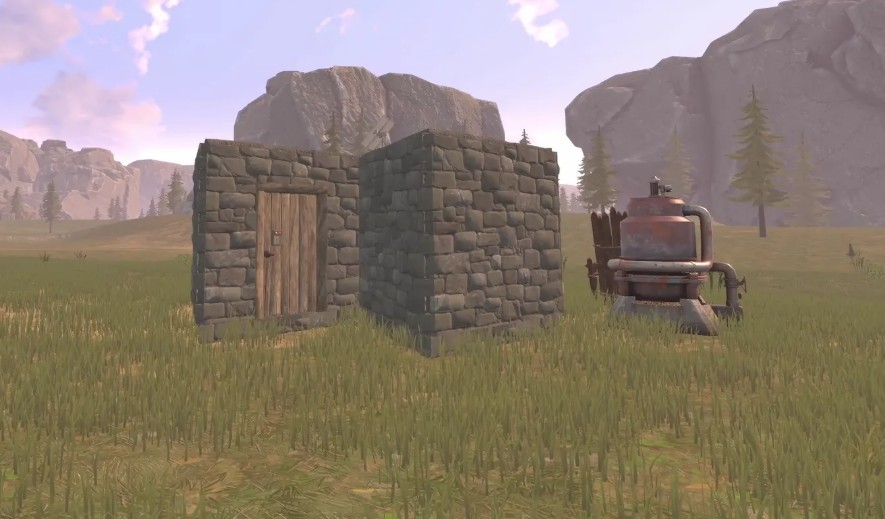
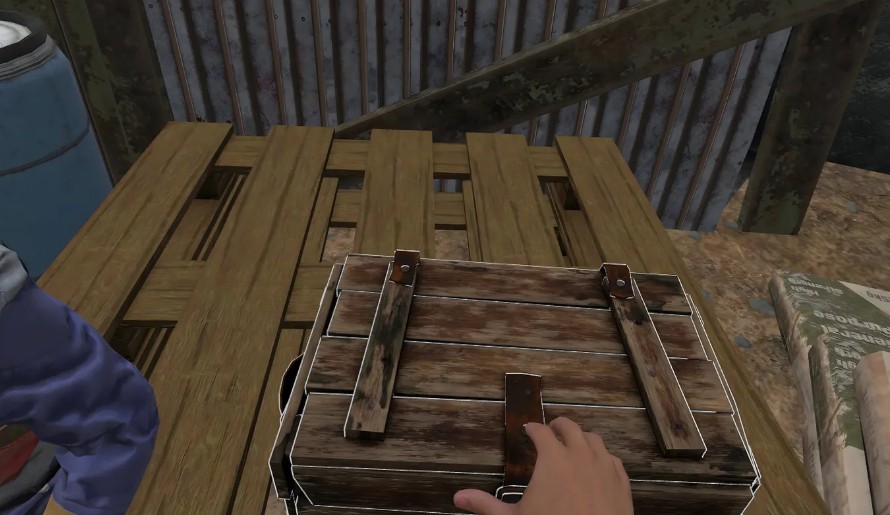
Menus are for tourists. Here, you build by hand. Grab a wooden plank. Position it against a frame. Swing the virtual hammer-a solid *thwack* echoed by a deep haptic buzz. It takes fourteen precise hits to sink a single nail. Your shoulder will ache. Place that wall two degrees off? You’ve just built a sniper’s sightline directly into your loot vault. A slightly sloped roof? Rainwater pools, degrading the structure until a mutant’s charge brings the whole section down. This is construction as a full-contact, consequential sport.
Scavenging is a marathon. Finding ‘Structural Scrap’ isn’t clicking a glow. It’s twenty-two minutes of wrestling a rust-fused car door from its hinges, your controller juddering with every stubborn wrench-turn. You hide a crate of precious rifle ammo on a high storage shelf-tactically sound. Then the raid alarm blares. Now you’re scrambling, knocking over virtual chairs, fingertips brushing the crate as gunfire shreds your front gate. That comfortable abstraction between you and your gear? Obliterated. Your inventory is a physical space you navigate, panic-sweat and all.
The Double-Edged World: PvE That Forces PvP Choices
The wasteland is a third, impartial faction. Mutated ‘Glitch-Hounds’ don’t just spawn. They patrol. Learn their distorted routes through the acid-yellow fog or become a gory statistic. Radiation zones emit a soft, persistent Geiger-click through your Quest’s speakers-a calm, eerie rhythm. Stray too close to the core, and that click races into a frantic, lethal buzz.
This PvE layer creates savage calculus. You and a rival from ‘Clan Reaper’ spot the same pristine ‘Fusion Core’ in a Glitch-Hound nest. Fighting means you both die. So a tense, wordless truce forms. You cover their back with a jerry-rigged rifle as they loot. They toss you half the components-a fair deal. You part with a nod. Seventy minutes later, you recognize the unique *clank-scrape* of their metal boots on the gravel outside your base. The truce is over. The world forced you to make an ally, then handed you a perfect blueprint for betrayal.
The Voice Chat Gambit
Trust is forged and shattered through your headset’s mic. A raised, empty hand is the universal ‘friendly.’ Sharing cooked ‘Iguana Meat’ from your campfire pot is a binding, if temporary, contract. But VR betrayal cuts deeper. You remember the specific timbre of their laugh as you fought back-to-back. The sting is personal, visceral.
Proximity chat is your ultimate weapon. Whisper plans for a coup in a dank sewer pipe. Broker a trade-17 ‘Purified Water’ for a ‘Shotgun Schematic’-using only your voice, no safe trade windows. But this ecosystem is fragile. Remember UNDERDOGS? Its multiplayer died from population bleed. Ghost servers are narrative killers. GRIM’s gamble on the Quest’s massive install base is a bet that every stranger has the potential to be your permanent nemesis-or the ally who watches your back for a hundred real-time hours.
When the Tech Itself Is a Threat
In VR, a frame drop isn’t a graphical hiccup. It’s vertigo in the middle of a shotgun blast. GRIM must maintain 90 fps even when twenty players and a mutant horde descend on your compound. The devs use every trick-culling distant geometry, simplifying physics-to keep the Quest’s mobile chipset from choking.
Your survival tip? Monitor your ping religiously. If a door interaction lags by 400 milliseconds, fall back. That delay is all a seasoned raider needs to slip inside. I once lost a week’s haul of ‘Titanium Alloy’ because my Wi-Fi stuttered as I input my base door code. The door stayed sealed for three fatal seconds. In this world, performance isn’t a luxury-it’s a core mechanic, as vital as your weapon.
The Physical Economy
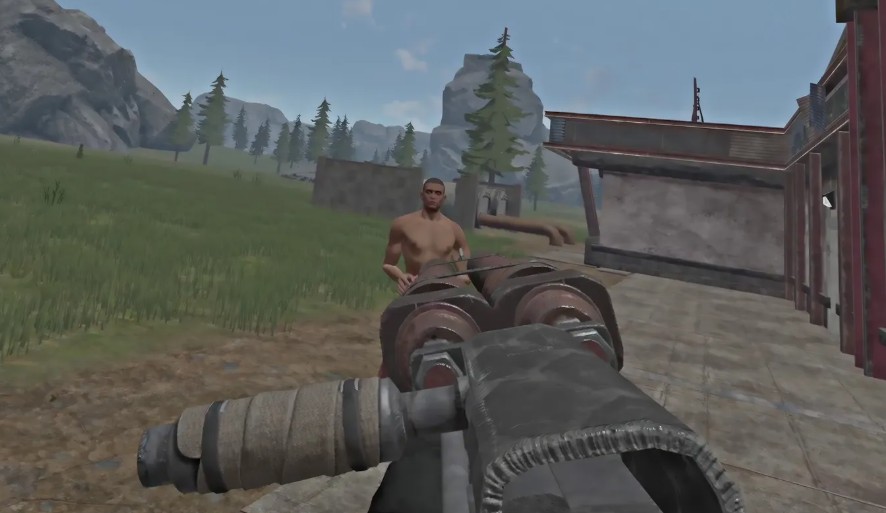
Crafting is manual assembly. To build a ‘Makeshift Rifle,’ you grab the barrel, align the iron sights (misalign by a millimeter and your shots veer wildly), and screw the stock into place. Rush the process? The gun jams on its third shot. Your storage isn’t a menu list. It’s a cluttered garage of crates you organized in a panic. A priceless ‘Fusion Core’ might be tucked under a pile of common ‘Tin Cans’-a stupid hiding spot that once saved my entire stash because raiders, in their greedy haste, overlooked it.
An unobvious strategy: bait traps. Place a crate labeled ‘TITANIUM ALLOY’ near a cliff’s edge. Raiders, fumbling in the adrenaline of VR, will often knock it into the abyss trying to grab it fast. You waste their time, their morale, and their trip for the cost of one decoy item. It’s psychological warfare with physics.
Combat You Feel in Your Muscles
This isn’t point-and-click. A sledgehammer has genuine virtual heft-swing it hard for crushing damage, but you’re left wide open for a two-second recovery wobble. A knife allows a flurry of jabs, but you have to press into intimate, terrifying range. Firearms demand real posture. Brace a rifle against a broken window frame to steady your aim. But that planted stance turns your head into a stationary target for a counter-sniper.
Endurance is a stat you can’t upgrade. Holding a defensive angle with a heavy ‘Boomstick’ shotgun tires your actual arm after minutes. Your muscles tremble. That’s not a debuff icon-it’s your body begging you to switch tactics. Savvy players use ‘Molotovs’ not just for damage, but for the thick, volumetric smoke they generate. In VR, that smoke creates genuine, disorienting cover for a flanking move you could never sell on a flat screen.
The Social Metagame
Successful clans aren’t just groups-they’re organs with specific functions. You need a ‘Builder’ with an architect’s spatial IQ, a ‘Ghost’ who specializes in silent, solo scavenging runs, and a ‘Face’ whose voice can negotiate shaky ceasefires. Use the in-game permissions system ruthlessly. Give the new recruit access to the ‘Tato Farm,’ not the ‘Armory Locker.’
But be warned: VR makes exclusion physical. Locking someone out of the inner sanctum feels like you’re slamming a real door in their face. It breeds mutiny faster than any resource shortage. Solo players can thrive through hyper-specialization. Become the server’s premier ‘Trauma Kit’ crafter. When the mega-clans come begging during a war, you have leverage. You trade on your terms; you don’t obey.
The Great Trade-Off: Simplicity for Universality
GRIM uses intuitive, natural hand-tracking to pick up, throw, and swing. You won’t be inputting complex button combos. Communication is pure voice or gesture-a pointed finger for ‘over there,’ a slashed throat for ‘ambush.’ This is a deliberate design sacrifice. It strips away UI complexity so a VR rookie and a grizzled veteran operate on the same tactile plane. The barrier to entry isn’t a control scheme. It’s human nature. Your skill tree is your ability to read a tense silence, to build fragile trust, or to sell a convincing lie. The technology dissolves. The people-terrifying, wonderful, treacherous-are all that remain.
Conclusion: Beyond the Ruins-Securing Your Place in VR’s Social Sandbox
GRIM’s legacy won’t be polygons or mechanics. It will be the communities-and vendettas-it births. UNDERDOGS’ cautionary tale (dead servers in weeks) underscores a brutal truth: your survival is parasitic on a healthy population. Don’t just log hours; invest in relationships. Join a clan early, even a three-person squad-collective defense deters raiders more than any solo turret. Wield voice chat as a strategic asset; a well-timed whisper can dissolve an ambush or broker the trade that nets you a rare ‘Auto-Turret Schematic.’
Tech will evolve. Meta’s ‘Neural Band’ research points to a future of thought-based interfaces. For now, GRIM’s strength is its accessible hand-tracking-it levels the playing field. But stay adaptable. As VR matures, expect gameplay shifts: more complex crafting via gesture libraries, maybe even environmental manipulation. A proactive tip: practice precision object manipulation now. Mastering the delicate art of placing a tripwire or aligning a scope could future-proof your skills against updates that reward surgical dexterity.
The bigger picture? GRIM signals VR’s pivot from isolated experiences to persistent, player-shaped worlds. Unlike a fantasy FPS where a glitch dictates the meta, here, stability lets human stories breathe. You’re not just a survivor. You’re a catalyst. Build a cross-server trade empire. Become the raider whose name sparks panic. Mediate a peace treaty between warring factions. Each choice ripples through the server’s fragile economy and politics. This player-driven depth is the antibody that prevents VR worlds from decaying into pretty, empty simulations.
Your final move? Embrace impermanence. Bases fall. Alliances shatter. But your reputation-‘that solo crafter who never cheats a trade,’ or ‘the backstabbing warlord from Server 42’-persists. Use VR’s physicality. (Future updates may let you leave handwritten notes as traps or treaties.) Remember, the true endgame isn’t a vault full of loot. It’s influence. Will you forge a legend that outlives the ruins? The answer, quite literally, is in your hands.