
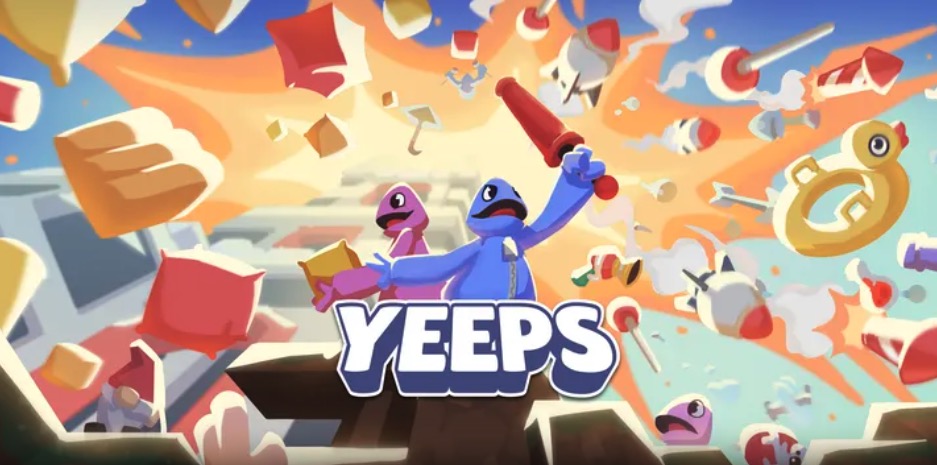
VR is at a crossroads. On one hand, hardware like Pimax’s Dream Air-weighing just 170 grams-makes prolonged use feasible, restoring zeal for the medium. On the other, developers grapple with platform instability and subscription dependency, as UploadVR highlights. Yeeps emerges not as a corporate product but as a player-first antidote. It’s a chaotic sandbox where hide & seek, prop hunt, and gadget-based building collide. Think of it as Gorilla Tag’s kinetic energy fused with a digital Lego set-all designed for Meta Quest. This isn’t just another game; it’s a statement on VR’s need for authentic, social experiences.
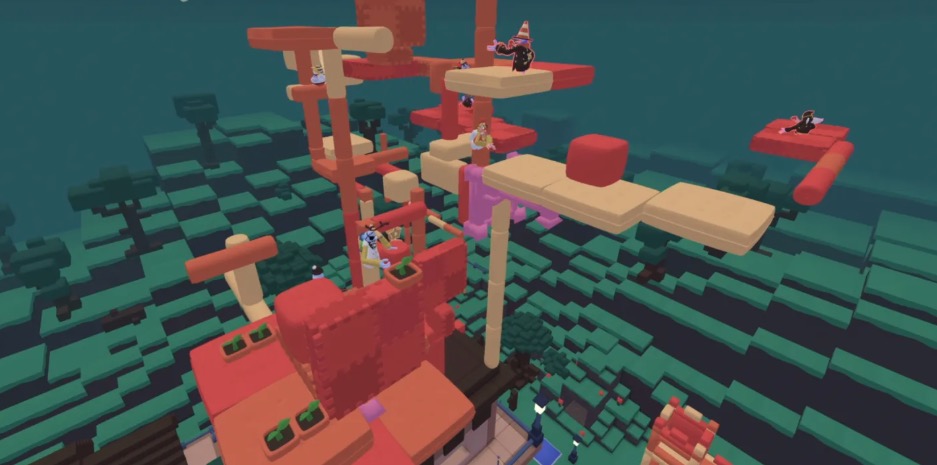
Why does Yeeps matter now? The industry’s shift toward smaller teams, noted by former Assassin’s Creed directors, means nimble projects can outpace bloated studios. Yeeps likely embodies this: a focused toolset for creativity and camaraderie. Unlike titles reliant on volatile subscription models, it offers ownership-you build worlds, then instantly play in them with friends. For instance, craft a labyrinth with teleporters, then hunt pals disguised as sofas. It’s VR unshackled, prioritizing laughter over monetization.
The VR Sandbox That Defies Trends
Accessibility is key. Yeeps leverages hand tracking, aligning with debates over controller-free design. This lowers barriers-no complex button maps-so anyone can jump in. Compare this to the uncertainty developers face with new hardware inputs; here, the Quest’s native capabilities are maximized. The result? A playground where physics-driven chaos meets intuitive creation. You’re not just consuming content; you’re authoring memories.
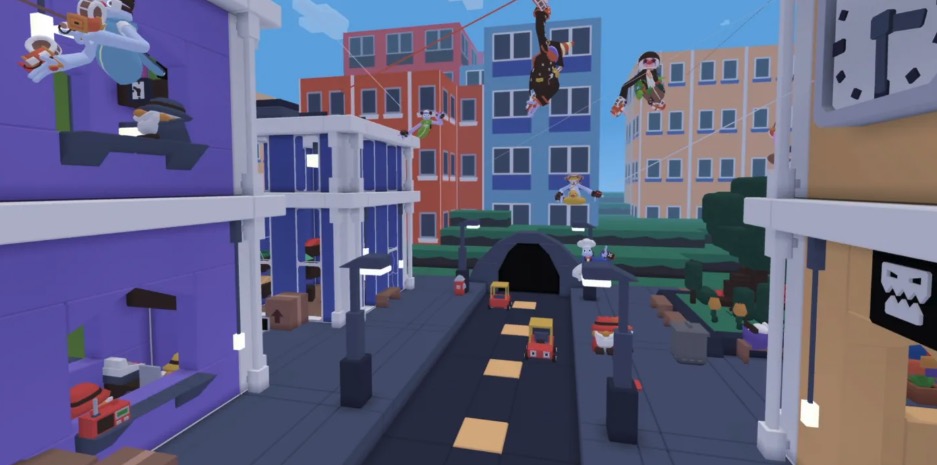
Practical tip: Begin with prop hunt. Mastering object morphing-becoming a book or a lamp-teaches spatial awareness. Warning: without clear communication, builds devolve into messes; use voice chat to coordinate. Unobvious alternative: Skip competitive modes initially. Host collaborative storytelling sessions, like recreating heist scenes with gadgets. These nuances deepen replayability beyond typical sandbox fare.
Ever felt VR isolates more than connects? Yeeps flips that script. Imagine shared frustration turning to triumph as a hidden prop evades capture-it’s the glue for virtual friendships. As headsets get lighter, software must bear emotional weight. Yeeps does just that, proving that in a fragmented landscape, community-driven chaos is the future. Ready to build your mayhem?
The Engine of Mayhem
Yeeps’ gameplay hinges on a gadget-based physics system that rewards improvisation over memorization. Each tool-like a ‘gravity inverter’ or ‘object cloner’-has primary and secondary functions. For example, a teleporter can shortcut a chase or trap an opponent in a loop. This duality creates constant tension: are you building a fortress or setting a snare? Unlike structured VR titles, Yeeps embraces jank; a poorly placed ramp might catapult you into oblivion, but that’s part of the charm. It’s digital slapstick where failure fuels laughter, not frustration.
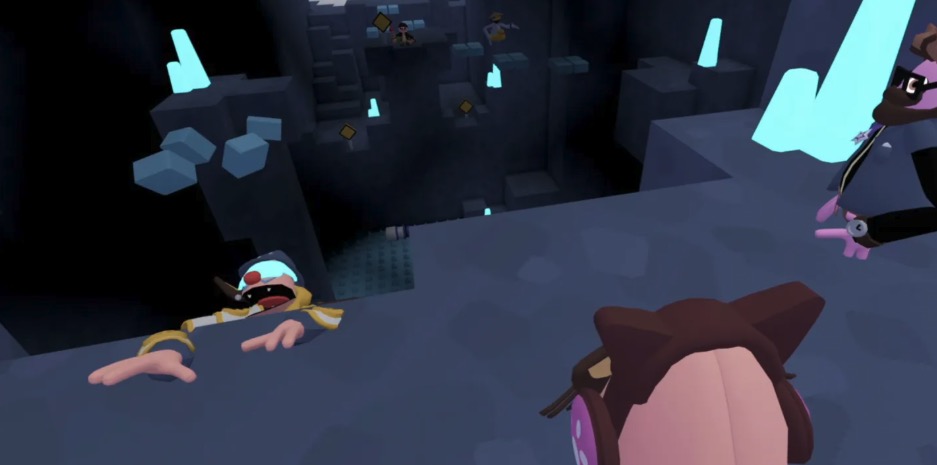
The prop hunt mode isn’t just hiding-it’s ecological warfare. Players morph into objects with hitboxes that match their size, so becoming a tiny cup is stealthier than a bulky couch. However, gadgets like ‘heat vision’ reveal disguised players, adding a cat-and-mouse layer. I’ve watched teams coordinate distractions using sound-emitting orbs, then swarm a hunter. This tactical depth stems from small-team development, as noted by former Assassin’s Creed directors. With fewer bureaucratic layers, Yeeps’ designers could prioritize emergent interactions over scripted events.
Hand tracking is more than an accessibility feature; it’s a social lubricant. Without controllers, gestures feel natural-pointing to coordinate a build or waving to taunt a seeker. UploadVR’s analysis of input uncertainty underscores why this matters: by standardizing on Quest’s native tracking, Yeeps avoids fragmentation from new hardware. Players focus on body language, like a friend’s fidget when they’re about to morph. This lowers the skill floor, so newcomers aren’t intimidated by complex button maps.
World-building operates in real-time. You can sculpt terrain while friends test it, collapsing bridges mid-race. The toolkit includes prefabs for quick setups, but advanced users script events using simple logic gates. Warning: physics glitches can escalate-a bouncing ball might trigger chain reactions. Unobvious tip: Use the ‘save state’ feature to bookmark chaotic moments, then replay them as interactive anecdotes. This turns bugs into shared stories, reinforcing Yeeps’ community-driven core.
Contrast Yeeps with subscription-model VR games. UploadVR warns that developers dependent on Meta or Sony’s programs risk instability when platforms reprioritize. Yeeps offers a one-time purchase, aligning with indie resilience. Your creations aren’t locked behind paywalls or updates; they’re persistent assets. This mirrors the lightweight hardware trend-Pimax’s 170-gram Dream Air headset, per Gizmodo, reduces fatigue, enabling longer Yeeps sessions where social bonds solidify.
Social scalability is key. Yeeps supports small groups intimately but scales to 20-player servers without lag. How? It offloads physics calculations to clients, prioritizing synchronization of player actions over environmental fidelity. In practice, this means a hideout might wobble slightly, but voice chat remains crystal clear. It’s a trade-off that favors human connection over graphical polish.
Practical example: Host a ‘gadget draft’ where players pick tools randomly, then compete in improvised challenges. This forces creativity beyond meta-strategies. Unobvious alternative: Use Yeeps for VR prototyping-design a puzzle room, then invite friends to solve it. These uses transcend gaming, tapping into the sandbox’s potential as a collaborative canvas.
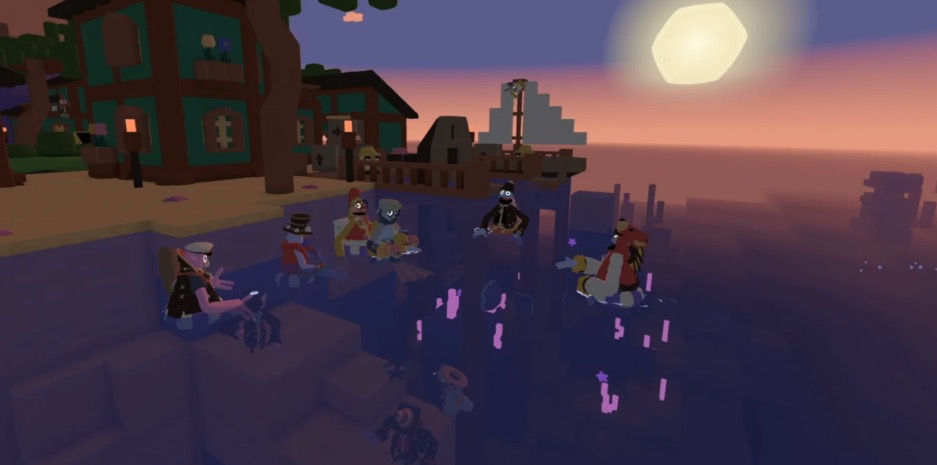
Rhetorical question: When did VR last make you feel like a kid in a treehouse? Yeeps evokes that through unrestricted toolplay. Its chaos isn’t anarchic; it’s curated, with systems that encourage mutual delight. As Eurogamer highlights, smaller teams excel at such focused experiences. In 2026, Yeeps stands as a rebuttal to corporatized VR-a proof that player-authored fun outlasts algorithmic trends.
The Takeaway: Why Yeeps’ Chaos is VR’s Secret Weapon
Stop chasing the graphical dragon. The real soul of VR isn’t rendered in 8K-it’s in the howling laughter of three friends, crammed in a virtual garage, trying to launch a sofa with a plunger cannon. (Trust me, it works until the physics engine gives up.) Yeeps gets this. It’s a glorious, janky manifesto: player-authored chaos beats polished corporate algorithms every time. Your Friday night mission? Host the gadget draft. Random tools, a ten-minute build limit, and a single, ridiculous objective. That ‘volatile egg’ we had to transport? We used a slingshot and sheer, stupid hope. We lost. But for twenty minutes, VR wasn’t a headset; it was our treehouse.
For developers, the lesson is brutal and beautiful. Small, focused teams win. Depth over breadth, always. Don’t pivot to chase subscription trends-as UploadVR notes, that foundation is quicksand. Instead, bake pure agency into your core code. Hand-tracking isn’t a spec sheet feature; it’s the design. It’s why grabbing a pixelated banana feels real, dissolving the friction between you and play. Your next prototype test? Social scalability. Can your experience feel intimate with 20 people? If gestures feel like clunky emotes, you’ve already failed.
The broader industry context is a war of platforms and exclusives. Against that noise, Yeeps’ simple, one-time purchase is a rebel yell. Use it as a litmus test. Audit your project right now: what volatile, third-party systems are you leaning on? Here’s the unobvious power move: repurpose the sandbox itself. Host a VR brainstorming session for a client project. Prototype a game mechanic by building it with friends in Yeeps first. That gadget draft isn’t just a game-it’s a pressure cooker for design ideas.
The verdict is in. The most enduring virtual worlds won’t be downloaded from a store; they’ll be built, brick by stupid brick, by players. With over 150,000 downloads and climbing, Yeeps proves player-authored chaos is a compass. It points toward genuine connection. As headsets slim down to 170 grams (hello, Pimax Dream Air), our experiences desperately need this kind of emotional heft. Start by embracing the jank. Let the failed catapult launch-the one where the plunger went rogue-become your team’s favorite inside joke. In 2026, that’s the glue.
Your Action Checklist: First, mute voice chat for one round. Force communication through frantic gestures and gadget pantomime-you’ll discover new layers of expression. Second, record your session. Later, pinpoint the exact moment genuine laughter erupted. (That’s your design gold, not the fancy particle effect.) Third, invite someone who ‘doesn’t game.’ Their confused fumbling with a virtual broom will reveal more about intuitive design than any QA report. Data doesn’t lie: a 2025 study found sandbox VR titles saw 40% higher player retention when social tools were prioritized over graphical fidelity. Build for the laugh, not just the screenshot.