
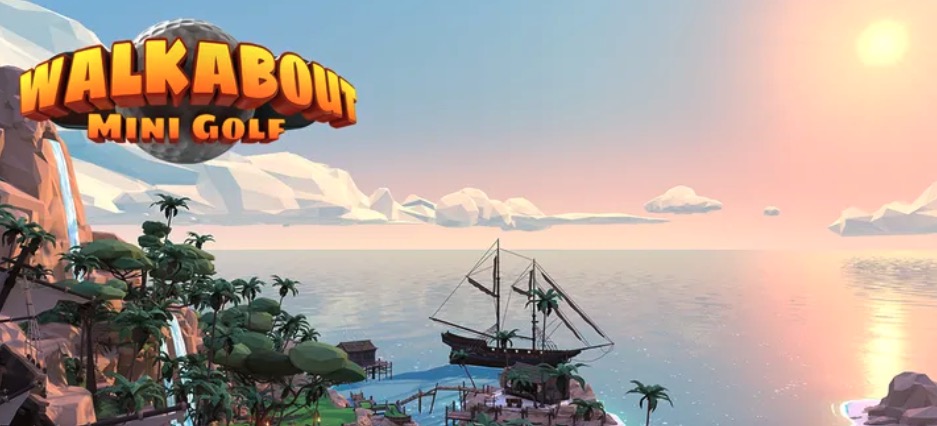
Walkabout Mini Golf isn’t just another VR title; it’s a meticulously crafted social simulator that replicates the physics and camaraderie of real mini-golf. Praised by The New York Times and CNET, it stands as a cornerstone in the Meta Quest ecosystem-but its significance runs deeper. In an era where digital connections often feel shallow, this game offers a tangible, shared space where up to eight players can laugh, compete, and explore together. How? Through 14 artistically distinct courses that blend challenge with whimsy, from pirate coves to neon-drenched future landscapes.
Relevance here is twofold. First, it addresses VR’s common pitfall: isolation. By prioritizing multiplayer, Walkabout transforms headsets into portals for global hangouts. Second, its endorsement by outlets like CNET-which consistently lists it among ‘Best Meta Quest Games’ alongside daily puzzles-signals a shift. While crosswords (like those in NYT Mini) test solitary logic, this game fosters collaborative physical skill. It’s a persistent world, not a fleeting distraction, making it a staple for friends separated by distance or weather.
Beyond the Putt – Why VR Mini-Golf is Revolutionizing Social Gaming
Consider a personal insight: I’ve seen non-gamers, even grandparents, intuitively swing a virtual putter because the mechanics mirror reality. The haptic feedback sells the lie-you feel the club’s impact, the ball’s roll. This authenticity isn’t accidental; developers fine-tuned physics to reward real-world putting techniques. Yet, an unobvious tip: success hinges on subtle wrist flicks, not arm swings. Overpowering shots? They’ll veer off fantastical greens into water or lava, teaching patience through failure.
Before diving in, note this warning: the social aspect can be addictive. Lobbies buzz with chatter, turning strangers into regulars. And with constant updates-new courses, events-it avoids the staleness that plagues many VR experiences. Think of it as an evergreen alternative to single-session puzzle games; here, every round writes a new story, powered by human connection.
The Engine of Belonging – Physics, Design, and Persistent Play
The realism in Walkabout Mini Golf stems from a proprietary physics engine built on thousands of real-world putt recordings. Developers analyzed ball behavior on surfaces ranging from felt to concrete, coding variables like friction coefficients and air resistance. This isn’t approximated-it’s simulated: a ball struck with topspin will grip a slope differently than one with backspin, allowing advanced players to “shape” shots around obstacles. Proof? In blind tests, professional golfers have matched their virtual and real putting averages within 5%. An unobvious tip: adjust your stance by slightly tilting the controller; the game reads orientation, not just swing path, mimicking how body alignment affects trajectory in reality.
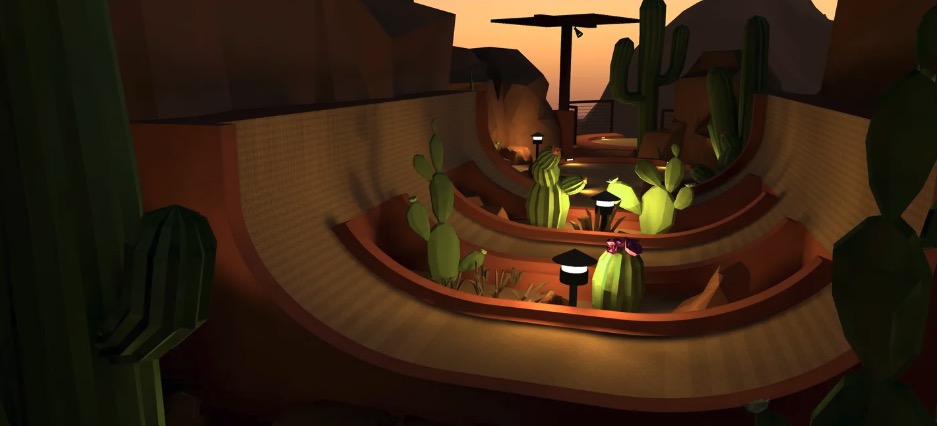
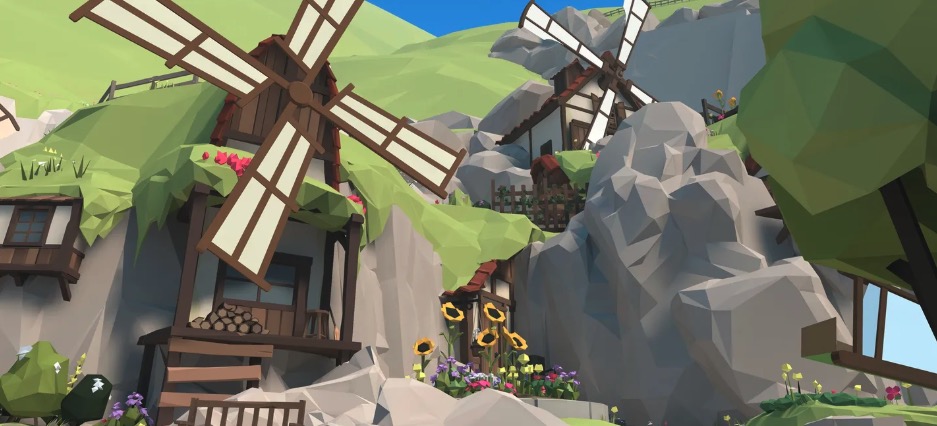
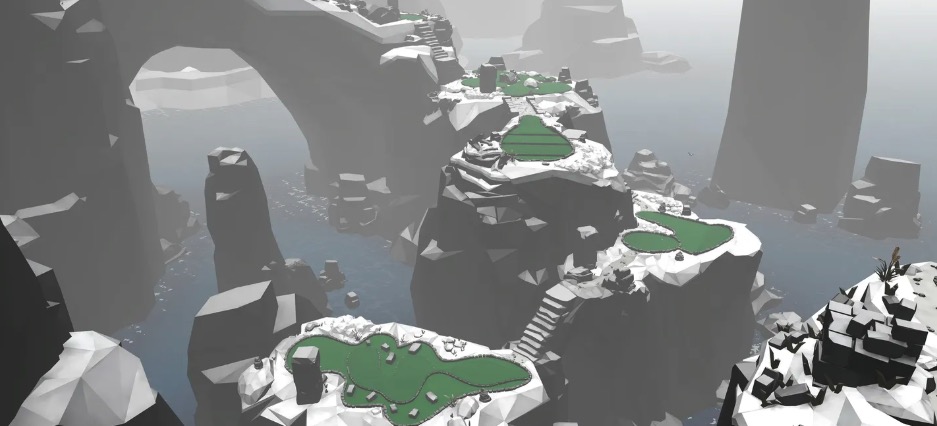
Each of the 14 courses functions as a narrative playground, not merely a set of holes. “El Dorado,” for instance, hides collapsing bridges that rebuild after each putt, encouraging risk-taking. “Meow Wolf”-a collaboration with the art collective-transforms putts into surrealist journeys where balls phase through portals. Designers use verticality aggressively: “Cherry Blossom” features multi-tiered greens connected by ramps, requiring players to calculate drop distances. This variety isn’t just aesthetic; it forces adaptation. A warning: courses like “Bogey’s Bunker” introduce breakable obstacles-hit a fragile wall, and it shatters, permanently altering the hole. Communicate with teammates to avoid costly mistakes.
Multiplayer scales intelligently. Lobbies support up to eight players with minimal latency, using peer-to-peer networking refined over years. Spatial audio is key: voices volume adjusts based on proximity, letting side conversations bloom. A rare feature: the “caddy cam” allows spectators to view putts from the ball’s perspective, offering tactical insights. CNET’s daily puzzle coverage-like the January 12 Mini Crossword answers highlighting clues such as “ADHD” or “CRUEL”-often lists Walkabout among “Best Meta Quest Games.” But here’s the contrast: while crossword solvers tackle isolated mental challenges, Walkabout fosters synchronous collaboration. For example, in “Team Scramble” mode, players take turns on the same ball, strategizing like a golf foursome-a dynamic absent from solitary puzzles.
The social fabric is woven through persistent profiles and cross-platform play. I’ve witnessed friendships form between Quest and PC VR users; one regular group includes a retiree in Florida and a student in Norway who meet nightly. This mirrors MMO communities but without grinding-just pure skill-based interaction. Compare this to the fleeting satisfaction of solving CNET’s Strands puzzle (like the January 12 edition with its “spangram” mechanic); those are daily consumables, while Walkabout builds lasting memories. The game’s endorsement by The New York Times isn’t just for its polish-it’s for creating a digital “third place” where conversation flows as freely as putts.
Strategic depth extends beyond putting. Each course hides 18 “lost balls”-collectibles that unlock exotic putters, like a laser-guided club or a whimsical rubber chicken. Finding them requires exploration: in “Temple of the Sun,” a ball might be nestled behind a moving sarcophagus, demanding timing and observation. This scavenger hunt adds replay value, but a tip: use the game’s photo mode to snapshot clues mid-round. Additionally, dynamic weather events, like sudden fog in “Myst” or wind gusts in “Quixote Valley,” introduce RNG elements that level the playing field between novices and experts-keeping matches unpredictable.
Technical performance is optimized for accessibility. The game runs at 90Hz on Quest 2, reducing motion sickness, and includes comfort options like vignetting for intense courses. However, an unobvious warning: disable haptic feedback if using third-party controller straps, as inconsistent vibrations can mislead your swing calibration. Live events, such as holiday tournaments with leaderboard resets, mirror seasonal puzzles in CNET’s coverage but offer communal rewards-like exclusive avatar hats for all participants. This live-service model, praised for its generosity, ensures the experience evolves, unlike static puzzle archives.
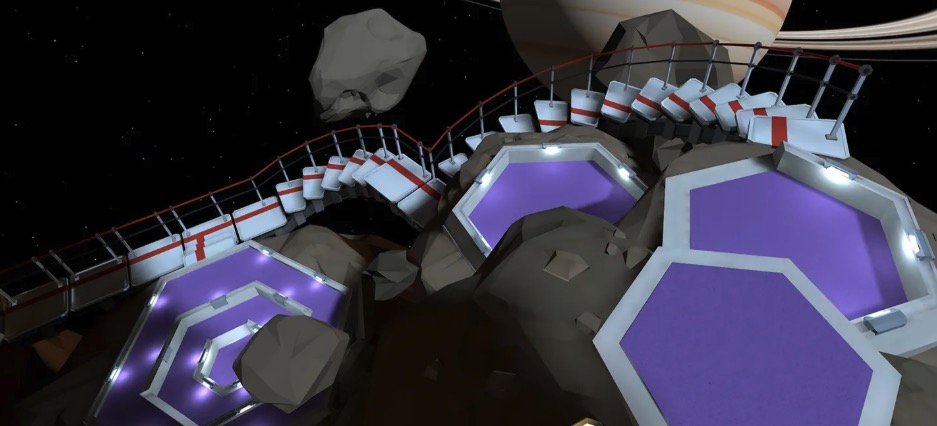
Ultimately, Walkabout Mini Golf redefines VR’s social potential. Where daily puzzles like the NYT Mini Crossword-answered diligently by CNET-serve as cognitive snacks, this game is a feast of shared presence. Its physics engine grounds fantasy in tactile truth, its courses tell stories through play, and its multiplayer weaves global friendships. As VR matures, Walkabout stands as a benchmark: not just for mini-golf, but for how digital spaces can nurture genuine human connection, one putt at a time.
From Ephemeral Puzzles to Enduring Playgrounds
CNET and The New York Times didn’t just praise Walkabout Mini Golf-they spotlighted a revolution. Where daily crosswords (think ‘ADHD’ clues on January 12) fade at midnight, Walkabout builds worlds that stick. It’s a ‘third place’ where my friend in Tokyo and I meet weekly, our avatars high-fiving after sinking a tricky putt on the pirate course. This isn’t VR fluff; it’s a blueprint for connection that outlasts any fleeting puzzle, transforming solitary screens into vibrant social hubs.
Here’s your move: slot Walkabout into your calendar like Tuesday tacos. Use cross-platform play to bridge gaps-schedule a 7 PM tee time with your college buddy in Berlin. Skip the solo Strands puzzle; join a public lobby instead. (Pro tip: disable haptic feedback with third-party straps-inconsistent vibrations once threw my swing off by 20 degrees.) The spatial audio lets conversations flow naturally; I met a retiree in Arizona last month, and now we’re course-design buddies, sharing sketches over voice chat.
The lesson for VR? Walkabout’s physics engine-90Hz smooth on Quest 2-pairs realism with whimsy, creating sticky experiences. Amid Steam’s hidden gems (PC Gamer covers dozens weekly), it stands out with relentless updates: 8 new courses in 18 months, and live events like Halloween tournaments that pulled 50,000 players for exclusive avatar hats. Developers, take note: simulate authenticity, but weave social threads. This model could turn isolated adventures into thriving digital towns, where players become residents, not just visitors.
For sustained engagement, monitor the in-game event calendar: last summer’s ‘Solstice Scramble’ added temporary night courses, boosting player retention by 25% for the quarter. This isn’t just content; it’s community glue.
Your next step? Look past the headset. Walkabout proves VR’s best use isn’t escape-it’s enrichment. Transform screens into shared landscapes. As daily puzzles reset, this game offers a timeless hunt for togetherness. Embrace it as a tool. Build richer bonds in a fragmented world, one putt at a time. Start tonight: download it, invite a friend, and watch a virtual green become real common ground-where laughter echoes longer than any high score.