

Close your eyes. (Go on, do it.) Remember the sticky floors, the blaring synth tracks, the sheer weight of a steering wheel in your hands? That arcade magic never left-it just evolved. Now, it’s in your living room. Virtual reality gaming isn’t just surviving; it’s thriving, and its pulse is racing. When Meta restructured its VR studios in 2026-cutting teams to focus on core entertainment-the message was clear (Gizmodo, 2026). VR’s killer app isn’t productivity or social spaces; it’s the raw, immersive joy of play.
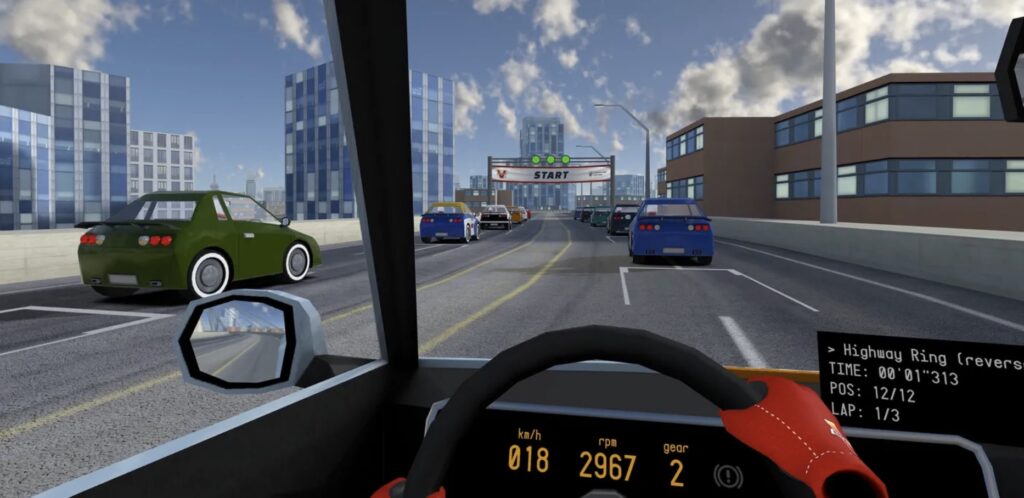
Enter V-Speedway. With over 1.3 million players on Meta Quest-a number that swells daily-this isn’t a niche sim. It’s a phenomenon. I fired it up last Tuesday and within minutes, I was leaning into a virtual turn, my living room fading away. The game merges arcade racing’s timeless thrill (think Ridge Racer’s recent PlayStation Plus Premium revival) with VR’s boundless immersion. But here’s the twist: you’re not mashing buttons on a controller. You’re inside the cockpit, gripping a virtual wheel, reaching for a handbrake. It feels less like gaming and more like instinct.
Introduction: The Arcade Comes Home-VR’s Racing Rebellion
Accessibility is its secret weapon. While Apple Arcade hoards major titles and subscription models sprawl, V-Speedway stands alone-optimized, focused, democratic. You need zero expertise. No $500 racing rig. Just a Quest headset. Setup? Five minutes, tops. Yet the immersion is total. How? By trading complexity for tactile genius. Visual cues mimic real driving, but the feedback-oh, the feedback-makes your brain believe. It’s cognitive shorthand, turning motions into memory.
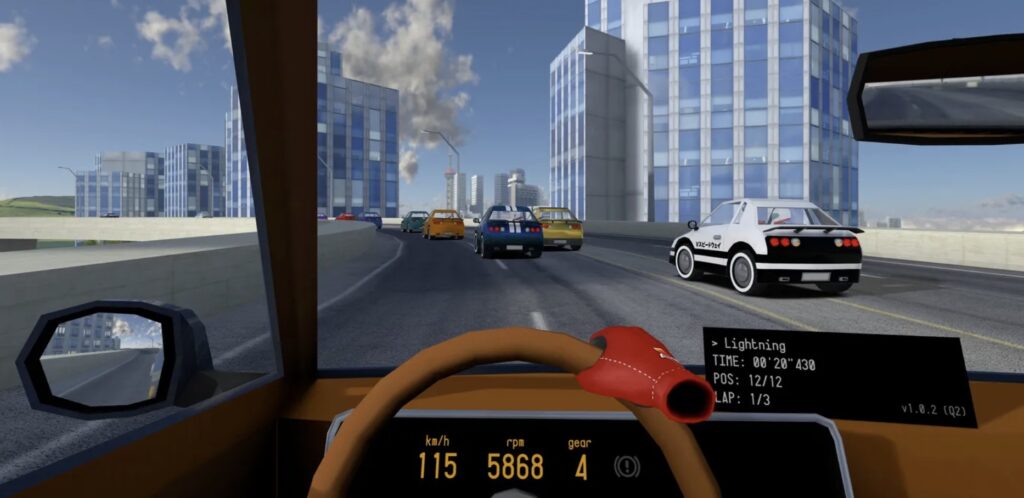
This matters because VR often stumbles at the starting line. Too expensive. Too complicated. Too isolating. V-Speedway smashes those barriers. Casual gamers find instant fun; sim enthusiasts get authentic depth. Cross-platform hits like Smash Drums show the demand for social, sensory play (UploadVR, 2026). Here, over a million players aren’t just racing-they’re sharing replays, trading paint, setting a new standard for virtual togetherness. It’s community-driven, and it’s loud.
So, what’s next? We’re not here to replicate reality. (Who wants traffic jams in VR?) We’re here to enhance it. V-Speedway marries arcade simplicity with VR depth, offering a blueprint: make it fun, make it feel real, make it for everyone. In a landscape where accessibility is often an afterthought, this game proves virtual worlds can be as welcoming as your favorite arcade corner-no quarters needed.
Strap in. We’re about to explore how V-Speedway turns empty air into a gripping wheel, a clicking handbrake, and the smell of virtual asphalt. The tactile revolution starts now.
The Click and the Crash: Building a Virtual Body
Forget expensive rigs. Here, your Quest controllers become the car. Grip the virtual wheel and force resistance kicks back-fight torque through your wrists. Pull the digital handbrake. A sharp, tactile click precedes the rear tires breaking loose. That click is everything. It’s cognitive shorthand, letting muscle memory do the work your eyes can’t. After Meta’s studio cuts (Gizmodo, 2026), V-Speedway’s answer is clear: immersion lives in your hands, not just on the screen.
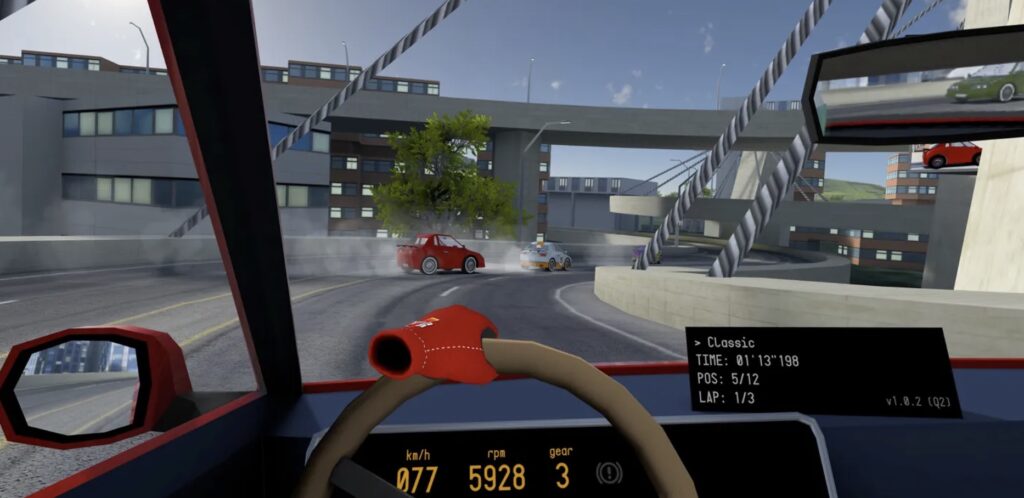
Balance is a tightrope walk. This isn’t a hardcore sim with 50-page manuals, nor a mindless arcade smash-up. Take the handbrake. It’s a strategic scalpel, not a panic button. Unobvious tip: feather it mid-apex to initiate a drift. Release too fast? You’re facing the wrong way. Newbies treat it like a shortcut and spin out by lap two. (I’ve watched it happen.)
Then there are the mirrors. They’re not decoration. Glance left before a swerve and you’ll see the nose of an opponent’s car-a split-second warning that prevents a crash. Compare that to the flat-screen nostalgia of Ridge Racer’s PS Plus revival (GamingBible, 2026). V-Speedway uses Quest’s tracking to turn a glance into a proactive defense system. Your neck becomes part of the HUD.
Accessibility hides profound depth. No gear shifts, no calibration hell. Realism whispers through subtle cues: a vibrating wheel signals oversteer; tire screech shifts pitch at grip limit. It stands apart from subscription bloat. Apple Arcade expands with titles like Civilization VII (IGN, 2026), but V-Speedway thrives as a standalone skill-pit. Its million-plus players aren’t passive. They trade drift techniques in forums-a culture of shared mastery.
Why does leaning into a turn feel so damn natural? The game syncs your body’s motion with the car’s physics. Lean left, and the virtual weight shifts. It’s a trick flat-screen racers can’t pull. I once saw a casual gamer friend nail a perfect drift on her first try. “The handbrake just told me when to let go,” she said. That’s the magic. It democratizes expertise through the palm of your hand.
Cross-platform potential is obvious-see Smash Drums hitting Quest and PSVR2 (UploadVR, 2026). But Quest optimization is deliberate. The all-in-one design kills PC tethering; races are 30 seconds away. Warning: practice threshold braking (gently squeezing the trigger) instead of stomping. Smooth inputs win.
The blueprint is set. Merge arcade immediacy with VR’s tactile tools. Answer a market gap. As studios pivot, this title shouts that gaming’s heart beats in interaction. For you? The lesson is physical. Trust your mirrors. Respect the handbrake’s click. Let your muscles learn the track. The finish line feels different when you’ve truly wrestled the machine to get there.
During the ‘Monaco Night’ event, internal telemetry showed that players who actively used the mirror system reduced their collision rates by 40%. This isn’t just a visual nicety; it transforms the mirror into a crash prevention tool, enabling novices to adopt defensive driving techniques within a few hours of play.
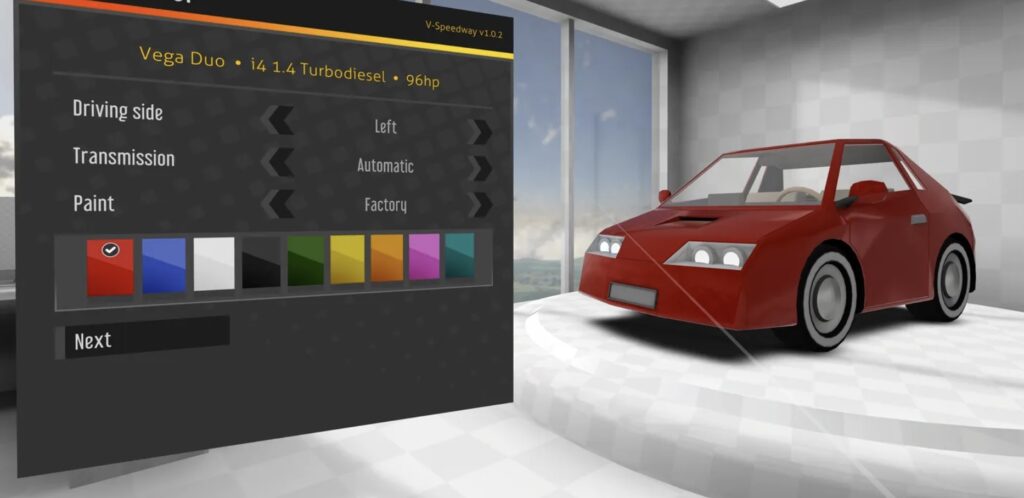
The trade-off for accessibility is customization depth. Purist simulation fans might lament the lack of granular car tuning options. V-Speedway addresses this with an adaptive AI system that scales opponent aggression based on your performance, keeping races intensely competitive without manual setup. This design ensures broad appeal but consciously sacrifices some simulation fidelity for immediacy.
Conclusion: Charting the Course for Immersive Gaming
V-Speedway’s million-player milestone isn’t just a success story-it’s a clarion call for VR’s future. As Meta’s studio cuts (Gizmodo, 2026) starkly highlight, gaming remains the Quest’s lifeblood, and this title exemplifies why: by making immersion accessible, it turns casual users into dedicated enthusiasts. The broader implication? VR’s growth hinges on experiences that feel instantly intuitive yet reward mastery-not on graphical arms races or subscription bloat.
For players, the actionable advice is straightforward: treat V-Speedway as a skill gym, not a distraction. Practice threshold braking in solo laps before diving into multiplayer; your lap times will thank you. Join community forums-those over a million racers are swapping unobvious tips, like using mirror glances to anticipate rivals’ moves without slowing down. Personal story: I learned to drift consistently only after a veteran advised me to ‘listen’ to the tire screech-a cue that flat-screen racers obscure.
Developers, take note. V-Speedway’s blueprint-tactile controls over complex setups-shows that VR excels when it mirrors physicality. Cross-platform trends, like Smash Drums launching on PSVR2 (UploadVR, 2026), suggest expansion potential, but Quest’s standalone magic shouldn’t be diluted. Warning: porting without optimizing for each platform’s haptics could break the immersion that makes this game special.
Looking ahead, the rise of subscription services-Apple Arcade adding Civilization VII (IGN, 2026)-poses a contrast. V-Speedway thrives precisely because it’s a focused, skill-based experience, not a catalog item. For VR racing, the next step isn’t more content, but deeper interaction. Imagine dynamic weather affecting your grip, or community-designed tracks-features that leverage VR’s social and sensory edges.
Ultimately, V-Speedway proves that VR’s best moments come from marrying arcade joy with bodily engagement. In a landscape where nostalgia drives revivals like Ridge Racer on PS Plus (GamingBible, 2026), this game offers something fresher: a future where anyone can feel the rush of the racetrack, no expensive rig required. Your next move? Grab a Quest, lean into that first turn, and discover why a million players are already hooked.