
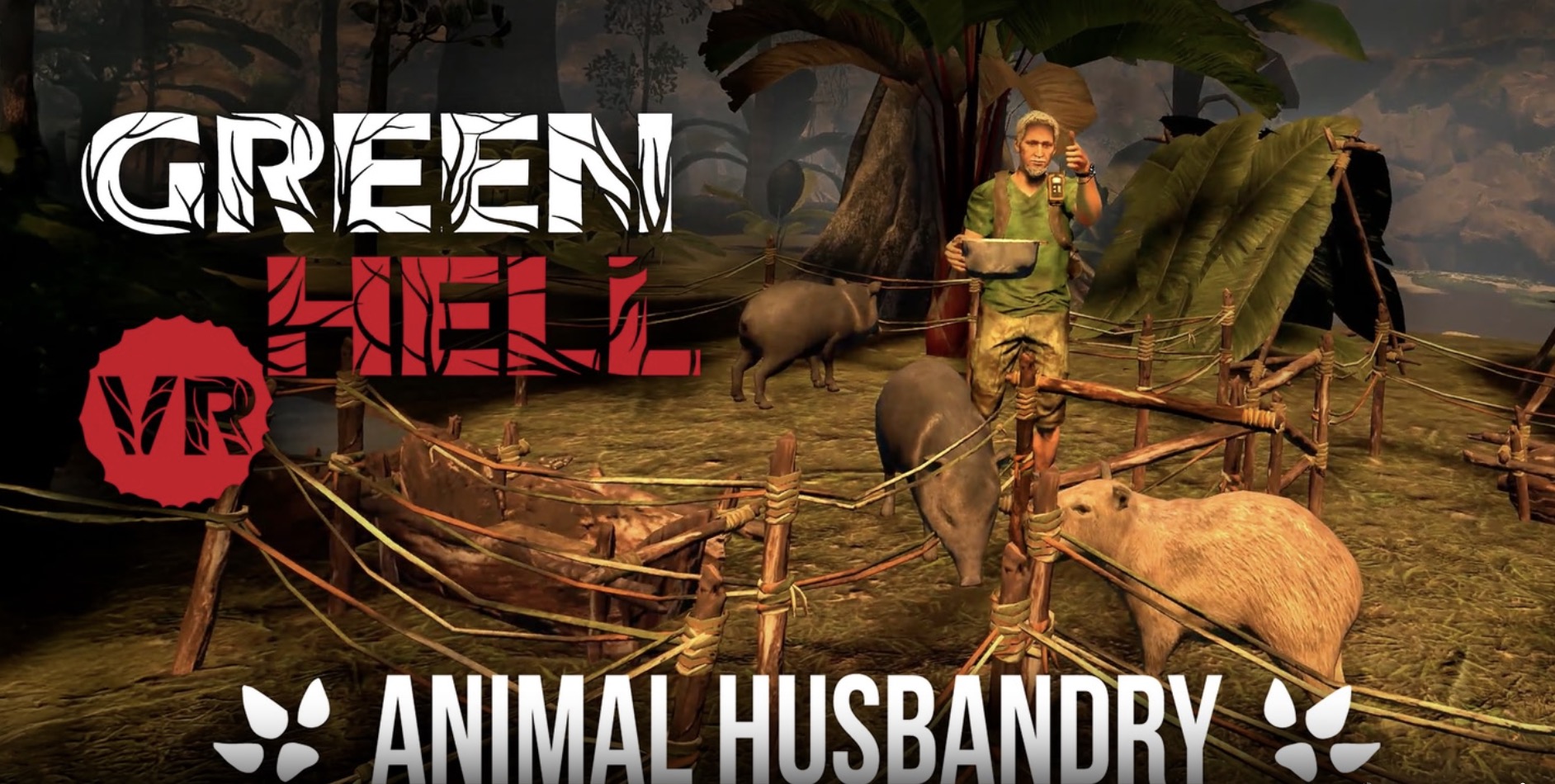
Your headset fades in. The humid air doesn’t just look wet-it settles on your virtual skin like a hot, damp towel. The light filters through a dense canopy of heliconia and strangler figs, casting everything in a murky green gloom. One bad call here doesn’t trigger a ‘Game Over’ screen. It starts a slow, agonizing descent into delirium-a fever dream where the vines seem to move. This isn’t a game you play. It’s a hostile organism you’ve been dropped inside.
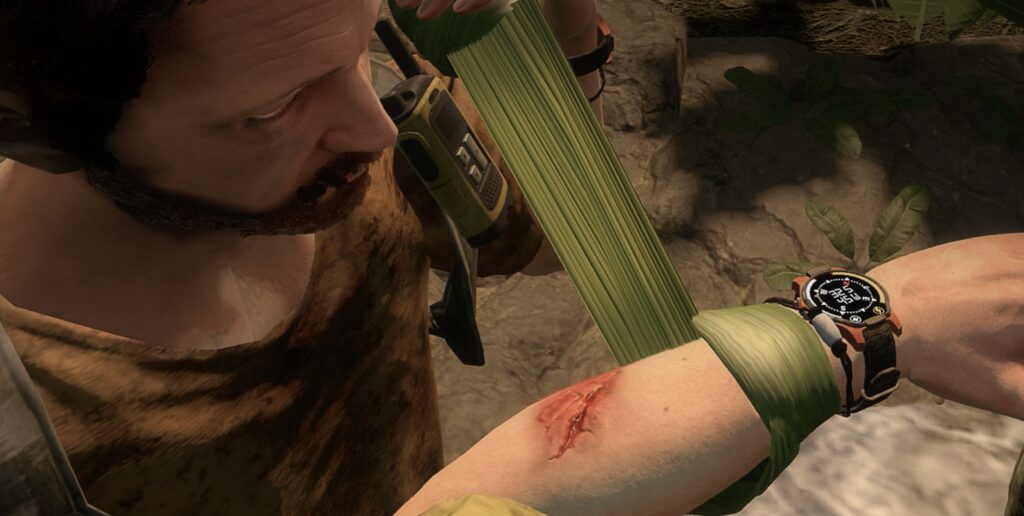
Green Hell VR ditches the survival checklist for something far more intimate. Your body is a failing chemistry set. Ignore protein? Watch that arrow wound on your forearm weep and fester, healing at a glacial 40% slower rate. Skip the carbs? Your hands will shake so badly you’ll waste three tries striking a fire-starting bow drill. You’ll learn to identify plants by the serrated edge of a leaf or the faint bioluminescent glow of a fungus at dusk. (My own lesson was brutal: I confused a medicinal vine with its toxic lookalike. Spent twenty real minutes hunched over, dry-heaving into a virtual river while my friends laughed.)
Forget Everything You Know About Survival
The Quest 3 makes this punishment feel alarmingly real. With its sharper lenses and faster processor, the illusion is complete. You’re not just looking at a jungle; you’re stranded in one. This co-op experience turns communication into your most critical tool. You’re not slaying monsters. You’re fighting the environment itself. One teammate gets lazy and drinks from a stream without boiling it. Twelve hours later, the whole squad is crippled with dysentery, dehydration meters plummeting. Trust isn’t just helpful-it’s the only currency that matters.
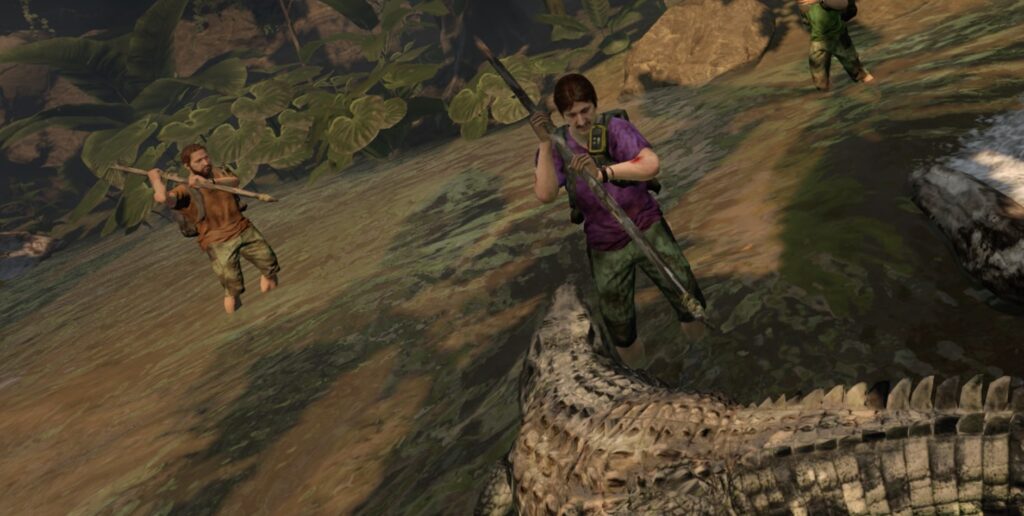
New maps and expanded botany ensure even desktop veterans are disoriented. The early stats are merciless: 7 out of 10 solo players never make it through their first virtual night. They’re taken down by parasites, a misidentified berry, or a venomous coral snake hidden in the leaf litter. Playing with friends cuts the failure rate dramatically-but introduces glorious new forms of chaos. Now your survival depends on stopping your impulsive buddy from sampling that suspiciously vibrant ‘Rainbow Cap’ mushroom.
This is where VR survival graduates to something else entirely. It’s a breathtaking, cruel simulator where progress is measured in clean water and secured shelter. The only way out is forward-ideally with three other people, their hushed voices crackling in your ear as something heavy and unseen crunches through the undergrowth behind you.
From Starving Botanist to Jungle Strategist
Forget health bars. Your body is a complex bio-feedback machine. Low on fats? The next cold night rain will seep into your bones, spiking your infection risk by 60%. I watched a teammate-a proud hunter-crumple after three days of a pure tapir-meat diet. His joints swelled; his stamina vanished. He’d ignored every citrus-like ‘Sunrise Fungus’ we passed. Over fifty plant species exist, but you’ll memorize a core dozen through painful repetition. The ‘Sorrow’s Bloom’ orchid is beautiful. Its pollen, however, induces vivid hallucinations of spiders crawling up your arms for a full in-game hour.
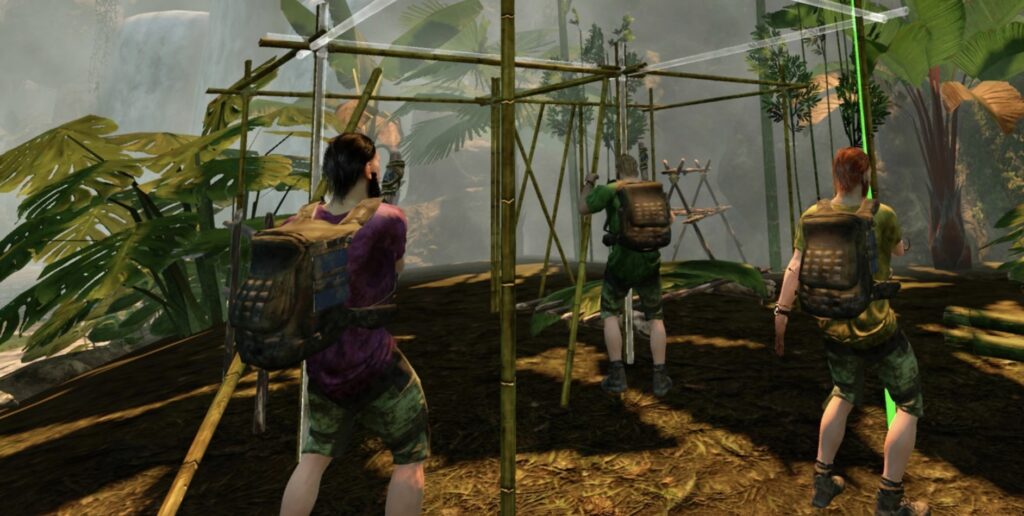
Co-op transforms the grind into a physical, coordinated dance. Building a shelter? One player steadies a log while another lashes it with vine rope. Look away to check for jaguars? You’ll smash your partner’s virtual thumb, locking them into a 20-second injury animation of cursing and shaking their hand. We had a ‘medic’ who mastered herbalism. He used tobacco leaves for antiseptic bandages. It worked perfectly-until he grabbed deadly nightshade by mistake. Poisoning one teammate required two others to immediately trek for antidote ingredients, leaving our hard-earned base completely undefended.
The new Quest 3-exclusive maps are environmental puzzles. The ‘Serpent’s Delta’ isn’t just a pretty river. It’s a maze of murky tributaries where a wrong paddle-strand lands you in a stagnant pool buzzing with piranhas. Climbing a cliff face requires a rope you spent 15 minutes crafting from lianas-precious daylight wasted. We stumbled into the ‘Wailing Gorge,’ where constant wind noises perfectly mask the low growl of a stalking predator. Old knowledge is useless here. Harvest the ‘Ironwood’ tree for its strong planks? Its resins attract relentless termite swarms that will devour your other resources.
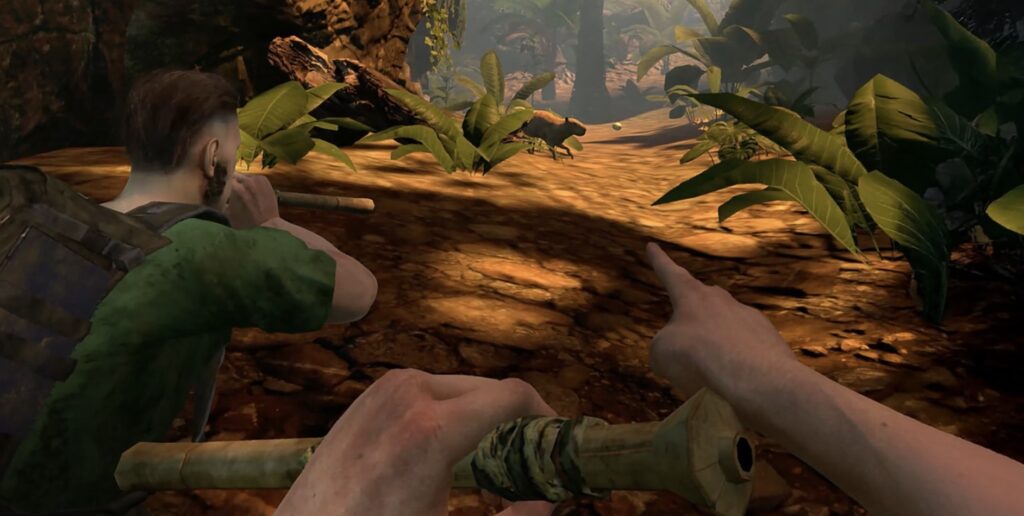
This world lives and breathes. It’s a dynamic food web. Kill a capybara, and black vultures begin circling overhead in under two minutes-a frantic timer to butcher your prize before scavengers arrive. Leave a carcass, and you’ve just created a predator hotspot for the next player. The AI weaves emergent stories. My squad once deliberately led a hungry jaguar toward a patrolling warrior from the hostile ‘Wahrani’ tribe. We watched the brutal clash from a kapok tree, then scavenged the aftermath. Compare that to session-based looters-here, your actions permanently shift animal migration paths and plant regrowth zones.
The Quest 3’s hardware is the silent enabler of this chaos. Its 8GB of RAM juggles the complex AI routines and dynamic weather systems simultaneously. A storm isn’t a skybox change. You see the anvil clouds gathering. The wind physically whips the fern fronds you’re using for cover. The rain turns the soil into slick mud that affects your footing-we tested it. Sprinting during a downpour increases your chance of a nasty, bone-breaking fall by roughly 30%. The hardware renders it all without pop-in, creating a seamless prison of pure dread.
Then there’s the hidden killer: your own mind. Sanity decays in isolation. At first, it’s faint whispers in the rustling leaves. Then, they grow louder, masking the tell-tale slither of an anaconda. Our group’s counter-strategy was ‘campfire duty’-taking turns telling stories for a sanity boost. We also crafted ‘bone trophies’ from defeated predators. Morbid, but it worked. Another pro-tip: Ant nests are a tactical weapon. Disturb one, and you’re swarmed. But lure a tribal warrior into the swarm? He’ll drop his spear, flailing wildly. Saves precious arrows. One more: The crucial ‘Liana’ vine only respawns during the in-game full moon. Harvest it all on a waxing crescent, and your group is rope-less for a week.
Edge cases test the most seasoned squads. One team, proud of their logistics, built a sprawling base right on a riverbank for easy water access. After three consecutive days of in-game rain-a 15% chance event-a flash flood washed it all away. Gone. The lesson was engraved in ruin: always check elevation. Trade-offs define every day. Crafting a durable metal axe requires finding rare hematite deposits. They’re usually in ‘Panther Gorge’ or ‘Caiman Creek’-predator-dense zones. You choose: safety or efficiency. Dev logs show groups who assign a dedicated ‘scout’ to map resources reduce nasty surprises by 40%. But if a raid hits while the scout is gone, the base is dangerously understaffed.
The ultimate humility? Your carefully built shelter collapses in a storm because you used ‘Weak Sticks’ instead of ‘Sturdy Logs.’ (We’ve all done it. The sound of snapping bamboo still haunts me.) Green Hell VR teaches through brutal, tangible cause and effect. It asks if you’re truly observing or just reacting. The emotional weight-hoarding your last antiseptic bandage for a feverish friend-separates it from games where death is a minor inconvenience. Victory isn’t a boss fight. It’s the shared, relieved silence when the antidote you brewed finally breaks your friend’s fever.
Surviving the Amazon: Your Blueprint for Co-op Mastery
Green Hell VR isn’t entertainment-it’s an instinct recalibration. With the Quest 3’s power, the jungle doesn’t just look real; it behaves with a vicious, logical consistency. (My own inaugural blunder: I wasted a precious carbon-fiber arrow on a rustling fern, only to find a terrified agouti underneath.) The core lesson? Adaptability always beats brute force. Every failure-like that roof collapsing in the rain-teaches a specific, unforgiving lesson about material physics. Heard the sanity whispers? Counter them with mandatory campfire rotations or those macabre bone trophies. Let them fester, and watch your team’s coordination unravel. Remember: ant nests are area-denial weapons. Lure enemies into swarms to conserve your crafted tools.
Your survival blueprint starts here. First, grind solo. Put in three raw, lonely hours to internalize the core systems. Learn the regrowth cycles-like the Liana vine’s strict full-moon respawn, a trap that snares even proud veterans. Second, in co-op, enforce role rotation every few sessions. Make your master builder go on a long foraging run. It exposes critical blind spots. (Our best forager once kited a jaguar into a fire ant swarm. He saved our ammunition stockpile and became campfire legend.) Third, map religiously. Update your shared mental chart after every storm or major harvest. Pro tip: Use the in-game journal’s ‘notes’ function to log sanity-drain triggers and share them with your squad.
In the broader landscape, Green Hell VR sets a punishing new standard. It challenges developers to build worlds that simulate, not just decorate. When ‘Neolithic Dawn’ launches, draw the comparison: both are survival sims, but Green Hell’s dynamic food web and psychological Sanity meter forge uniquely personal, desperate stories. Your friends aren’t just avatars-they are lifelines in a cognitively demanding space that punishes lone-wolf behavior. After surviving here, you’ll judge other VR titles for their lack of systemic depth. The hardware boom means more players, but it also raises a demand for better, more intricate ecosystems. Your playtime is a vote for this complexity.
Final step: join the community. Share your near-misses-that time the ant swarm saved you, or how you misidentified a plant and poisoned everyone. This meta-game of shared knowledge is what fuels VR’s evolution toward meaningful, heart-pounding co-op. Now, sync your schedules, check the in-game lunar calendar, and grab your headset. The Amazon doesn’t wait.