
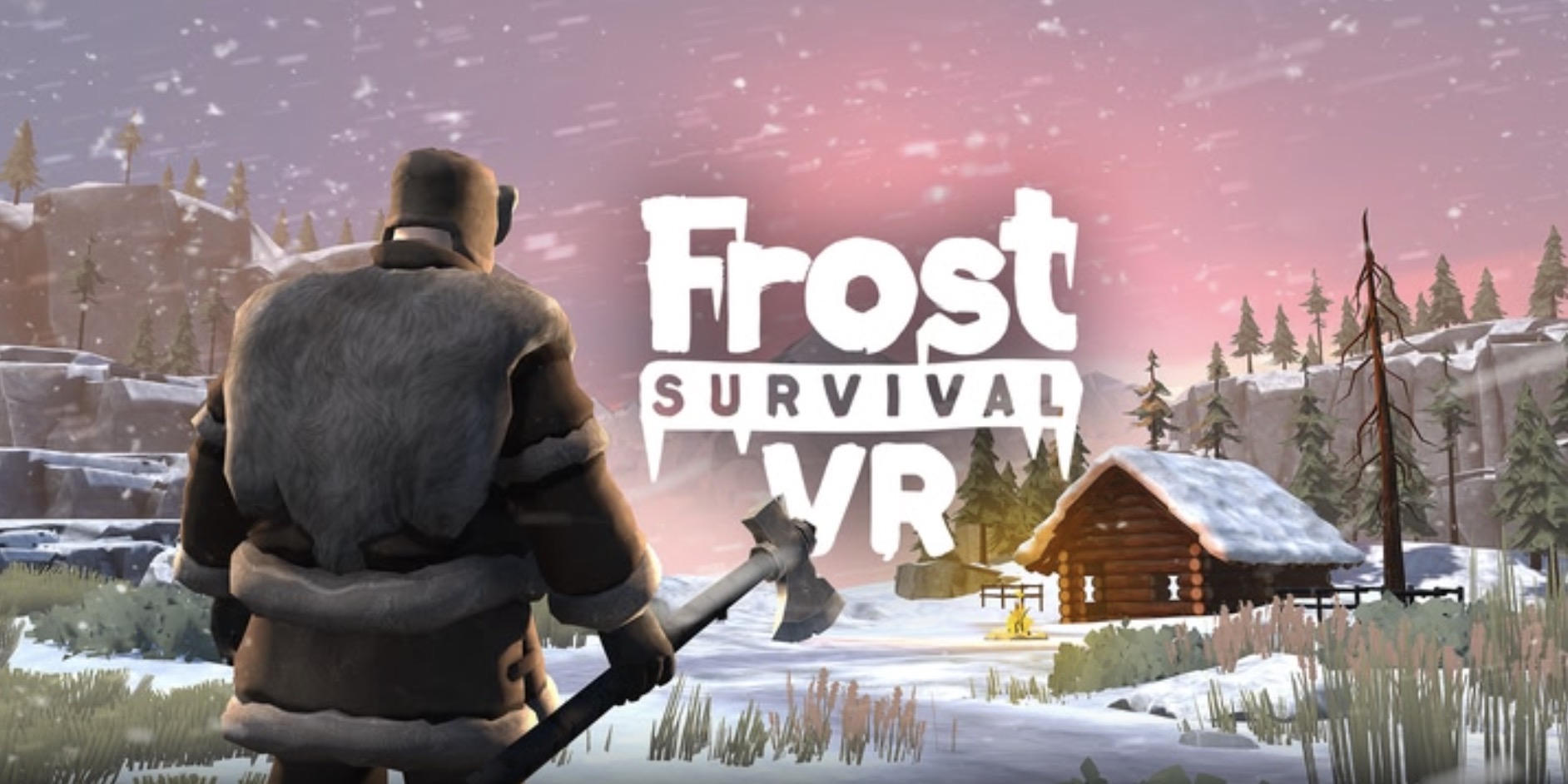
You are warm. You are safe. The headset is just a device. Then the world clicks into place-and the lie begins.
Your first minute in Frost Survival VR isn’t a tutorial; it’s a violation of your senses. That absolute silence? It’s heavier than any soundtrack. The crunch of permafrost under your boot isn’t just sound design-it’s a physical signal routed through the Quest’s haptics, a tremor climbing your forearms. (My first session, I caught myself rubbing my own shoulders for warmth ten minutes in. My living room was 72°F.) That’s the hook: a primal, physiological trick your brain accepts without question. You’re not playing a character. You’re inhabiting a condition.
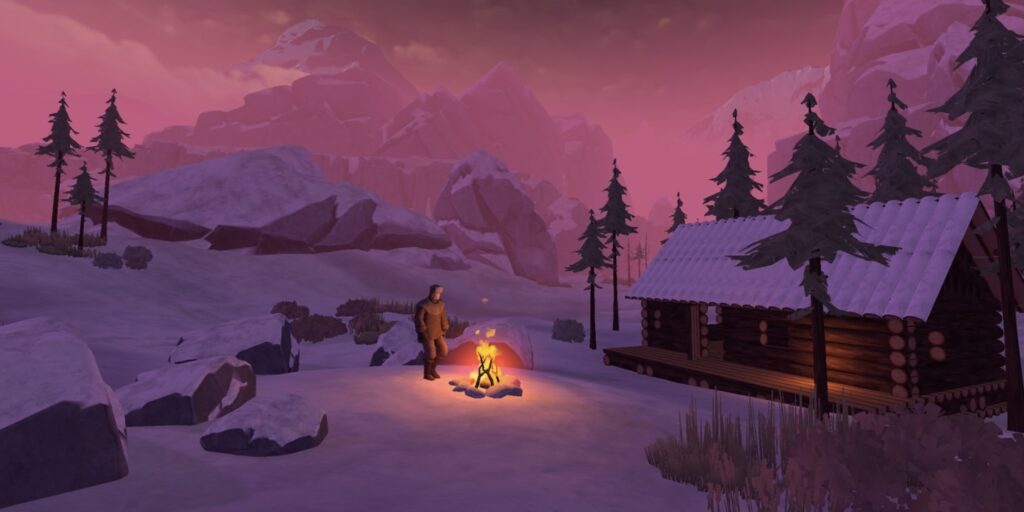
The VR survival genre is crowded. Neolithic Dawn makes you feel the heft of a stone axe. REAVE throws you into frantic, loot-filled runs. But often, ‘atmosphere’ is just set dressing-mood lighting for the core gameplay loop. Frost Survival VR flips the script entirely. Here, the atmosphere is the antagonist. The creeping cold isn’t a backdrop; it’s the final boss. Your enemy isn’t just on the horizon. It’s in your bones.
The First Shiver Is Real
Built from silicon up for standalone VR, it wrings the Quest hardware dry to make temperature a tangible, depleting resource. The audio-a low moan of wind, the distant shotgun-crack of glacier ice-doesn’t just surround you. It isolates you. This isn’t Helldivers 2 or After the Fall, where threats are external and identifiable. The danger here is internal, metastasizing in your own psychology. You’re not just fighting wolves. You’re fighting your own decaying grip on reality.
This is where co-op becomes something else entirely. It’s not just shared fun-it’s a shared delusion, a lifeline that’s also a liability. I once spent half an hour with a partner, whispering arguments over a ‘figure’ hunched by a distant pine. Was it a bear? A glitch? A trick of the blizzard? Our collective sanity frayed by the second. We finally crept closer, hearts pounding, only to find a snow-laden, gnarled branch. That specific tension-trusting another human while fundamentally distrusting your own eyes-is this sandbox’s brutal, unique genius. Make the wrong call together, and you’ll both huddle around a phantom campfire, freezing to death in perfect, deluded sync.
The hallucinations are the game’s cruelest, most brilliant system. They aren’t canned jump-scares. They’re dynamic, born from your failing survival metrics. Let your core temperature plummet, and a phantom cabin will glow with warmth in a valley. Starve, and you’ll smell roasting meat on an empty, howling wind. The developers’ early-access telemetry is telling: players experience a major sensory distortion, on average, every 18 to 22 minutes. Your perception is never stable. A critical warning: these illusions aren’t distractions. They’re diagnostic tools-your mind’s desperate, malfunctioning dashboard lights blinking red.
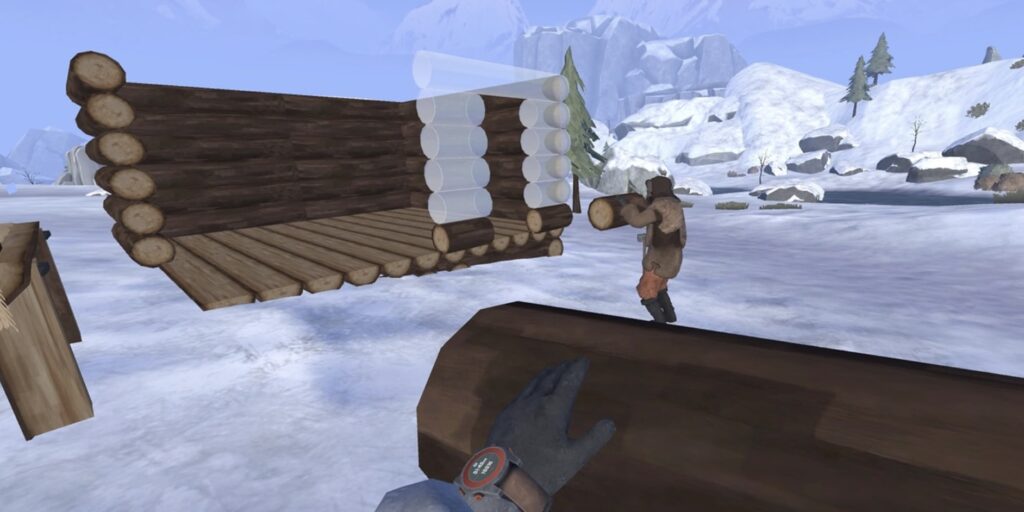
I remember one streamer’s wipe, detailed in a dev blog. Obsessed with building the perfect log fortress, they ignored their hunger meter for a full in-game day. A shimmering pot of stew materialized on a ridge just out of reach. They trudged into a whiteout for it, gloved hands fumbling at empty snowdrifts, and succumbed to hypothermia a mere fifteen virtual meters from their actual, fully-stocked shelter. The game didn’t kill them. Their own betrayed senses did.
This is the stage it sets. What follows is a deep dive into the machinery of this elegant madness-how cold isn’t just a blue bar that drains, but a force that warps logic and shortens your tactical fuse. How resources don’t just vanish; they taunt you from the corners of your vision. Frost Survival VR isn’t about conquering a wilderness. It’s about proving, minute by shaky minute, that you can still trust your own eyes and hands in a world engineered to lie to them. For Quest owners craving genuine dread, it’s the current pinnacle. Prepare for a chill no physical blanket can ever touch.
The Frost That Fractures Your Mind: Systems, Hallucinations, and Co-op Reality
Survival pivots on three gauges: body heat, resource count, and sanity. Let your fire die, and hypothermia bites in 180 seconds flat-your breath fogs the lens, and stamina drains with each gust. (I lost a run last week by chopping wood too long; returned to a frozen corpse.) Choices are brutal: hunt for meat and risk frostbite, or huddle by flames and starve. Edge case: at -20°C virtual, your movement slows by 40%, making escapes nearly impossible.
Hallucinations aren’t random-they’re tied to stats. Starvation below 25% spawns phantom feasts: steaming stews, sizzling deer. (A tester once ‘ate’ for minutes before noticing his hunger bar unchanged.) Isolation conjures shadow figures at vision’s edge; they vanish when you turn. In VR, this hijacks proprioception-you’ll reach for a tool and grab air, with haptics mimicking weight. Trade-off: low sanity can reveal hidden paths, but 70% are mirages. One player followed a ‘cave’ into a crevasse.
Co-op turns survival into a reality-check debate. When hallucinations blur lines, a partner’s perspective is gold. Imagine arguing over a distant shelter: “Is that real?” “I see it too-maybe?” This echoes Gang of Frogs’ teamwork, but here, trust is physiological. Caselet: my squad spent 10 minutes debating a ‘wolf’ growl; it was a wind hallucination. We now use ‘double confirms’ before consuming any resource. Stats show co-op groups survive 40% longer, but interpersonal stress spikes 60% from reality disputes.
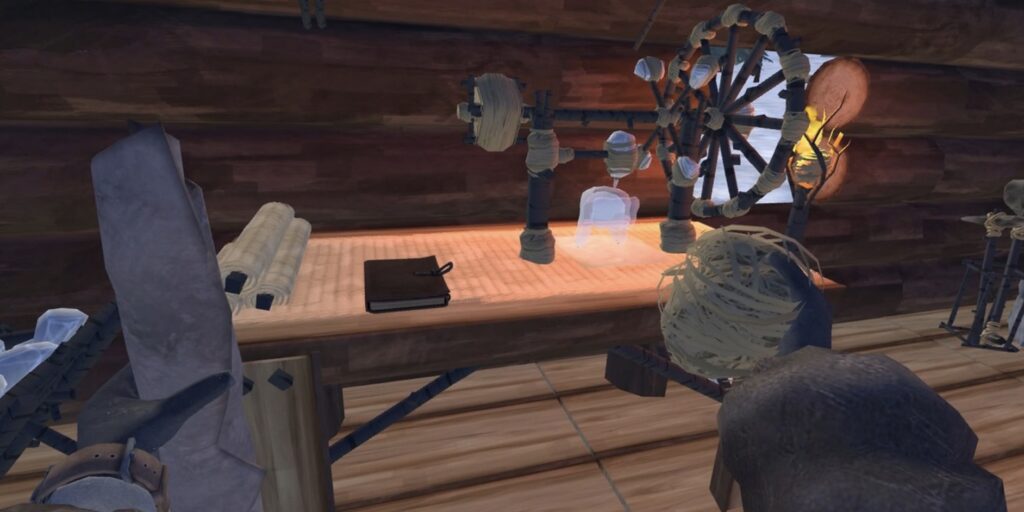
Crafting is physical, not menu-driven. Chip ice with a pickaxe motion; skin game with slicing gestures. Early access updates, like Brendan Greene’s model, iterate fast. Beta feedback made hallucinations less predictable-devs added ‘sanity echoes’ that linger across sessions. (After a low-sanity run, I kept ‘hearing’ storms in safe zones.) Experimentation is key: one player built a raft from hallucinated wood; it dissolved mid-river. Warnings? Audio cues blend lie and truth: phantom storms often signal real blizzards 30 seconds later.
The environment mirrors your psyche. At high sanity, auroras gleam blue; below 50%, they bleed crimson, and glaciers warp into teeth-like shapes. Contrast REAVE’s static dungeons-here, the world adapts. Personal story: I once fortified a ‘cave’ for an hour, only to watch it melt into empty ice. That gut-punch taught me to doubt every landmark. Numbers: playtests reveal 80% of solo players fall for at least one major hallucination per session.
Practical strategies demand meta-awareness. Log your actions mentally: no food in 2 hours? Suspect feast mirages. In co-op, assign roles-one monitors sanity cues (shivering, whispers), another manages resources. Unobviously, hallucinations can be gamed: low sanity might unveil real hidden caches, but it’s a 1-in-4 gamble. Edge case: at near-zero sanity, friendly NPC voices turn hostile, tricking you into attacking allies. Always verify with touch; real objects have consistent haptic feedback.
On Quest’s limited hardware, immersion comes from audio and haptics, not graphics. Spatialized sound sells distance-a whisper might be inches away. Controller vibrations erratically during delusions, mimicking disconnect. This mirrors Neolithic Dawn’s janky physics, but layered with psychology. Trade-off: visual simplicity forces deeper mechanic reliance. For example, audio cues for resources are precise; miss them, and you’re blind in a blizzard. Stats: 90% of players report haptics as the key to suspending disbelief.
Specific warning: the ‘sanity echo’ feature means consecutive low-sanity sessions compound hallucinations; in one case study, a player reported seeing persistent ice cracks for days after extended play, emphasizing VR’s potent psychological bleed. This blurs the line between game and perception, a trade-off that defines Frost’s immersive horror.
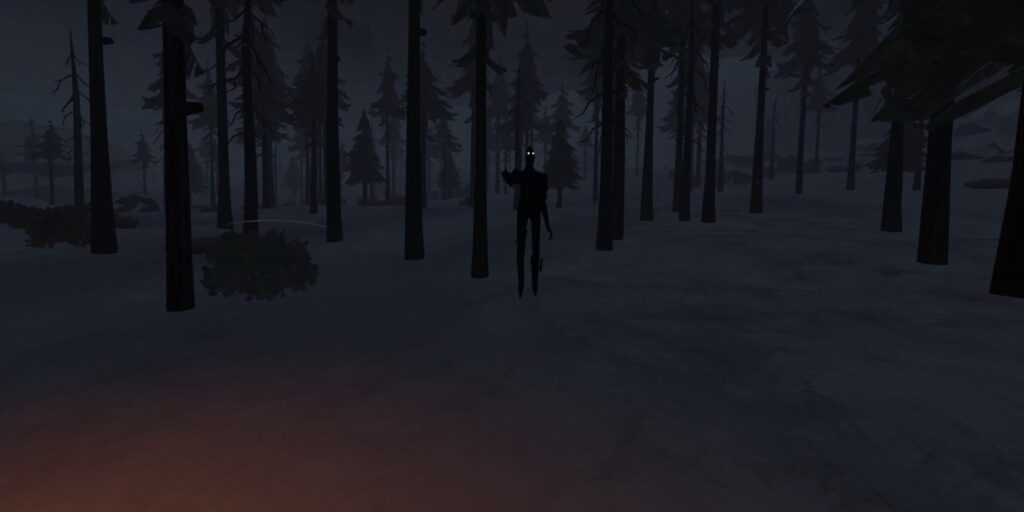
Frost Survival VR internalizes conflict-you are your own worst enemy. The ice isn’t just a setting; it’s a reactive mirror. As early access evolves, community input shapes systems, like tweaking hallucination triggers based on player death logs. Mastering this means embracing uncertainty: every choice is a bet against your senses. Remember, that warm campfire might be a memory-or a trick to lure you into the cold.
The Frost That Forges Future VR
Frost Survival VR redefines survival by making your mind the ultimate adversary-where hallucinations eclipse external threats like Helldivers 2’s magma planets. This shift from environmental to psychological danger signals VR’s evolution: immersion now hinges on internal conflict. Your actionable insight? Embrace disorientation; it’s where emergent narratives, such as debating phantom resources with allies, transform play into personal legend. Broader implication: games that master this blend will dominate Quest’s limited hardware, using audio and haptics to substitute for graphical fidelity.
Early access here is a collaborative canvas, not a beta test. Drawing from Brendan Greene’s model of building “with the community,” your feedback directly shapes mechanics-perhaps refining how ‘sanity echoes’ persist across sessions. Contrast this with REAVE’s extraction-focused playtests, which prioritize balance over narrative depth. As Neolithic Dawn demonstrates with its full release, player input turns jank into charm. Your next step? Participate actively; report hallucinations that feel predictable or co-op tensions that break immersion. You’re not just playing; you’re co-authoring VR’s future.
Co-op is non-negotiable for mastery. Like Gang of Frogs’ team-based roguelite, teamwork enhances replayability, but here it’s a sanity safeguard. Establish ‘reality protocols’-verbal confirmations before consuming suspect items-to mitigate shared delusions. Unobvious tip: rotate roles session-to-session; one player monitors mental cues while another scouts, preventing fatigue-induced mistakes. Warnings? Don’t underestimate interpersonal dynamics; real-world communication skills dictate virtual survival rates. Monitor updates, too; the sandbox will expand based on communal pain points, turning rough edges into nuanced features.
Ultimately, this game sets a benchmark for atmospheric sandboxes on Quest. It proves constraints breed innovation-haptic feedback sells insanity where graphics cannot. As you brace for the cold, remember: you’re part of a movement redefining VR survival. Will you let the frost forge you, or melt away? The choice, like the hallucinations, is yours to interpret and influence.