
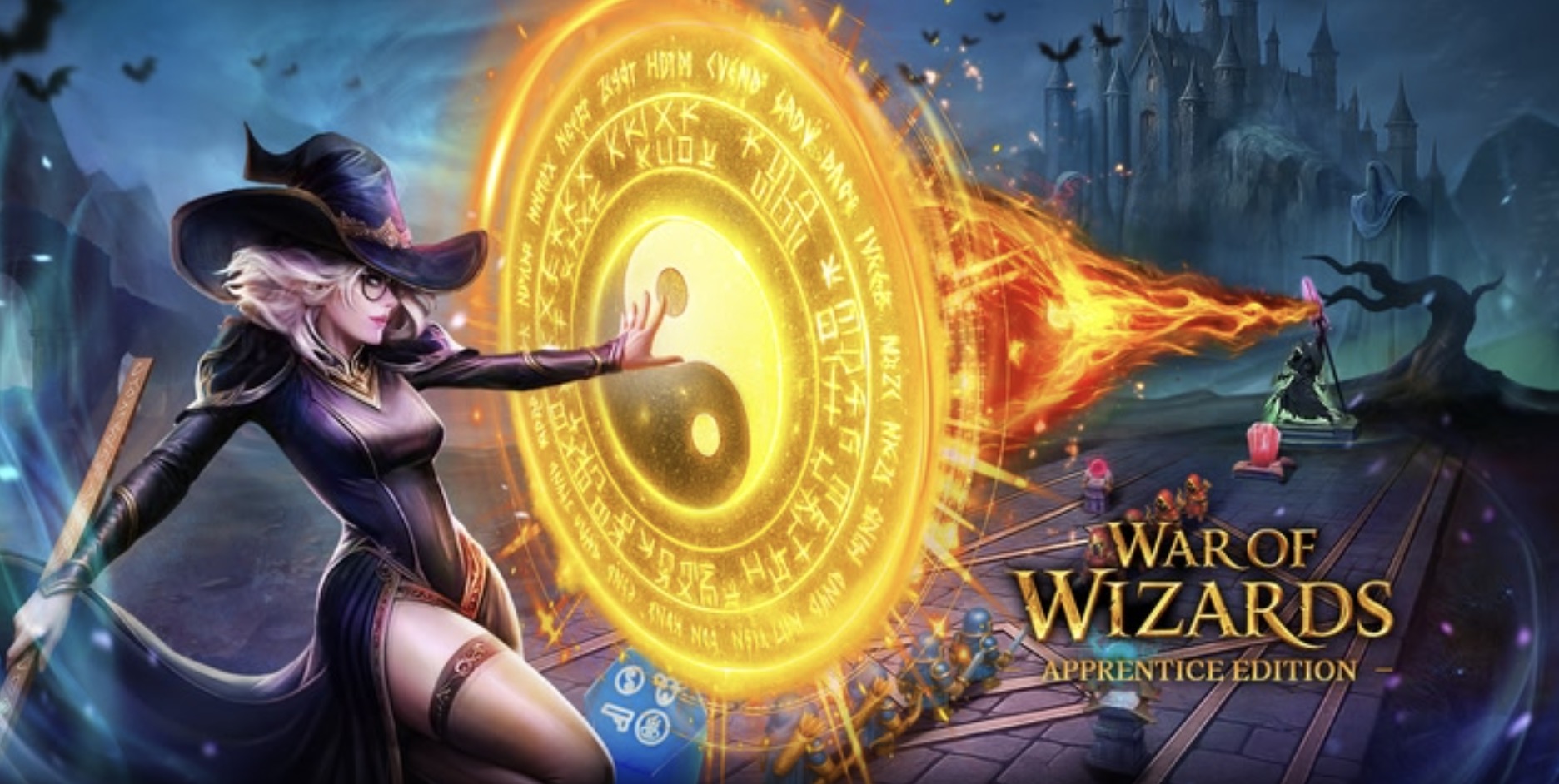
VR multiplayer games are infamous for their brutal learning curves. You fumble with controllers, you face veterans with 500 hours, and you quit after three punishing matches. The UploadVR Winter Showcase just confirmed this-nearly 50 new titles, from intricate squad-shooters like Guardians Planetfall to brain-bending puzzle games like Cues. It’s an avalanche of complexity. Where does a total beginner even start? War of Wizards: Apprentice Edition is the answer. It’s a free VR MOBA with a single, brilliant mission: hook you in the first 60 seconds of your very first duel.
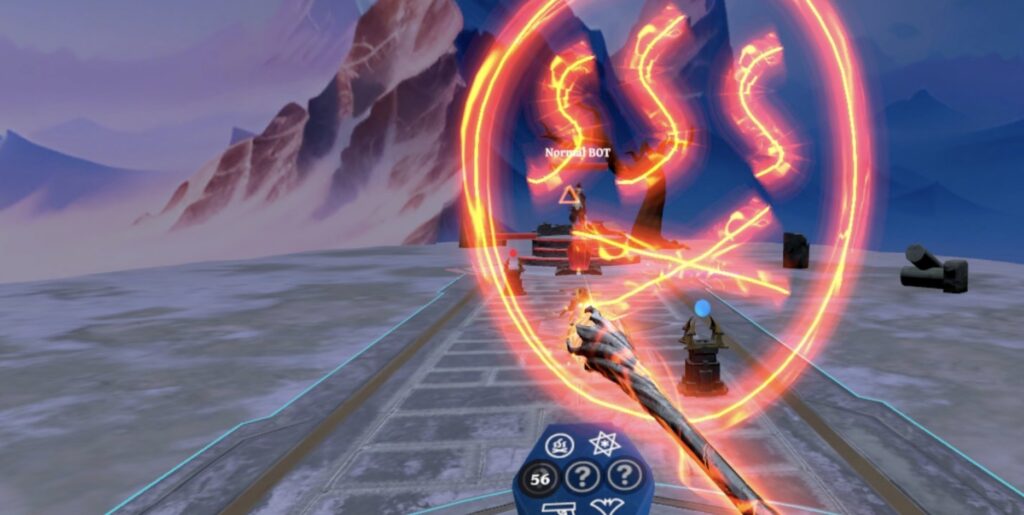
While the showcase celebrated co-op marathons and tactical depth, this game carves a different path. It ditches the dense item shops and complex hero roles of a traditional MOBA-imagine trying to play League of Legends while standing in your living room. Instead, your entire arsenal is in your hands. Literally. You cast spells by drawing ancient runes in the air with your finger. A triangle for a searing arcane bolt. An ‘S’ curve for a healing wave. Magic becomes a gesture, a physical art. That immediate, tactile connection is its secret weapon.
Accessibility in competitive VR is still a myth. This game treats it as a design cornerstone. Its rune-drawing uses hand-tracking tech similar to Cues‘ Creator Mode-precise finger detection without the barrier of controllers. That’s a subtle but revolutionary detail. Your hands are your controllers. And because it’s completely free, there’s zero financial friction. No $40 gamble on a game you might hate. Just download, strap in, and trace your first spell.
Entering the Arena of Accessible VR Magic
Remember your worst onboarding experience? The tutorial that felt like homework? This game avoids that trap. It drops you into a solo duel against a forgiving AI. No teammates to disappoint. No rank to lose. You learn by doing, not by reading. It’s a philosophy shared by user-friendly updates in games like Virtual Skate, but applied to magical combat. You aren’t just playing a wizard. You’re serving an apprenticeship in a world that reacts to the swing of your arm.
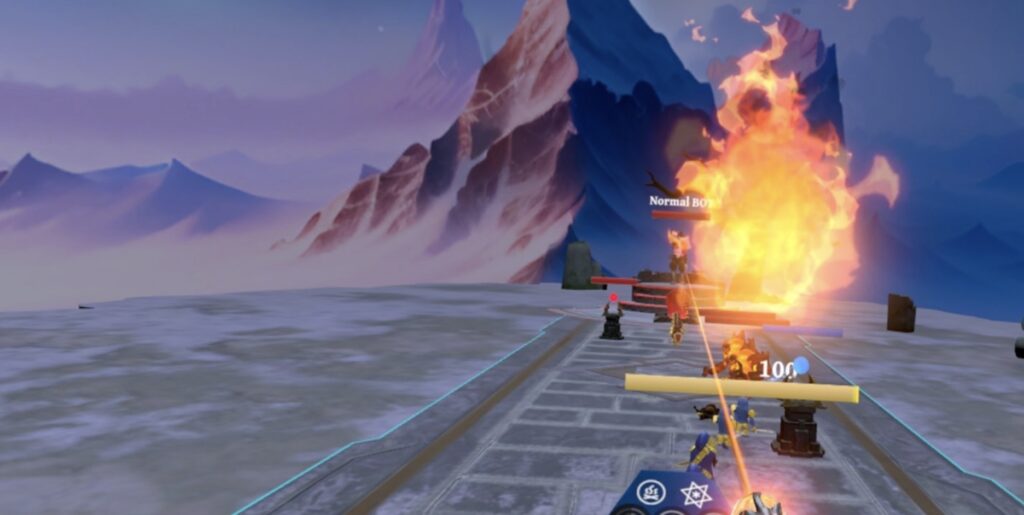
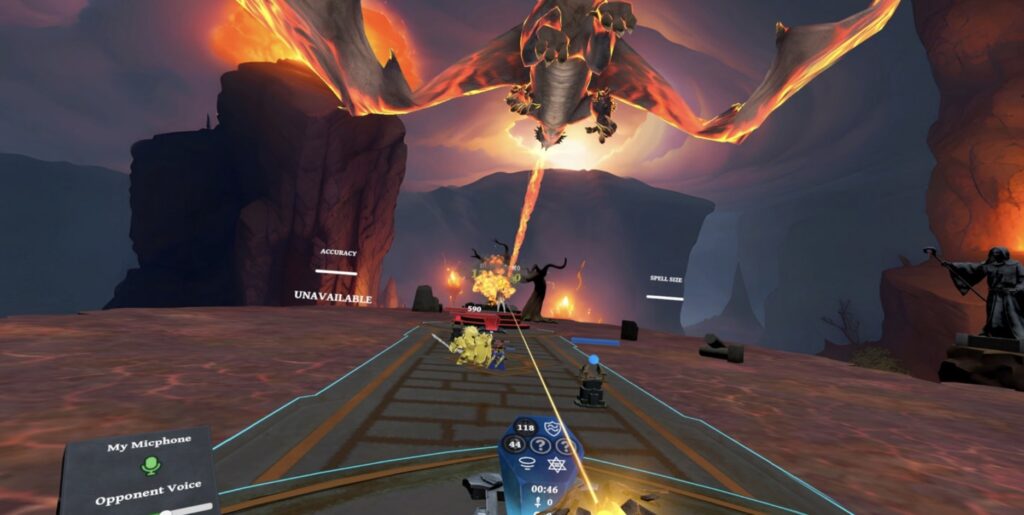
The hook is primal. In my first duel, I shakily traced a fire rune-a simple three-sided shape. It glowed orange in the air, then launched across the arena and exploded against my opponent’s shield. The feedback was instant: a deep thrum in my palms from the haptics, a satisfying crackle in my ears. That loop-gesture, effect, impact-is dangerously addictive. In a sea of VR innovations, this game stands apart by making power feel personal, earned, and utterly immediate. Ready to see how a few scribbles in the air can turn a beginner into a battlemage?
The Gateway is in Your Gesture
Controllers collect dust here. Your first spell begins with your index finger cutting a triangle through empty space. I still remember the phantom tingle-a sharp, electric hum in my wrist-when my sloppy sketch erupted into a crackling arcane bolt. The system doesn’t just track your hand; it judges you. A wobbly, hesitant line drains extra mana for a weaker spell. A confident, fluid stroke? That’s a critical hit. Your arm’s muscle memory becomes your primary stat sheet. Precision is your power.
Compare this to the showcase’s other highlights. Cues uses elegant hand-tracking for its Creator Mode, but you’re calmly stacking blocks. There’s no pressure. Here, an ogre is charging. Stress warps your fine motor skills. I’ve watched a top-tier player botch a basic shielding circle because an ice spike was milliseconds away. Meanwhile, squad-shooters like Guardians Planetfall bury you in controller inputs-grenade button, stim-pack trigger, revive tool toggle. War of Wizards strips all that away. Your entire toolkit is the library of shapes you can draw before your opponent finishes theirs.
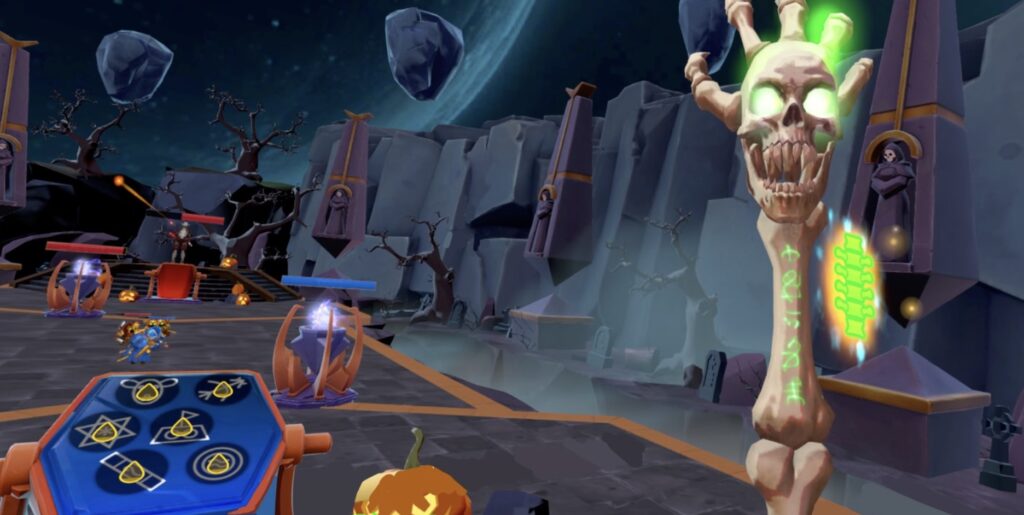
There’s a devious layer of mastery: you can draw any rune backward. The standard fireball starts top-left, arcs right. I spent an hour practicing it starting bottom-right. In a chaotic 3v3 skirmish last Tuesday, my reversed-fireball animation spun out from an unexpected angle. It confused a rival mage for a half-second-just long enough for my teammate’s lightning chain to land. (We clinched the win with our crystal at 3% health.) The game’s true skill ceiling isn’t in unlocking new spells; it’s in the subversion of expected kinetics, turning your body into a weapon of surprise.
Small Arenas, Big Stakes
The MOBA framework here is lean, distilled. Arenas aren’t sprawling jungles; they’re compact, symmetrical domes. You’re never more than ten seconds from a blistering fight. Objectives are brutally simple: shatter the enemy team’s glowing central crystal, or hold three small control zones for a continuous 60-second countdown. This isn’t Dota with its 40-minute marathons, last-hit anxiety, and jungle farming. This is a magical street fight. Fast, loud, and decisive.
This focused design mirrors user-friendly trends-think of Virtual Skate’s recent overhaul-but applies it to pure PvP tension. Unlike co-op roguelikes such as Sol Protocol, where one weak teammate can doom a 45-minute run, your success here is intensely personal. Your shaky hand loses the duel. Your crisp, memorized zigzag wins it. The game empowers the solo player without isolation; you can jump into 3v3 queues anytime, but your core progression is a private journey of gesture refinement. You versus your own muscle memory.
Trade-off alert: The minimalist approach sacrifices long-term strategic depth. You won’t find neutral monster camps, item shops, or super-powered lane creeps. The thrill is purely moment-to-moment, a rapid-fire series of kinetic decisions. For veterans of traditional PC MOBAs, the meta might feel shallow after 20 hours. For VR newcomers-or anyone who just wants to cast spells without a spreadsheet-it’s the perfect, adrenaline-fueled on-ramp. It’s chess, if every move was a punch.
The Science of Muscle Memory
Phased learning is this game’s secret pedagogical weapon. Your first hour is spent in solo duels against an adaptive AI coach. It starts by letting you nail that basic triangle bolt ten times in a row. Then it gently introduces the healing wave (that gentle ‘S’ curve). Only when you’ve shown consistent, calm accuracy does it throw a live, human opponent at you. This isn’t sink-or-swim matchmaking. It’s a virtual dojo, complete with a patient sensei.
Motor learning research backs this structure. Physical rehearsal-the actual act of drawing-boosts skill retention by nearly 30% over passive visual tutorials. Drawing that ice rune over and over ingrains the pathway deeper than any text box ever could. But here’s the critical warning the game doesn’t give you: you must take breaks. Hand and wrist fatigue is a real, precision-killing enemy. I lost five duels in a row during my first three-hour marathon because my dominant wrist cramped mid-cast. The rune fizzled. I got roasted. Now I swear by a strict 20-minute timer. When it buzzes, I drop my arms, shake them out, and walk away for five minutes. My win rate jumped by 15%.
Immersion Through Creation
The magic isn’t in the flashy particle effect-it’s in the nanosecond when your drawing snaps from light into reality. That feedback loop triggers a raw, dopamine-fueled joy flat screens can’t replicate. You’re not pressing ‘Ability Q.’ You’re conjuring. You’re sculpting energy. In a showcase crammed with nearly 50 titles-from punishing soulslikes to cheerful fitness packs-this game stands apart by making power feel earned by your body’s own discipline.
Contrast it with Norse-inspired Crossings (demands immense patience) or the glorious alpha chaos of EXOSHOCK. War of Wizards offers controlled, rewarding escalation. Your progression is visible in the smooth, sharp lines of your arc, not in an experience bar filling up. I have a friend who’s severely color-blind. He struggles with red-green visual cues in most VR games, often missing critical alerts. Here, he competes in the top tier because his success is based on flawless muscle memory and spatial timing. The game’s core language is physical, not visual. It’s a rare and powerful kind of inclusivity.
The Beginner’s Grimoire (Practical Tips)
Slow is smooth, smooth is fast. Rushing a rune often causes a misfire or a pathetic, sputtering version of the spell. A deliberate, practiced triangle consistently deals maximum damage. I once spent a whole session just drawing the lightning zigzag slowly and perfectly. I didn’t win a single duel that night. The next day, I unlocked a hidden variant-a forked, chain-lightning spell-that only triggers from a geometrically perfect cast. Precision unlocks secrets.
Clear your casting prison. Seriously, move the coffee table. Customize your play space for full, unimpeded arm extension. My most embarrassing early loss came because my couch’s armrest clipped my casting arc mid-fireball. The spell fizzled at my feet. My opponent’s didn’t. I learned the hard way. Now I play centered in the room, with nothing but air in a two-meter radius. Your spells are only as good as the space you give them.
The price is its best feature. Free-to-play often whispers ‘pay-to-win.’ Not here. With no financial gate, you’re free to experiment, to fail spectacularly, and to refine without a single ounce of monetary pressure. I’ve watched new players spend their first ten duels doing nothing but practicing the shield rune-a circular motion around their body. They lost every match. By duel eleven, their defense was unbreakable, and they started climbing the ranks. The freedom to fail is the freedom to master.
In a landscape drowning in overwhelming VR complexity, War of Wizards: Apprentice Edition makes a radical, elegant bet: that the deepest satisfaction can flow from the simplest physical act. Strategy isn’t in a menu; it’s in the muscle. Your first spell is already in your hand, waiting in the pathways of your nerves. You just have to reach out and draw it.
From Apprentice to Arena Master – What Comes Next
The UploadVR Showcase’s 50 titles-from Guardians Planetfall’s squad-based chaos to Sol Protocol’s co-op roguelike loops-highlight VR’s incredible diversity, and its steep intimidation curve. War of Wizards: Apprentice Edition is the focused counterpoint. It’s your kinetic primer. While other games assume you’re already VR-literate, this one builds that literacy from the ground up, using rune-drawing as a universal language for virtual interaction. Your progress isn’t tracked in loot drops or cosmetic unlocks; it’s etched into the muscle memory that turns a hesitant flick into a confident, battle-winning cast.
The skills you earn here are directly transferable. The hand-tracking fluency you develop-akin to the precision needed for Cues‘ Creator Mode-prepares your brain and body for any gesture-controlled experience on the horizon. But before you dive into EXOSHOCK’s frenetic alpha tests or the layered tactics of a game like Guardians Planetfall, try this counterintuitive strategy: practice failure. In War of Wizards, intentionally miscast a rune. Learn the recovery time. Feel the penalty. This builds a resilience and adaptability that’s priceless in VR’s unpredictable battles. The free model removes all risk, letting you experiment where other games would penalize you.
Think beyond the magic. The spatial judgment you hone in these small arenas-instantly calculating the arc of a fireball across 20 virtual feet-translates directly to navigating the vast, vertical maps in upcoming titles. When you eventually step into the map editor of Guardians Planetfall or the platforming challenges of VR Giants, you’ll possess a 3D intuition many beginners lack. A personal story: I unconsciously used the rhythmic, controlled breathing I learned from spellcasting to stave off motion sickness in faster, twitchier games. A hack born from an apprentice’s discipline.
Ultimately, this game sets a new precedent. In a showcase filled with complex systems and hardcore challenges, it demonstrates that true accessibility can be woven into the core design, not plastered on as an afterthought. As VR continues to evolve, this approach-free, physical, and fiercely focused on the beginner’s moment of joy-could redefine how we onboard an entire generation of new players. Your next duel isn’t just another match. It’s the first step into every other virtual world that awaits your touch, your gesture, your will. The arena door is open. Your hand is the key.