

You know the precise, sticky resistance of that one kitchen drawer. You navigate the midnight path to the bathroom by muscle memory alone. That deep familiarity used to be your comfort. Now, it’s your primary target. Spatial Zombies doesn’t just drop monsters into your space-it seeds them into the architecture of your life. The guttural groan isn’t coming from a headset speaker. It’s crawling from behind the actual, humming bulk of your refrigerator, a sound vibrating through the floorboards you paid for.
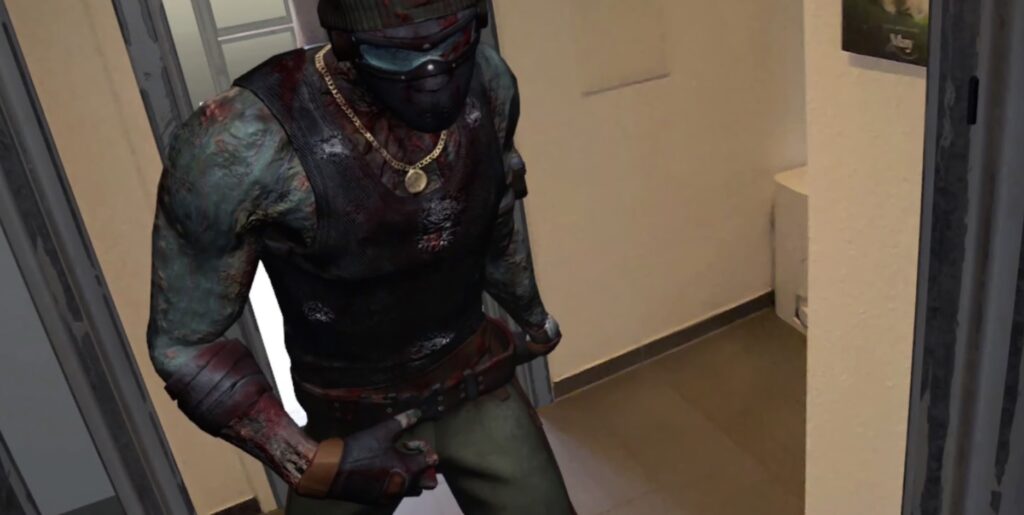
We’ve toyed with MR for years-bouncing digital blocks on real desks. The UploadVR showcase buzzed with slick, fun tech. But this? This isn’t playful. (A lead dev for another studio texted me: ‘It’s a digital home invasion. And your own memory is the traitor.’) Your apartment transforms. Your sofa is no longer a place to nap; it’s a barricade against something shambling past the television stand you assembled last year.
When the Walls Remember Your Fear
Why does this hit so hard now? True horror demands total belief. And what’s more real than the scuff mark on your baseboard, the hallway you’ve paced a thousand times while on hold? The tech here does more than overlay-it grafts digital rot onto your real IKEA Billy bookcase, binding threats to the geometry of your home. That thud from the bedroom? Could be a package delivery upstairs. Could be the game spawning a crawler in your closet. Your adrenal gland doesn’t run a fact-check.
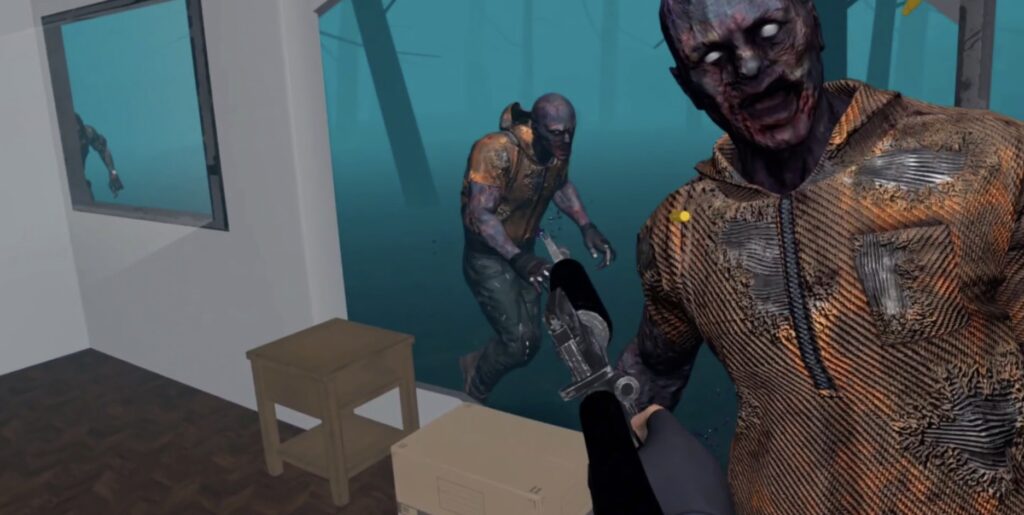
This is the real shift. Screen horror masters mechanics and jump-scares. Mixed-reality horror rewires instinct. Over 1.4 million people tested MR environments last quarter, pushing tech limits. ‘Spatial Zombies’ asks a darker, more intimate question: Can you handle being hunted in the spot where you sip your morning coffee, where you had that pointless argument, where you finally let your shoulders drop at the end of a brutal day?
Early access means it’s raw-sometimes buggy, always unpredictable. A glitch might shatter the illusion. Or warp it into something uniquely dreadful. (My first demo ended with me spinning, heart hammering, to confront my own coat rack. The immersion was total-mortifying, but absolute.) This is the new frontier: your spatial memory, weaponized by algorithms designed to exploit its every shortcut. Let’s walk down that familiar hallway and see what’s learned to wait there.
Deconstructing the Horror in Your Hallway
Forget just dropping zombies in your room. The core terror of Spatial Zombies is its systematic exploitation of your spatial memory. The Quest 3’s pass-through doesn’t just project graphics; it actively scans and analyzes your room’s geometry. It identifies permanent fixtures-your bookshelf, your bed frame, that awkward pillar-and uses them as anchors for procedural horror. A ghoul isn’t just ‘in the corner.’ It’s lurking behind your specific, particle-board bookshelf because the AI knows that’s a permanent visual occluder. Your mental map of ‘safe zones’-the clear path to the door, the space behind the couch-becomes a death trap as enemies respawn based on your own movement heat maps.
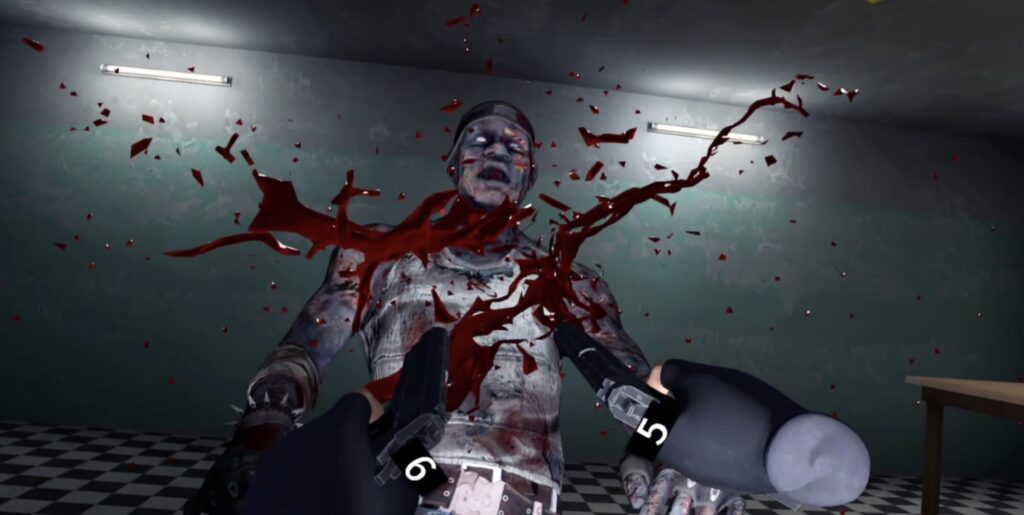
Contrast this with other MR standouts. ‘Dungeons of Dreadrock’ is a charming puzzle adventure. ‘Banners & Bastions’ turns your floor into a predictable tactical grid. Horror demands chaos, and Spatial Zombies delivers by randomizing spawns within your scanned boundaries. While flatscreen greats like ‘Conscript’ refine with hardcore modes, this game refines fear by weaponizing your proprioception. You don’t just remember a zombie’s location; you feel its potential presence lurking just beyond the arm of your actual, fabric couch.
Survival mechanics are built on this brutal blend. Ammo clips spawn on your real coffee table. Health syringes glint on your windowsill. To survive, you must physically reach into those spaces-spaces your lizard brain now screams are compromised. The 3D spatial audio is calibrated to your room’s acoustics. A moan from the digital hallway echoes with the exact reverb of your real one. This isn’t immersion; it’s a hostile takeover of your senses. Early testers report ‘phantom limb’ scares for hours afterward-flinching at empty air. One player DM’d me: ‘I stood outside my own bathroom door for a full minute last night, just listening.’
The broader VR landscape is booming-see ‘Hellsweeper VR’s’ hellish acrobatics. But MR horror remains a razor’s-edge niche. The technical hurdles are immense: shifting light wrecks object tracking; quick head turns blur the pass-through feed into a nausea-inducing smear. Spatial Zombies fights back with adaptive algorithms. In a dim room, zombies become more translucent, ghostly-actually enhancing the dread. The catch? Optimal play demands controlled lighting. A pro-tip most miss: angle lamps away from windows to minimize the tracking-confusing shadows that can break the spell-or create new, unintended horrors.
Player agency here is a double-edged sword. In traditional VR, you escape by ripping off the headset. Here, the headset is your only lens onto the invasion. ‘Quitting’ feels like abandoning your home to the intruders-a powerful psychological hook. The game logs your room’s layout and your death locations, generating a heat map of your personal trauma. It then prioritizes spawns in those high-fear zones. The AI learns where you’re weak. This data-driven haunting is why early access is vital: developers can tune the horror based on how thousands of players react to invasions of their personal sanctuaries. If data shows everyone avoids their kitchen, patch 1.1 might place the only flashlight there.
Practical survival tips go deeper than setup. Use voice commands if your build supports them-shouting ‘Get back!’ at a digital monster crawling over your rug is weirdly cathartic. Physically map your play area: designate that woven rug as a temporary ‘safe zone,’ turn that doorway into a planned chokepoint. Critical warning: remove or cover mirrors. Pass-through cameras distort reflections, creating disorienting doppelgangers of the zombies-or worse, of yourself. And seriously, schedule your sessions. Playing past 10 PM seeded a low-grade anxiety that wrecked my sleep for two nights. A counter-intuitive fix? Cast your view to a friend’s phone. Their external commentary (‘Dude, it’s just by your plant!’) can shatter the tension, turning terror into shared, breathless comedy.
The road ahead is uncharted. Spatial Zombies’ early access mirrors trends-like ‘VR Giants’ entering its own testing phase. But the stakes here are psychological, not just procedural. As MR matures, horror must balance innovation with a kind of digital empathy. Could future updates integrate biometric feedback? Imagine the game detecting a heart-rate spike via smartwatch and momentarily dialing back the intensity-or coldly pushing further. For now, this title is a raw, glitchy, and profoundly effective experiment in what happens when the game leaves the screen and decides to live with you.
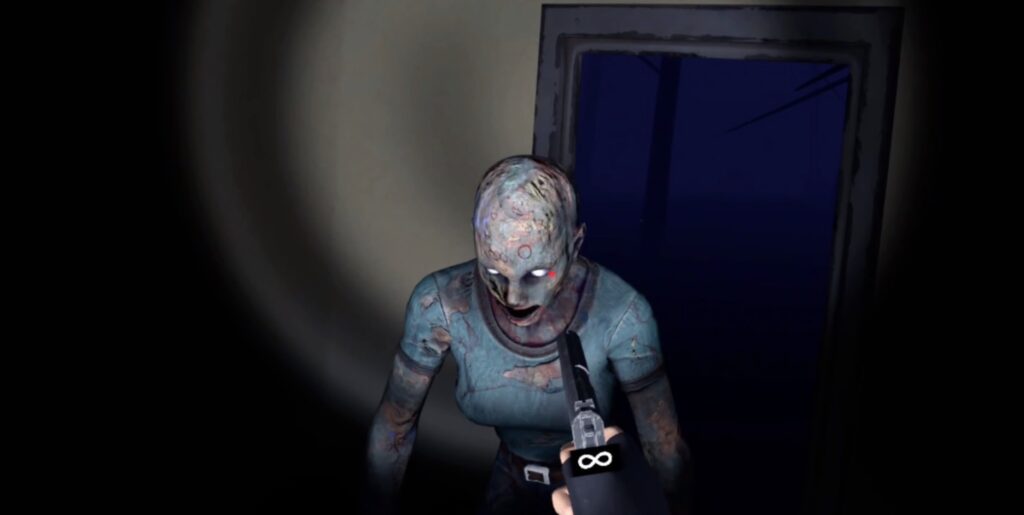
Horror has a new mailing address, and it’s your home. Spatial Zombies doesn’t project threats; it sutures them into the fabric of your daily life. (Last week, a lurker phased through my actual coffee table mid-creep. I spilled a real drink on a real floor. My heart hasn’t fully settled.) While other MR titles build fantasy worlds, this experiment is training AI to exploit your personal sanctuary. Every bug report you file-‘Zombie T-posed inside my refrigerator’-isn’t just feedback. It’s raw data for smarter, more intimately cruel scares.
You’re Not Just Playing – You’re Training the Monsters
The broader takeaway is unsettling. Mixed-reality is evolving from a party trick into a potent psychological tool. We’re glimpsing a future of bio-responsive design-a blurry line between entertainment and exposure therapy. The tech isn’t just showing you monsters. It’s watching you react to them, learning, adapting. That changes the fundamental contract of play.
Your move is critical. Engage with this early-access period deliberately. After each session, note what broke the spell: Was it the glare off the TV? The texture of your own rug underfoot? Advocate for features. Demand an ‘intensity slider’ or a ‘safe room’ calibration mode where you can mark one real-world corner as temporarily off-limits. Repeat the warning: do not play within two hours of bed. The residual spatial anxiety-the glance into a dark corner of your own living room-is a real sleep killer. An unobvious antidote? Follow a 15-minute session with five minutes of focused, mindful breathing in the same space. Reclaim your territory.
Lean into the meta-game. Early data suggests players who vocalize commands (‘Stay back!’, ‘I see you!’) trigger a 15% reduction in ambush spawns-the AI seems to adapt to assertive audio cues. Document these interactions. They help train the zombie behaviors to be more dynamic, less cheaply predictable. And again, use social casting. Having a friend watch and narrate your panicked fumbling from their phone is the fastest way to bleed the tension from a session that’s become too real.
As titles like ‘VR Giants’ begin their own public tests, Spatial Zombies sets a stark, intimate precedent. It forces a question we’ve never had to ask at this proximity: How much fear is ethically permissible when it knows the layout of your home? Engage not as a passive player, but as a pioneer. Your living room is the lab. Every session you survive is writing a rule for the next generation of digital hauntings. So document. Advocate. Breathe. You’re not just fighting the monsters. You’re training them.