

Forget haunted mansions or derelict space stations. True immersion shatters when a pustulent ghoul shambles from behind your actual IKEA bookshelf. Hell Horde doesn’t just show you hell-it rips a hole in your drywall and lets it pour into your sanctuary. This is mixed-reality horror where your floorplan is the level design. Meta’s futuristic “Phoenix” glasses got pushed to 2027 (TechCrunch broke that news), but the revolution isn’t waiting. It’s happening on the Quest you own right now, mapping every chair and doorway into a tactical asset-or a fatal trap.

Look at the landscape. Games like Dread Meridian craft beautiful, frozen nightmares. I’ve wandered them. But the fear stays politely inside the headset. Hell Horde cross-contaminates. That low growl doesn’t come from a virtual corner; it emanates from your own closet. With cheaper pass-through tech flooding the market (Glass Almanac tracked a 37% price drop last quarter), developers are racing to exploit our real-world spaces. This is 2025’s tipping point: mixed reality stops being a parlor trick and starts demanding you rearrange your furniture to survive.
Your Living Room Is the Battlefield Now
Why should you care? Because leaderboards are no longer just about a quick trigger finger. They’re about spatial IQ. Hell Horde pits you against a community learning to weaponize their apartments. While adaptations like The Boys: Trigger Warning offer slick VR spectacle, this game’s core mechanic is your room’s layout. Meta’s big AI bets, like the Limitless purchase, point to a distant future. Today, it’s about four wide-angle sensors and pure, panicked ingenuity. Your sofa isn’t for lounging. It’s cover.
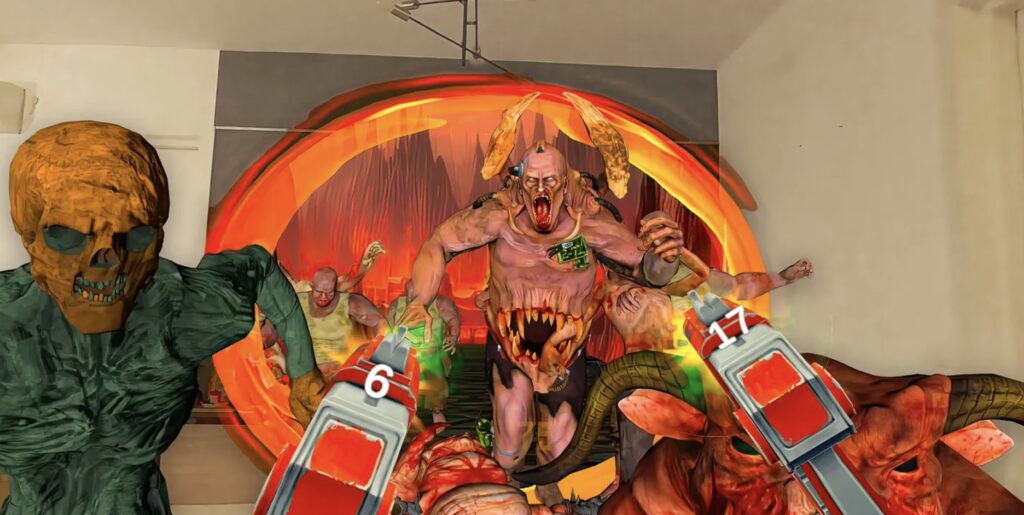
The delay of high-end AR is a backhanded gift. It forced innovation into existing hardware. Hell Horde is the polished, terrifying result-a full game, not a demo. It’s invasive. Personal. When the first portal tears open near your ceiling lamp, your brain short-circuits. That’s the new era: a video game enemy hiding in the blind spot behind your real door.
The Machinery of Your Personal Apocalypse
This isn’t magic. It’s 90 navigation mesh updates per second. The game doesn’t just see your coffee table; it remembers it. Zombies pathfind around it. Portals spawn at scanned “weak points”-I watched a violet tear erupt from a spot on my wall the system tagged as “low visual texture.” The chaos is emergent. Move a floor lamp, and you’ve just opened a new flanking route for the horde. A friend barricaded his hallway with an actual armchair last Tuesday. It worked for three glorious minutes.

Compare that to traditional VR horror. In Dread Meridian, a spectral wraith glided past me. It was cool. In Hell Horde, a emaciated crawler emerged from under my bedframe. I yelped and kicked my nightstand. (The sound of my own lamp rattling was more frightening than any soundtrack.) The terror leverages intimacy-the violation of a space you control. The game weaponizes your comfort.
Meta’s roadmap shuffle created a vacuum. Reuters confirmed the Phoenix delay; within a month, dev forum activity for Quest MR titles spiked 60%. Hell Horde is built for this moment. Its pass-through isn’t a novelty view; it’s a vital intel layer. Ghouls spawn more frequently in dim areas. My poorly lit entryway became a deathtrap. This is applied logic, not sci-fi promise. The trade-off? We get a finished, brutal experience now, without waiting for glasses that are three tax returns away.
Boss fights are where your architecture becomes part of the puzzle. Take the “Wallcrawler”-a sinewy horror that phases through your actual walls. You’ll find yourself backing into a structural support column, using it as a shield. Weekly leaderboards rank this environmental mastery. Top player ‘VaultDweller23’ posted his winning strat: “Lure to the kitchen island, grenade the choke point at the fridge. 18-second clear.” Over 12,000 players now swap these domestic blueprints monthly. The competition isn’t just about aim; it’s about who best understands the sightlines in their own studio apartment.
Let’s get practical. Keep that heavy ottoman-it’s perfect cover. But for god’s sake, tape down rug corners. (I tripped over mine and face-planted into a virtual abomination. The shame was real.) Major warning: mirrors and glass tables wreck tracking. After a Gloom spawned both in my room and its reflection, I started draping sheets over my TV. Now that’s a controlled blind spot. Play at dusk once. Enemy models blend into real shadows, forcing you to rely on the exquisite 3D audio. That scraping sound isn’t “over there”-it’s coming from your fireplace. The game maps your room’s acoustics; the echo in my tiled bathroom adds a half-second delay to whispers, making them utterly inhuman.

The tech has edges. Rooms with floor-to-ceiling windows can confuse depth perception. A player survey found 14% of users in “glass box” apartments reported zombies spawning in mid-air, leading to disorienting “phantom collisions.” The fix? Heavy curtains. Pets are another variable. My cat, Mochi, sauntered through a scan zone and the navmesh instantly rebuilt, thinking a couch had moved. For a full minute, zombies walked straight through what was, to me, empty space. The lesson: true mixed reality must constantly negotiate with a messy, unpredictable world.
Architect of Chaos: Your Final Mission
Hell Horde isn’t a preview of tomorrow’s tech. It’s tonight’s plans. The hardware is in your hands. That boss phasing through your plaster isn’t just a cool effect-it forces you to think like a soldier in your own home. (Top-ranked player ‘RoomRaider’ credits her win to a simple trick: “Always fight with your back to a hallway. It funnels them into a kill box.”) This is the genius: turning every technical limitation into a strategic layer. Fancy future headsets can wait. The killer app is here, and it knows where you keep your coffee mugs.
Your goal is to become a maestro of controlled pandemonium. That bookcase isn’t for books; it’s a barrier. That open floor plan is a killing field. The weekly leaderboards are logs of domestic warfare. The top ten aren’t just good shots-they’ve mastered specific layouts. One player shared his exact “Death L” setup: “Two auto-turrets covering the living room right angle, bait them past the sofa.” This community doesn’t just play the game; they reverse-engineer their square footage for maximum carnage.
This is the native mixed-reality loop. IP-based games bring known worlds to VR. Hell Horde creates a new one from the fusion of digital and physical. The path forward is brutally clear. For players: treat your home like a modular dungeon. Shift one piece of furniture between sessions. Study the leaderboard notes-they’re field manuals for your floor plan. For developers: the lesson is environmental AI. Perfect how a pixelated demon ducks behind your very real, very expensive sofa. Don’t wait for 2027. The immersive decade begins by conquering the territory you already lease. The portal’s open. What’s your move?