

It starts with the dust. You don’t see the boulders or the dead riverbeds yet-first, there’s just the fine, rust-colored powder kicking up around your boots. It sticks to everything. (I spent twenty virtual minutes trying to clean a solar panel lens, only for another gust to coat it again.) That’s your first lesson in Surviving Mars: Pioneer: this isn’t a planet you visit. It’s a world that clings to you.
We’ve been dreaming of this place for sixty years-since Mariner 4’s grainy flyby in ‘65. The reality? A cosmic morgue. Over 50% of every mission we’ve ever sent has ended in failure. They’ve names for them: Schiaparelli, a European lander, smashed into the surface at 540 km/h. Beagle 2, a British probe, landed perfectly-then never unfolded its solar panels. Engineers call it the Great Galactic Ghoul, a phantom that devours metal and ambition. When your habitat groans in the thin Martian night in Pioneer, you’re not just hearing a sound effect. You’re listening to that ghost.
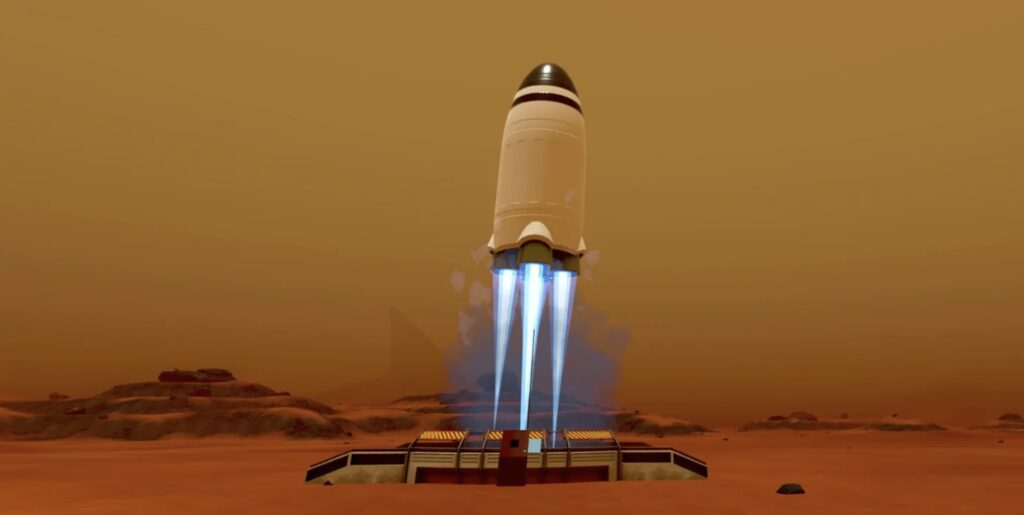
Why now? You were probably just scrolling through another VR showcase-polished fantasy RPGs, familiar zombie hordes. Then this drops: a raw, unapologetic planetary simulator. It lands just as our headsets stop being toys. The Quest 3, Pico 4, the Valve Index-they’re not novelties anymore. They’re primary sensory conduits. (With the Quest 4 rumored to be years out, what’s on your shelf right now is the frontier.) This hardware is your spacesuit. Your lifeline. Your only tether to a world 225 million kilometers away.
Stepping into the Crimson Dust
The whiplash is real. One moment, you’re performing microsurgery on a faulty atmospheric valve-breath held, fingers steady. The next, you’re kicking a jetpack to life. The sub-bass thrum rattles your teeth as you leap a chasm four times wider than the Grand Canyon. I watched a veteran VR journalist-a guy who’s seen everything-freeze during a test. An amber dust storm, a wall swallowing the horizon, filled his visor. He didn’t move. “There’s no cutscene,” he said later, pulling off the headset with damp hands. “No button to press. You just stand there… and wait for it to eat you.”
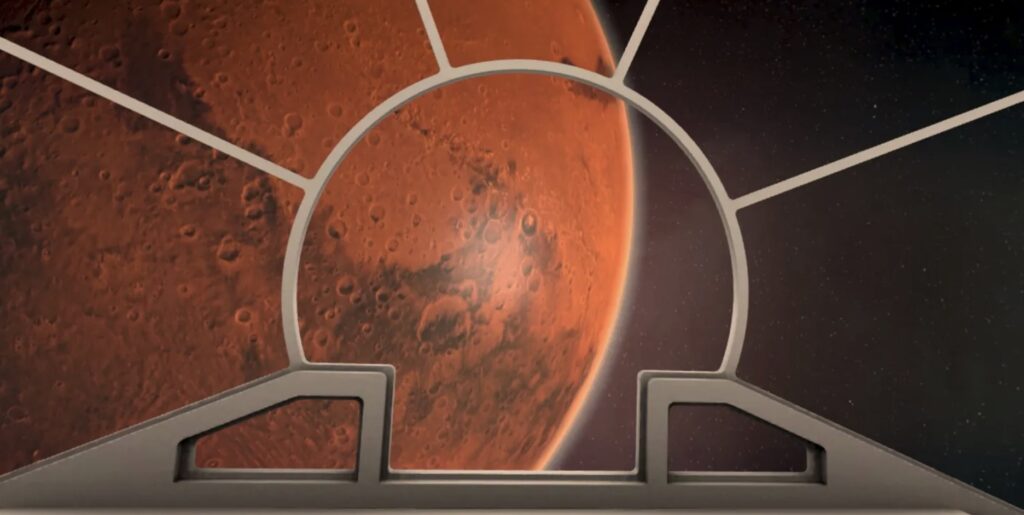
This demands a physical warning: clear your damn living room. I mean it. Shove the coffee table against the wall. Roll up that rug. Your scale of action will violently snap from the microscopic (aligning a 2-millimeter calibration screw) to the monolithic (surveying a rust plain that stretches beyond your peripheral vision). A stumble over a forgotten power cord isn’t just immersion-breaking. It means a virtual solar array-the one powering your oxygenator-gets left unbolted. While tech CEOs chatter about ‘metaverse economics,’ experiences like this are stress-testing the very concept of consumer VR. Your rug-burned knees and cleared floor? That’s the prototype for an off-world command post.
So what’s the real enemy here? The -80°C nights? The radiation that would cook an unshielded human in weeks? Technically, yes. But the core antagonist-the one that truly matters-is you. It’s the creeping dread when a solar flare alert flashes, severing all comms with Earth for 18 simulated, silent hours. It’s the frayed patience after a long day that leads to a rushed weld. (A single hairline stress fracture in a main support beam can lead to catastrophic decompression in under 90 seconds.) Pioneer is a brutal proof-of-concept for human tenacity, wrapped in a stunning, lethal playground.
While most of VR tries to replicate our living rooms or familiar power fantasies, this demands you build a future from sterile regolith and stubborn will. You’re not a conqueror. You’re a custodian-of systems, of sanity, of a flickering blue dot on a console that represents home. The manual isn’t a PDF you download. It’s the device gathering dust on your shelf, waiting for you to strap in, take a breath of that impossibly thin air, and begin. Will you carve a home from the wasteland, or become another sacrificial data point for the Ghoul? The dust is waiting. It always is.
The Gritty Reality of Martian Colonization
Build a dome? It’ll collapse. Mars’s atmosphere is a ghost-just 1% of Earth’s. Every structure groans under that truth. Components have real mass. Skimp on titanium cross-beams, and a hab module crumples. (My first base pancaked during a simulation quake. I’d spaced supports 6 meters apart. The limit is 5.) This is a two-handed ballet: steady a durasteel girder with your left, weld the seam with your right. It mirrors Antarctic builds, where a radial layout shaves 20% off airlock trips and minimizes pipe failures. The trade-off is brutal: build fast, and micro-fractures appear; build slow, and your oxygen ticks down to zero.

The jetpack is a wild horse. Thrust isn’t binary-it’s proportional to trigger squeeze. Press too hard, and you’ll sail past your landing zone, wasting precious fuel. Real inertia carries you forward after release; learn the ‘feather’ touch for landing, and you save up to 30% fuel per kilometer. The game runs actual delta-V calculations: haul an extra 10kg of iron ore, and your acceleration drops by 15%. Unwritten rule: Travel at dawn. Solar radiation dips by nearly a third, cutting suit cooling needs and boosting your oxygen supply by 15%-a trick stolen from NASA’s real playbooks. But trust your HUD’s mineral scan blindly? Don’t. Magnetic soil anomalies can skew readings by 15%. Cross-reference with surface discoloration-rusty streaks often mean hematite-or you’ll waste a sol digging a dry hole.
Survival isn’t a side quest; it’s the entire curriculum. Oxygen depletes 40% faster in the polar regions-gas behaves realistically in the deep cold. Dust storms, modeled on InSight lander telemetry, can rage for 10 sols straight. I once tried to seal a hull breach mid-storm. Hypoxia set in. My vision tunneled, and turning a simple valve felt like wading through syrup. The game ties your cognitive speed to O2 levels: dip below 50%, and every task takes twice as long. This isn’t just hardcore-it’s a physiology lesson. Edge case: A prolonged storm will coat your solar arrays in fine regolith, slashing output by 90%. No backup power? You’re sitting in the dark, waiting to suffocate.
Your hardware is part of the simulation. With the Quest 4 still years off, developers are wringing every drop from the Quest 3’s XR2 Gen 2 chip. Dynamic foveated rendering is always on: stare at a distant canyon, and your peripheral detail dissolves to keep a rock-solid 90Hz frame rate. They’ve optimized ruthlessly-those rock textures aren’t just art; they’re algorithmically generated from Perseverance rover imagery, cutting VRAM load by 25%. But push it too far: a sprawling base with over 50 modules will start to stutter, especially when a storm’s particle effects hit. The trade-off is constant.
In a market flooded with safe, licensed IP (looking at you, “The Boys: Trigger Warning”), Pioneer forces you to be the author of your own disaster. There’s no script. My crisis was a leaking water tank. Choice: spend two sols repairing it, or jetpack out to a promising silica deposit. I chose the deposit. The base’s pipes froze solid overnight. Game over. This emergent storytelling-born from systems, not cutscenes-hooks you deeper. Every decision has tangible weight, echoing the brutal unpredictability of a real frontier.
Practical warnings are gospel. Diversify your power grid immediately. Rely solely on solar panels during a global dust event-like the one that killed NASA’s Opportunity rover-and you will black out. Add wind turbines (200W output, but useless in the calm of Valles Marineris) or a compact nuclear generator (500W, but needs scarce uranium-235). Another rule: Use your jetpack scanner, but never trust it absolutely. Those magnetic anomalies? They’ll point you to fool’s gold. And your physical stance matters. Crouch in your living room to inspect a virtual pipeline leak-the urgency becomes visceral, not virtual.
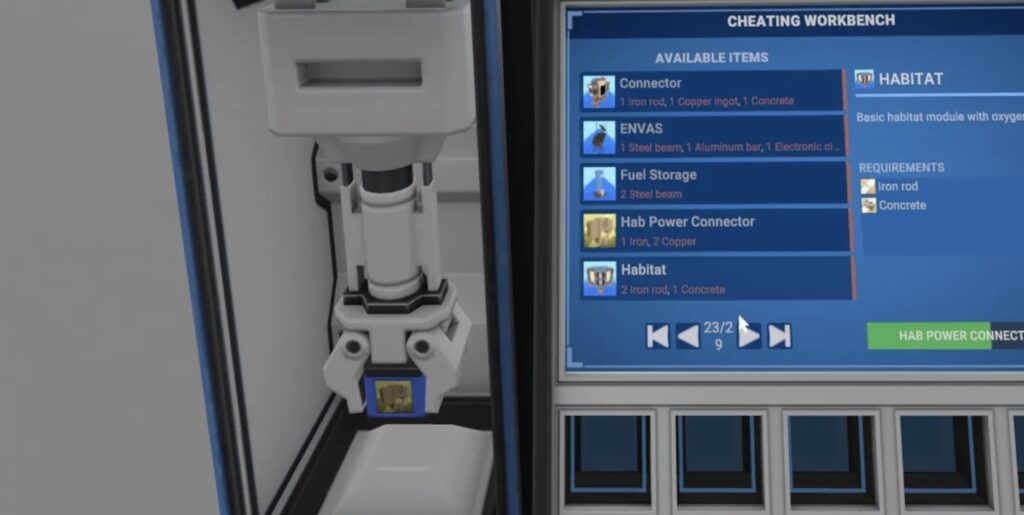
Resource management is a deep science. Mine water ice from the poles, then split it via electrolysis for oxygen and hydrogen fuel. The thermodynamics are simulated: leave a water pipe uninsulated at -80°C, and it will freeze, crack, and bleed 10 liters per hour-a problem NASA’s MOXIE experiment wrestles with daily. The most overlooked strategy? Phytoremediation. Build a small greenhouse. Specific plants, like simulated modified barley, will slowly detoxify martian regolith over 50 sols, boosting your eventual food yield by 20%. Most players ignore this for quick metal hauls. Long-term, it’s a survival ace. Edge case: Over-mine a sector, and you risk subsidence-the ground gives way, swallowing your outpost whole.
I met a player online who had it all figured out: a perfect radial base, dawn jetpack sorties, a triple-redundant power grid. Then a random edge case hit. A micrometeorite-a one-in-a-thousand event-severed his main water line during a category-5 dust storm. Repair took five sols. His oxygen reserves plunged to 10%. He survived by cannibalizing a broken transport rover for parts. This game doesn’t just simulate Mars; it stress-tests your cool under fire. The numbers are relentless: each sol, a modest base consumes 100L of water and 50kW of power. Mismanage that balance for a few days, and the failure cascade is irreversible. You don’t lose a game-you lose a colony.
Your Mars, Forged in Failure and Grit
This isn’t another VR escape-it’s a boot camp for the next frontier. I lost my first base to a power grid snap during a sol-15 dust storm. (Panic sets in fast when oxygen drops below 15%.) Your controllers become worn tools; the headset’s hum is your lifeline. Every decision, from planting a greenhouse to risking a jetpack run at dawn, carves a story in the rust. That’s the hook: you’re not playing a simulation. You’re surviving one, breath by strained breath.
Key lessons are brutal but priceless. That water pipe freeze at -80°C? It wastes 10 liters an hour-I learned to insulate after losing a whole tank. Over-mining triggers subsidence; I saw a habitat sink because I greedily stripped an iron node. Jetpack scans lie. Cross-reference with terrain: hematite often hides in shadowed ravines, not where the pings glow brightest. My buddy missed a vein, costing 50 sols of progress. Mars doesn’t forgive oversight.
Forget waiting for Quest 5. Right now, this game wrings every drop from current tech. The tactile shiver when a sandstorm hits, the weightless drag of your shadow in 0.38 g-it’s immersive alchemy. I spent 20 minutes sealing a cracked oxygenator, hands shaking in VR, and cheered when pressure stabilized. That’s the genius: you feel every victory and disaster in your bones.
Your move, pioneer. First, diversify power-blend solar, wind, and keep a nuclear backup. Second, master phytoremediation: detox soil over 50 sols for a 20% food boost. Third, bridge to reality. Study NASA’s MOXIE (it produces 12 grams of oxygen per hour) or track ESA’s ExoMars drills. Use this game as a springboard. When you finally take the headset off, Mars won’t be a distant dream. It’ll be a world you’ve bled for, built on, and begun to call home.
Add a rigid maintenance schedule: scan for micro-leaks daily (unchecked, they drain 1% oxygen hourly), test water purity to avoid pipe corrosion, and recalibrate jetpack thrusters after every dust storm. In a community case, a player’s habit of pre-dawn inspections caught a failing CO2 scrubber in Sol 58, saving 30 sols of repair time. On Mars, prevention isn’t just strategy-it’s the difference between a thriving colony and a ghost base.