
Forget the lonely, expensive VR of five years ago-that reality is shattering. Battlegrounds isn’t just another game. It’s a declaration. For zero dollars on your Quest, you and three friends get medieval grappling hooks, world-shaking cannons, and a single directive: reduce every castle, tower, and bridge to splinters. This is physics-driven anarchy as a social sport. While other titles chase mixed reality (like Pocket Lands) or licensed IP (The Boys: Trigger Warning), Battlegrounds goes for the gut. It delivers the raw, screaming-with-laughter thrill that premium VR often forgets to include.

Free-to-play is the key that unlocks the chaos. It demolishes the barrier for your hesitant friend who won’t drop $30 on an unknown. Like the crossplay racer Boom Karts VR, it gets people in the door. But then it hands them a lit fuse. The grappling hook here isn’t just for travel. It’s a prankster’s primary weapon-yoink an opponent off a parapet, steal the cannonball from their hands mid-load, or use them as a human shield. My squad’s first win ended with me hooking an enemy knight and swinging him directly into his own teammate’s misfired shot. We cried laughing for ten minutes straight.
The Free-for-All Revolution Hits VR
Why does this model matter now? VR’s growth hinges on ‘come play this right now’ moments. Battlegrounds leverages the Quest’s standalone ease-no PC, no wires, no $1,000 headset. Boot up, invite your party, and you’re causing structural collapse in 90 seconds. Contrast that with the solitary, atmospheric drive of Transmission: Shortwave. This is built for voice-chat banter, for betrayal, for spontaneous, wordless alliances that last exactly as long as it takes to destroy a common threat. The ‘free’ tag is a Trojan horse-expect cosmetic shops for flaming helmet skins-but the glorious core of smashing things remains completely unlocked.
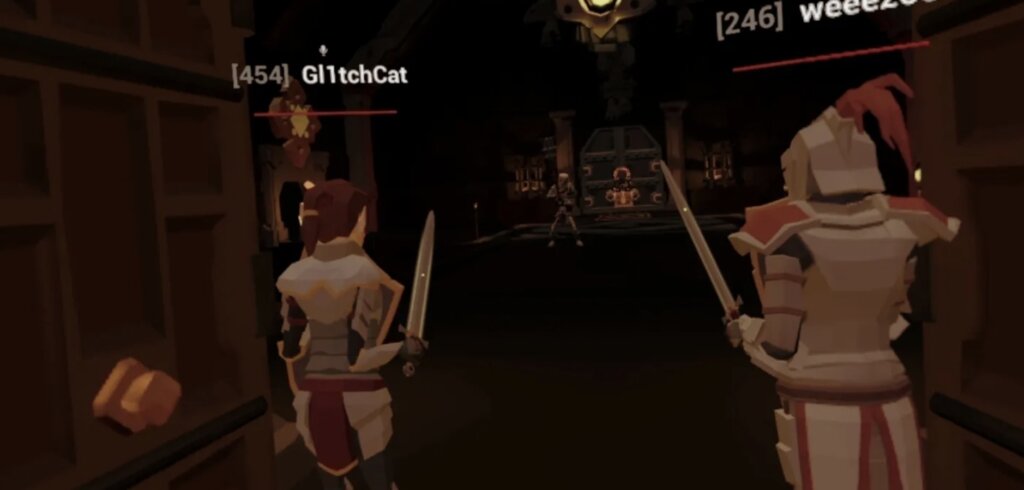
Here’s the genius bit: the environment is your weapon. This isn’t a static backdrop. It’s a loaded physics system waiting for a trigger. Knock a brazier onto a wooden walkway and watch the fire race toward a powder keg. Use your grapple on a compromised stone pillar and bring a whole gatehouse down on someone’s head. This systemic play-where fun emerges from rules interacting, not from pre-scripted events-is VR’s next frontier. It means no two matches are alike. For players, that’s infinite replayability. For the industry, it’s a blueprint: depth doesn’t require a Hollywood budget, just brilliant, interactive tools.
Mastering the Tools of Total Destruction
The grappling hook is your lifeline and your lasso. Mastery isn’t optional-it’s survival. Yes, you swing across moats. But the advanced move? Latching onto a moving enemy player to hijack their momentum and fling them into the abyss. The tension is physical: you feel the haptic thunk of a successful latch, the strain in your virtual arm as you reel them in. Miss by a few virtual inches, and you’re the one eating stone wall at 30 miles per hour. This is the opposite of the careful, hand-tracked creation in Pocket Lands. Here, the hook is pure chaos, demanding split-second reflexes, not patience.
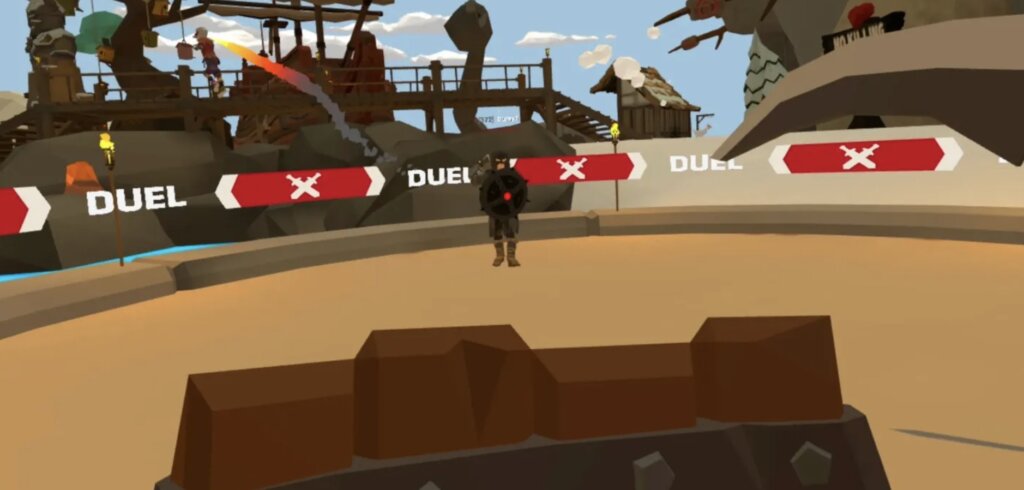
Cannons are the great equalizers and the great humblers. Operating one is a three-act VR ballet: heave the heavy cannonball into the breach (your arms will feel it), crank the elevation wheel with a satisfying grind, and peer down the iron sight. You need a spotter. You need a defender. Teamwork is forced, and that’s the point. The ballistic physics sell the fantasy-cannonballs arc with weight, smashing through wood in a cloud of splinters and crumbling stone into gravel. One perfectly placed shot can collapse a fortress tower, burying two teams at once. Compare that to the predictable loops of a racer. Here, a single pull of the trigger can rewrite the entire match.
The unsung hero is the physics engine. Every object has weight, force, and consequence. That barrel isn’t decoration-kick it down the stairs into a crowd. That loose chandelier? Grapple it and swing it like a wrecking ball. I watched a teammate try to ‘defuse’ a powder keg by throwing it. It sailed in a perfect, doomed arc… right onto our own siege ladder. The emergent story-our panicked scramble, the chain explosion, the collective groan-was funnier than any scripted comedy. Paid narrative games like The Boys: Trigger Warning offer a polished story. Battlegrounds offers a story you’ll tell for weeks.
This all combusts into magic with friends. Voice chat isn’t a feature; it’s the engine. Coordination devolves into glorious failure. Alliances form and shatter in seconds. You’ll remember the panicked shriek of your buddy as he grapples away from a falling turret more than any cutscene. That shared physical presence-the feeling that you’re there, sweating and laughing together-is VR’s killer app. It’s utterly absent in solitary sims. This game weaponizes camaraderie.
Free-to-play is a design mandate, not just a price. It pulls in crowds that would never risk money on an unknown VR entity. Cosmetic monetization (flashy armor, trail effects) likely funds it. The core, chaotic loop remains untouched-a masterstroke. Pro tip: loosely assign roles (e.g., ‘scout,’ ‘gunner,’ ‘demolitions’), but be ready to abandon all plans when a wall comes down. Critical warning: Cannon recoil spins your view violently. Practice in an empty server first, or your first live match will be a nauseating blur (I learned this the hard way). Unobvious tactic: ‘Hook-surfing.’ Time your grapple to latch onto a flying cannonball. Yes, you can briefly ride your own artillery.
This focus signals a shift. While some games build narratives or quiet sandboxes, Battlegrounds builds a playground of systemic cause-and-effect. It proves that the deepest stories are the ones players create through action (and catastrophic error). As VR matures, this is the lesson: true immersion isn’t about looking real. It’s about reacting real. It’s about handing friends a toolkit and stepping back as the world burns.
The Verdict: VR’s Social Playground, Unleashed
Forget sterile, solo VR tours. Battlegrounds proves the platform’s best moments are unscripted, physical, and shared. It’s the scramble where your ally’s misfire sends you both pinwheeling into the moat. (True story from my Thursday night-we had to pause the match to breathe.) This is the blueprint for mass appeal: zero barriers, endless chaos, and a mic that connects you directly to your crew’s laughter. Other games sell you a story. This sells you the memory of the time you and your friends accidentally won a match by collapsing the wrong castle.
The lesson for VR is stark. Depth doesn’t require a premium price or photorealism. It blooms from giving players a few exquisitely designed toys-a hook, a cannon, a world that breaks convincingly-and setting them loose. One player-driven disaster creates more genuine attachment than a dozen pre-rendered scenes. The free-to-play model, sustained by optional cosmetics, makes this sustainable. It takes mobile gaming’s accessibility and injects it with VR’s unique superpower: you don’t just see the explosion. You feel the cannon’s kick in your shoulders and the rope’s tension in your grip.
Your action plan is simple. First, download it tonight. Seriously. Text your three most chaotic friends immediately-this game is a ghost town without a squad. Second, run a drills session. Spend 20 minutes in an empty server. Master the cannon reload without vomiting. Practice hook-swinging until you can land on a moving target. Then, in the real match, break the rules. Be the grappler who zips onto an enemy cannon, steals the ball, and fires it back at their feet. Third, lurk the forums. 75% of the wildest tactics-like using a chandelier as a battering ram-come from player discoveries. Shape the meta.
Battlegrounds isn’t just another Quest title. It’s a statement. The most vital VR memories aren’t purchased alone; they’re forged together in the glorious, unpredictable wreckage you create. So rally your team, find the structural weak point, and pull the trigger. Your story-loud, messy, and uniquely yours-is waiting to be built. And then, spectacularly, blown to pieces.