

Forget the curated, purpose-driven apps. Your Quest headset isn’t just for workouts or language lessons. The platform craves raw, creative chaos-and Build Brawlers delivers exactly that. It’s a free, six-player brawler where your arsenal isn’t handed to you. You’ll build it from the random debris littering the arena. Think less pre-fight loadout, more frantic, sweaty-palmed engineering under fire. It’s a pressure test for your ingenuity, turning a pile of scrap into a weapon and your opponents into confetti.

Why does this matter now? The Quest 3’s hardware-especially if you grabbed it during a recent Amazon deal-makes the absurd feel tangible. Those pancake lenses and sharp passthrough render every rusty gear and cracked monitor with unsettling clarity. You’re not just looking at junk; you’re reaching for it. This game taps into VR’s core magic: embodied problem-solving. It’s a stark departure from the tactical planning of Spatial Ops or the structured rounds of Game Night. Here, your first decision happens when you’re already being chased. It mirrors the inventive spirit of VR Giants’ co-op, but swaps teamwork for cutthroat, hilarious competition.
Welcome to the Junkheap
Here’s the key: the randomness isn’t a design flaw. It’s the entire point. While other titles polish precision, Build Brawlers finds glory in the glorious disarray of a scrapyard brawl. Each match is a live social experiment. I’ve seen temporary truces formed over a single, precious gear, only to shatter in a betrayal seconds later. (The sound of a player laughing as they bludgeon you with the pipe you just gave them is uniquely, wonderfully human.) This controlled chaos is the fresh air the Quest library needs-a reminder that play doesn’t need a productivity metric.
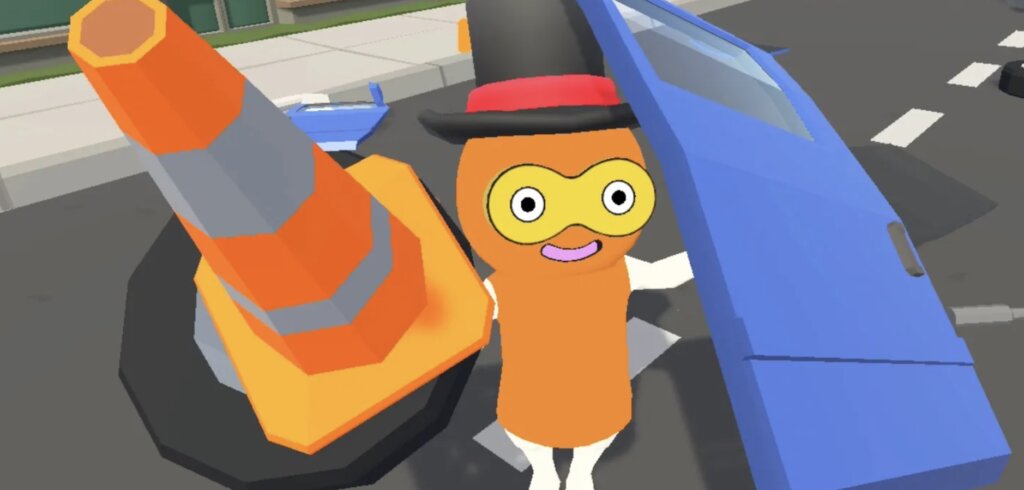
Remember that childhood thrill of building a fort from couch cushions? Or the adult version-fixing a wobbly shelf with a book and sheer will? Build Brawlers bottles that MacGyver spirit and sets it on fire. Your victory isn’t bought; it’s cobbled together from duct tape and desperation. In an ecosystem increasingly focused on utility, this game is a joyful, destructive rebellion. Ready to see if your pile of trash can become someone else’s nightmare?
The Scrapyard Symphony – Forging Chaos in Real Time
Forget menus and blueprints. Building here is a frantic, physical act. Arenas are littered with procedurally generated junk: think cracked monitor casings, loose car springs, greasy pipes, and even small appliances. The magic is in the intuitive, snap-together physics. Grab two objects. If the connection makes a kind of mad-scientist sense, they fuse. I’ve welded a crowbar to a car battery to create a sputtering, electrified mace. I’ve duct-taped a circular saw blade to a telescoping antenna for a whirling, reach-extending slicer. The haptic feedback thrums in your controllers with each successful union-a tangible click of creation.

This randomness is a brutal, brilliant leveler. Unlike Spatial Ops, where you can calmly edit a map before the fight, Build Brawlers forces adaptation. You might spawn in the ‘Plastic Pit,’ a zone drowning in brittle components but starved of metal. Your plan for a heavy maul evaporates. Now you’re building fast, lightweight weapons-maybe a shield from a trash can lid, or a flail from a bike chain and a plastic bottle. Pro tip: always scan for ‘anchor items’ first. A solid steel beam or a heavy wrench can become the base for a dozen different weapons. (Warning: hoarding too visibly paints a target on your back. I’ve lost a perfect engine block to a sneaky player who pretended to be friendly.)
The social dynamics are where the game sings. With six players and voice chat enabled, the arena becomes a buzzing, cutthroat marketplace. I once brokered a fragile alliance with a player named ‘ScrapKing.’ We pooled resources-my magnet, his copper wire-to build an electromagnetic harpoon gun. The second it was complete, he ripped it from my virtual hands and shot me with it. I wasn’t even mad; I was impressed. This volatile cocktail of deal-making and betrayal leverages VR’s unique presence. You read intentions in the slight lean of an avatar, the way someone edges too close to your precious pile of gears. Trust is the most fragile component in your build.
Contrast this with the Quest’s typical utility highlights. Apps like Supernatural gamify fitness; Mondly structures language learning. Build Brawlers offers pure, unadulterated play. It’s a workshop of warfare where your brain and reflexes are the ultimate tools. The Quest 3’s hardware elevates this. Those pancake lenses let you discern the individual teeth on a gear for a perfect mesh. The high-contrast passthrough means you can take a sip of water without removing your headset, never breaking the immersion of your scrapyard throne. That $100 Amazon credit might buy cosmetic upgrades later, but here, at launch, your skill is the only currency that matters.
An unobvious strategy? The best weapon is often the arena itself. Fling a cluster of tin cans to create a deafening distraction. Use a hastily crafted shield not for blocking, but as a stepping stone to vault onto a higher conveyor belt. I once won a round by jury-rigging a floor fan with kitchen knives, creating a pathetic but effective whirlwind that pushed two opponents off a ledge. These moments of embodied problem-solving are VR’s killer app. You’re not managing an abstract inventory; you’re twisting your wrists to screw a bolt while someone charges you. How often does a game make you feel the sweat of urgency in a virtual act?
Analyzing the design, Build Brawlers finds success by balancing simple rules with emergent depth. A newcomer can bash heads with a pipe-taped-to-a-brick in thirty seconds. A veteran knows that combining conductive metal with a battery near a puddle creates a shocking area-of-effect trap. It avoids the overwhelming custom rulesets of some sandbox games. The rules are simple: find junk, build something, survive. Yet, from that simplicity blooms wild, player-driven stories, much like the unexpected camaraderie of VR Giants. It begs a question: what does it say about us that we find profound joy in creating a doom-spinning blender-chainsaw hybrid?
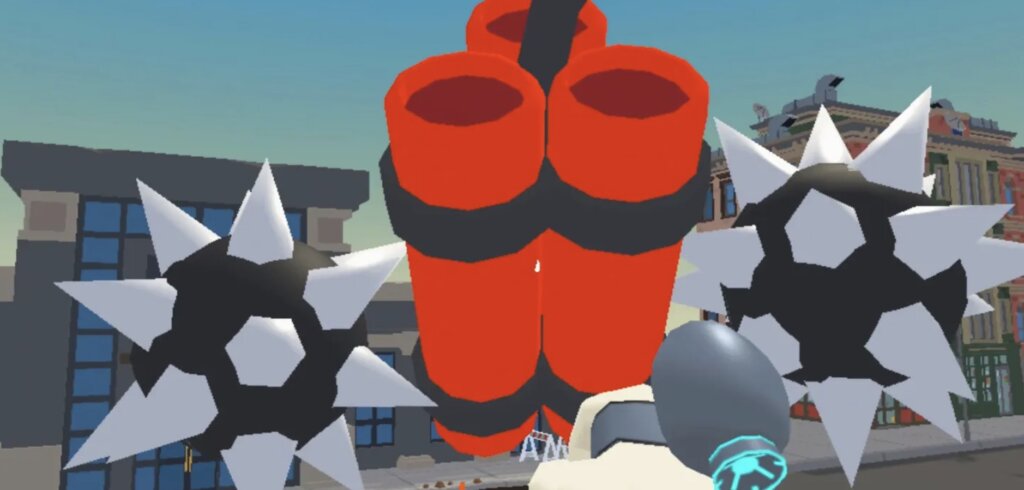
Peering ahead, the game’s future could borrow from its peers. Spatial Ops’ real-time map edits show how user-generated content fuels longevity. VR Giants’ cross-play model (and its free Friend Pass) proves accessibility builds communities. Imagine Build Brawlers where you could weld together not just weapons, but entire sections of the arena, or team up with PC VR players in a larger, junk-filled colosseum. For now, it stands as a potent, pure dose of VR’s improvisational potential. Remember, in this digital scrapheap, your creativity is the ultimate resource. So dive in. Just watch your back-and your spare parts.
Why Pure Play Still Matters
Build Brawlers is more than a game. It’s a statement. In a Quest ecosystem increasingly curated for self-improvement and productivity, it champions unstructured, emergent fun. That shift is vital. Choosing chaotic creation over a completed workout log feels like a small, delightful rebellion. Your takeaway shouldn’t be complex: don’t just fill your headset with utility. Carve out space for experiences that value creative spark over checked boxes.
Maximize your hardware for this. If you snagged a Quest 3, use its visual fidelity to your advantage. Scrutinize junk textures mid-fight. That’s not a trivial detail-being able to instantly identify a rubber hose versus an electrical cable can mean the difference between a flail and a taser. Recalibrate your playstyle. Stop hoarding. Experiment. Lure an opponent into a trap of your own loose debris. Build a non-lethal trampoline and offer it as a ‘peace gift’-then see how long the peace lasts. Victory here belongs to the adaptable, not the prepared.
The road ahead is paved with potential. Future updates could integrate map editing, letting players construct deathtraps from the ground up. Cross-play could fill lobbies instantly, though it must preserve the Quest’s accessible, standalone magic. For now, dive into the existing chaos with a critical eye. Watch how betrayal meta evolves over sessions. Share your most ridiculous weapon builds-the toaster-on-a-rope, the leaf-blower-flamethrower-in community forums. Help shape the game’s evolution. Your creativity built the weapon; now let it help build the community.
Ultimately, Build Brawlers excels by making every player both a sculptor and a lab rat in a brilliant social experiment. Where structured party games offer clear rules, here the only rule is your own ingenuity. So ask yourself: when was the last time a VR session left you breathless from laughter, not from a cardio score? Hold onto that feeling when you log off. It’s the metric that defines this game’s wild success, and it might just be VR’s most underrated, essential joy.