
Your stomach knows the feeling before your brain does-that weightless lurch as you plummet 200 feet. You clutch the safety bar, wind tearing at your face. But there’s no steel track below you. Only your living room rug. This is the new frontier of thrill: virtual reality coaster design that doesn’t just simulate a ride-it builds impossible worlds around it.
It’s easy to think of VR as a box for games. (And with headsets like the Quest 3 hitting holiday sales for under $300, it’s now a very accessible box.) But the real magic happens when the hardware disappears. When all you sense is the velocity. “Epic Roller Coasters” seizes that moment of pure immersion and packs it with strategic chaos. This isn’t a passive tour; it’s a hands-on expedition where you’re the engineer of your own adrenaline.
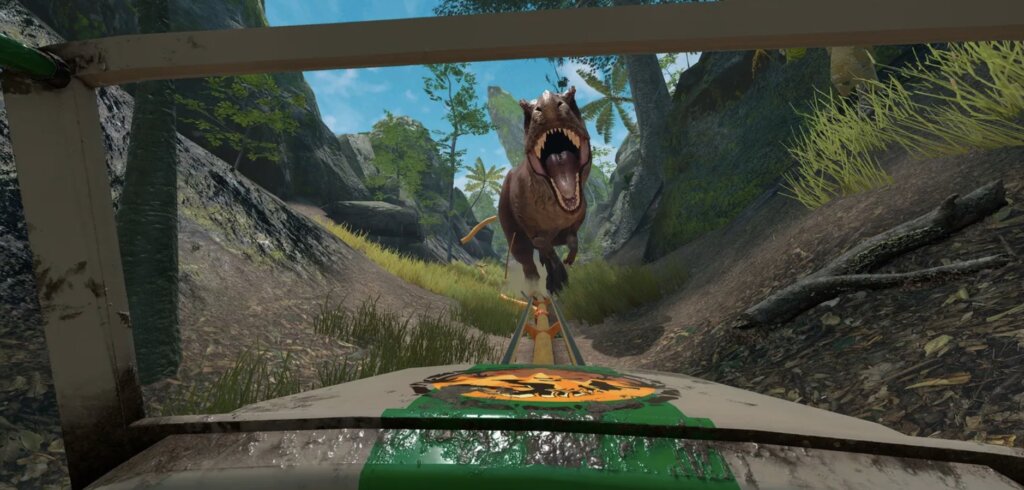
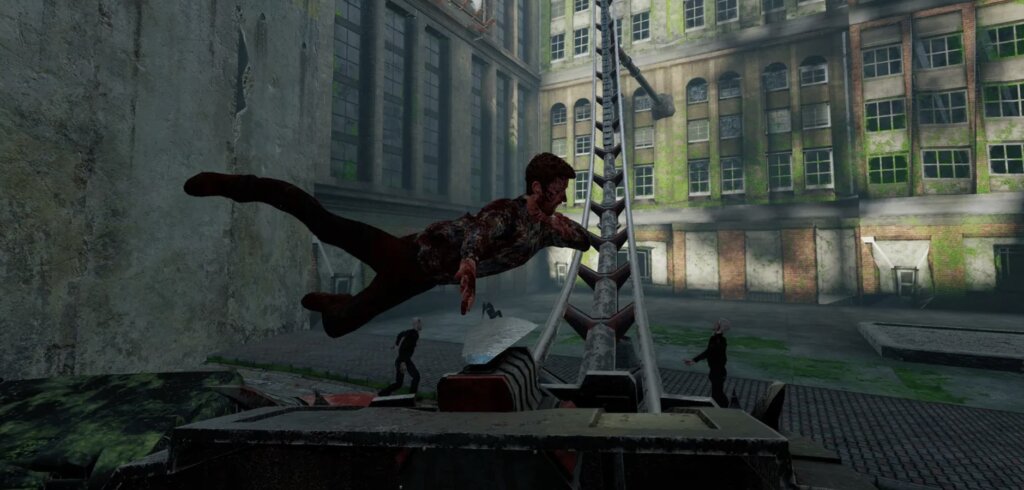
Forget the predictable click-clack of a traditional lift hill. Here, the rules of physics are a suggestion. One minute you’re weaving through a prehistoric jungle, ducking a pterodactyl’s dive-bomb during a zero-gravity loop. The next, you’re firing spell-bolts from a coaster car to melt a castle gate, your trajectory shifting with every hit. The zombie apocalypse demands sharp headshots on decaying targets while managing ammo crates at 60 miles per hour. A neon-drenched future city turns rails into magnetic ribbons, letting you corkscrew through holographic advertisements that shatter like glass.
The Screen Is Gone. The Drop Is Real.
But let’s be blunt: this intensity isn’t for the faint of stomach. A 2024 VR comfort study flagged coaster-style motion as a top nausea trigger for roughly 27% of new users. That’s why a smart start is non-negotiable-short, five-minute sessions with every comfort aid turned on. The payoff, however, is a genre-shattering blend. It takes the social competition of award-winning shooters, the tactile feedback of a motion simulator rig, and the pure spectacle of a blockbuster film, then straps you into the front row.
So why does this fusion matter now? Because it answers a quiet question every thrill-seeker eventually asks: “What’s next?” After you’ve ridden every coaster on the planet, where does the sensation go? It goes digital, interactive, and deeply personal. It turns a Saturday afternoon into a squad-based race through a magic canyon or a solo survival run against a dinosaur horde. This is more than a game. It’s a proof of concept-that pure, physical wonder can be engineered in code and delivered through a headset.
Worlds in Motion – Deconstructing the VR Coaster Experience
Each world in Epic Roller Coasters isn’t just a backdrop; it’s a dynamic system that dictates physics, objectives, and enemy behavior. Take the dinosaur jungle: here, coaster tracks weave through active ecosystems where pterodactyls might swoop for attacks, forcing you to duck during loops-a tactile response rare in static VR shooters. Contrast this with the neon future, where magnetic rails allow for zero-gravity corkscrews and holographic targets that shatter with satisfying pixel bursts. Magic castles introduce spell-casting mechanics; pulling a virtual trigger might launch a fireball that ignites barriers, altering the track path. Zombie wastes, meanwhile, demand resource management: ammo pickups are scarce, and headshots on shuffling undead become crucial during high-speed turns. This isn’t random chaos; it’s curated design where every drop and twist serves a gameplay purpose.
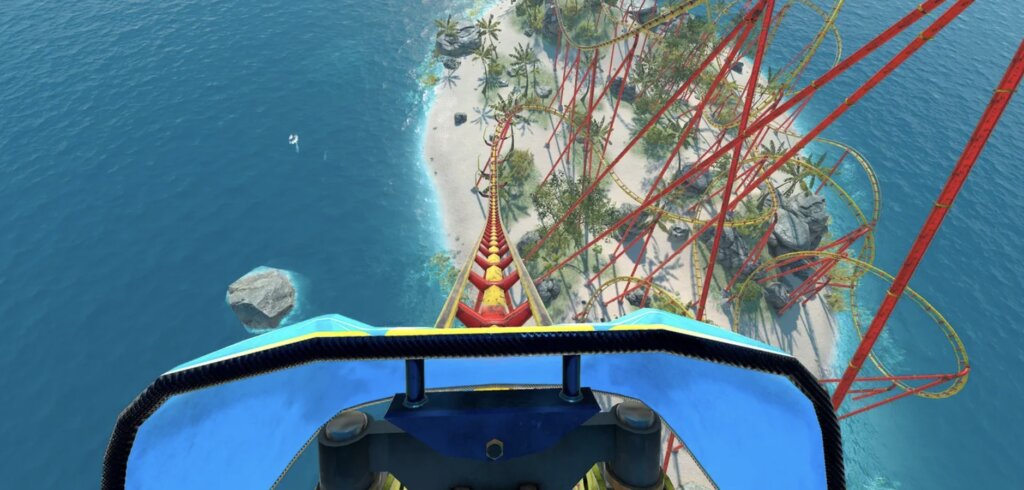
The three core modes-Classic, Shooter, and Race-transform these worlds into distinct challenges. Classic mode strips away combat, focusing on pure coaster physics: think mastering g-forces in a dinosaur valley’s steep dive. Shooter mode, however, integrates 2025’s trend toward fast-paced action, as seen in titles like Doom: Dark Ages with its shield mechanics. Here, you’ll dual-wield weapons while navigating loops, where timing reloads during brief straights becomes a skill in itself. Race mode shifts the emphasis to social competition; you’re not just beating the clock but outmaneuvering friends’ ghost cars-imagine drafting behind a rival in a magic realm to gain a speed boost. Each mode forces different cognitive loads: Shooter tests split-second decision-making, Race demands spatial awareness, and Classic hones vestibular tolerance.
Multiplayer elevates this from solitary thrill to shared spectacle. Consider ARC Raiders, 2025’s Best Multiplayer Game winner praised for its social loop; Epic Roller Coasters mirrors this by letting squads coordinate attacks in zombie horde modes or bet on race outcomes. Motion simulator support adds a physical layer-but with a caveat. If you hook up a chair shaker, sync it to in-game vibrations: a T-Rex’s roar should rattle your seat, not just your headphones. Warning: new players often overestimate their tolerance; start with five-minute sessions in Magic’s gentler realms before braving future-world inversions. Ever wondered why some VR experiences feel disjointed? Here, haptic feedback is tied directly to track elements, creating a unified sensory punch that reduces disconnect.
Accessibility isn’t an afterthought-it’s woven into the ecosystem. Meta’s 2025 holiday sale, discounting blockbusters by up to 68%, shows a push for affordable VR; Epic Roller Coasters benefits by being a genre hybrid that maximizes value per dollar. But the real unlock is using essential apps like Steam Link, which transforms your Quest into a portal for PC VR libraries. Imagine accessing modded coaster tracks or higher-fidelity textures via Steam, effectively expanding the game’s lifespan. Practical tip: pair this with social apps like Bigscreen to livestream your runs to friends, turning solo play into a commentary-filled event. This flexibility mirrors VR’s evolution from isolated games to connected platforms.
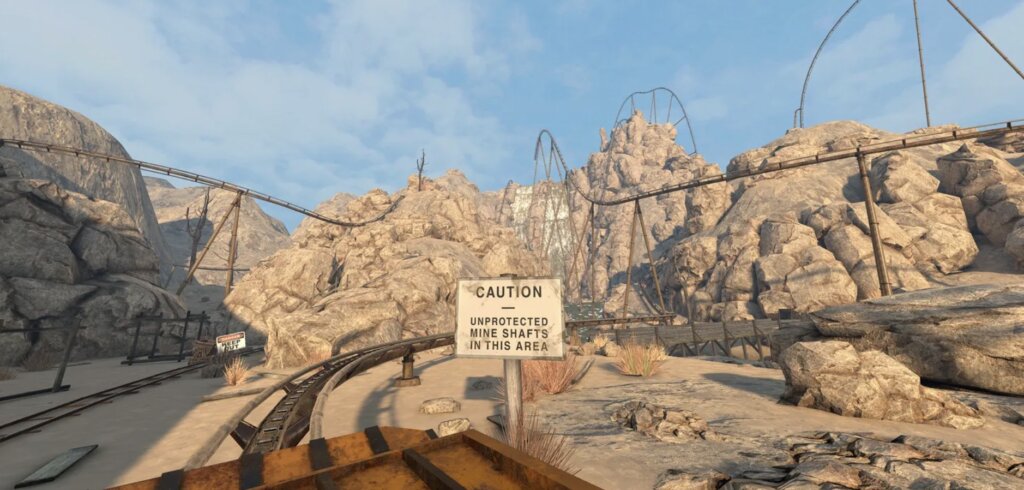
Unobvious depth lies in progression systems. In Shooter mode, weapon upgrades aren’t just about damage; a laser rifle’s recoil might be manageable on straightaways but disastrous during helixes-forcing loadout tweaks per world. Race mode hides subtle mechanics: in neon futures, absorbing energy from rival cars’ slipstreams can temporarily overcharge your boost, a tactic overlooked by beginners. Analyze replay data to spot where you braked too early in dinosaur jungles; those milliseconds cost podium finishes. Why does this matter? It encourages mastery beyond initial thrills, much like how top shooters reward map knowledge. Personal story: I once lost a zombie match by misjudging a coaster’s climb-now I memorize ascent angles before engaging hordes. It’s a layer of strategy that transforms adrenaline into achievement.
Charting Your Next VR Adventure
Epic Roller Coasters isn’t the end of your VR journey-it’s a launchpad. This experience crystallizes how affordable hardware, like Best Buy’s $250 Quest 3S bundle with a $50 gift card and The Walking Dead: Saints & Sinners, lowers barriers to entry. But ownership is just step one. Your real power lies in curation: use Meta’s holiday sale-where blockbusters like Into the Radius 2 are discounted up to 68%-to build a library that complements this genre-blender. Think of it as assembling a toolkit; each app or game adds a new layer to your virtual identity.
Essential Meta Quest apps, highlighted by BGR, transform passive play into active participation. Steam Link isn’t just for PC VR; it’s a gateway to modded coaster tracks and enhanced textures, effectively future-proofing your investment. Pair it with Bigscreen to stream races to friends-turning solo thrills into communal events. Warning: don’t let nausea curb your ambition. Start with short sessions in magic realms, using comfort settings as training wheels before conquering zombie loops. Ever felt VR was isolating? Here, social apps bridge the gap, making every drop a shared memory.
Look beyond the game to industry shifts for mastery. 2025’s shooters, like Doom: Dark Ages, prize fast-paced adaptability-a skill you’ll hone during coaster-mounted combat where reloads must sync with straights. Meanwhile, ARC Raiders winning Best Multiplayer Game underscores the social loop Epic Roller Coasters mimics; squad coordination in zombie hordes isn’t casual, it’s critical. Personal story: I ignored replay data once and stalled-now, I dissect every helix for millisecond gains. This game demands the strategic depth of a top-tier shooter, rewarding analysis over impulse.
Your next move? Treat Epic Roller Coasters as a living ecosystem. Sync motion simulators to in-game vibrations for tactile immersion, but calibrate gradually-a T-Rex’s roar should rattle your seat, not your stomach. Explore multiplayer to forge VR friendships; competition in neon futures fosters camaraderie that extends beyond the headset. With VR evolving into a hybrid of social, fitness, and entertainment spaces, this platform positions you at the vanguard. Why spectate when you can engineer thrills? The tracks are built; ride them with intent.