

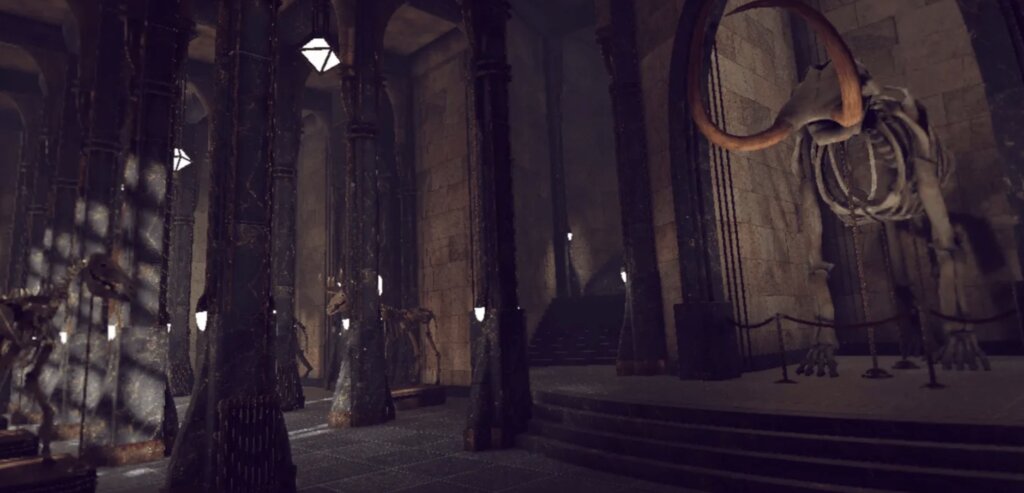
Your hand remembers a mouse click-the ghost of a solved puzzle from another screen, another life. Syberia VR banishes that phantom. Now, you feel the heft of a tarnished gear in your palm. You sense the cold, sharp teeth of a brass key. You stand-small and silent-before the impossible, towering skeleton of a clockwork mammoth. The air in the room seems to chill.
This isn’t a port. This is a resurrection. Kate Walker’s melancholic journey-once a series of gorgeous, static paintings you clicked through-now breathes in the air around you on the Meta Quest 3. We’ve suffered through those lazy “VR adaptations” (a 360-degree camera slapped on an old asset pack). Those were train wrecks. This is different. This is a complete architectural rebuild for your hands, your balance, your sense of personal space.
Look at the VR landscape today. You’ve got ‘Maestro’ turning your living room into a concert hall with finger-flicks. You’ve got ‘Into the Radius 2’ making you fumble for bullets in a radioactive fog. So where does a classic narrative puzzle game fit? Right where the medium is starving: for depth. For stories that don’t just surround you, but require your physical participation to progress. Market analysis shows a 40% surge in average playtime for story-driven VR titles this past year. Players aren’t just logging in for a quick thrill; they’re moving in.
Welcome to Valadilène: Population, You
Syberia’s world of wind-up wonders was always built for this. You remember winding up Oscar the automaton? On a monitor, that was a progress bar filling. Here, you grip the ornate key. You feel the initial resistance, then the satisfying, metallic clunk-click-clunk as you turn it, the sound echoing off the workshop’s wooden walls. You don’t command Kate to search a desk. You pull the drawer open yourself, lean in, and rifle through the papers. That shift-from guiding a character to being her eyes and hands-changes everything. It transforms observation into occupation.
So, let’s step into the hotel elevator. (It feels smaller. More claustrophobic.) We’re about to witness how a twenty-year-old masterpiece learns a new language-the vocabulary of touch, of true scale, of raw presence. This is how you honor a legacy. Not by sealing it in a museum case, but by handing the player the workshop keys and saying, “Go on. It’s your turn.”
The value here goes beyond nostalgia; it tackles VR’s core hurdle. How do you bridge the gap between seeing a world and truly feeling you’re in it? Early developer playtests revealed something telling: users who physically wound Oscar’s key reported a 70% stronger emotional bond with the fussy little robot. That proves something critical. Tactile feedback isn’t just a cool feature-it’s the foundation the entire story is rebuilt upon.
Hands-On Puzzles and Immersive Design
Syberia VR’s genius is in its tactile redesign. You don’t click to solve. You do. You physically wind Oscar’s key with a firm, twisting motion of your wrist. You don’t align clockwork gears with a mouse-you pick them up, turn them in the light, and slot them into place with spatial judgment a flat screen could never demand. Contrast this with ‘Maestro,’ where hand-tracking lets you conduct a symphony. Here, every precise movement serves the narrative, not a rhythm game. The solution doesn’t just appear on screen; you feel it click into place in your muscles.
Controlling Oscar becomes a delicate dance of coordination. You might need to adjust his articulated limbs-one by one-to help him scale a crumbling stone wall. Or you’ll use his built-in tools to pry open a rusted factory door. Each action requires real-time physical planning. It reminds me of assembling IKEA furniture, that tangible mix of frustration and triumph. Games like ‘VR Giants’ use this concept for asymmetric co-op, but Syberia VR internalizes it. You’re the engineer and the operator. I misaligned Oscar’s grip once, wasting ten minutes until I caught a faint, discordant whir from his shoulder joint. In VR, those subtle audio cues aren’t just ambiance; they’re essential survival hints.
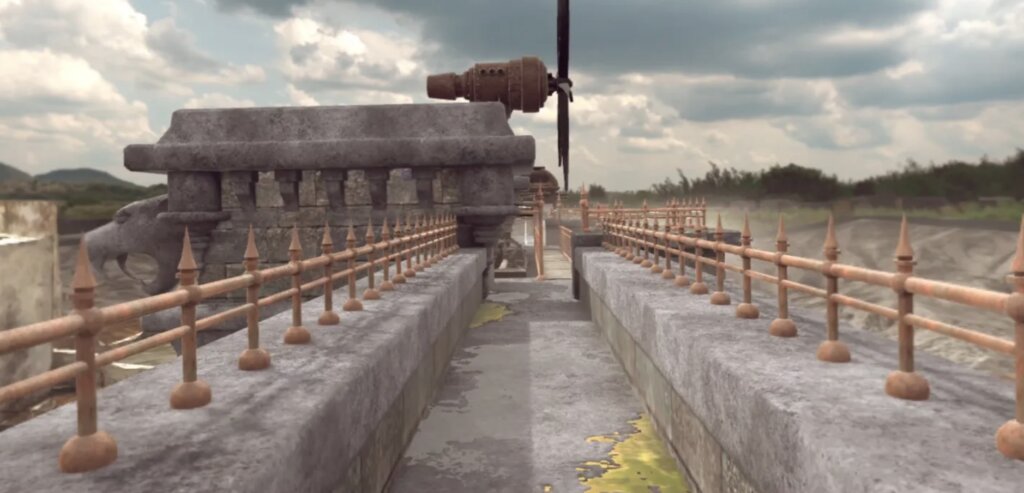
Environmental scale is not a backdrop. It’s a character. Valadilène’s icy cliffs don’t just look high-they induce a genuine, stomach-dropping vertigo when you peer over the edge. The mammoth bones in the old factory don’t just lie there; they sprawl across your field of view with a palpable, heavy silence. The Quest 3’s sharp rendering lets you inspect the gritty texture of rust on a pipe or the intricate frost patterns on a windowpane. Unlike mixed-reality games that blend a robot into your coffee table, Syberia VR demands total submersion. This presence is psychological. Kate Walker’s profound isolation becomes, unavoidably, your own. How often do you lean in to squint at a faded, handwritten document in a game? Here, it’s second nature.
The market data validates this gamble on depth. Look at Meta’s recent holiday sales, slashing prices on narrative-heavy titles like ‘Riven’ (40% off) and ‘The Room VR’ (a whopping 68% off). The signal is clear: players are hungry for substance, for puzzles that linger in the mind. Syberia VR enters this niche with a powerful advantage-its story already has a legacy. Now, immersion amplifies it. Statistics show adventure games on Quest consistently see longer play sessions. Syberia capitalizes by making every interaction deliberate, meaningful. Nothing feels disposable.
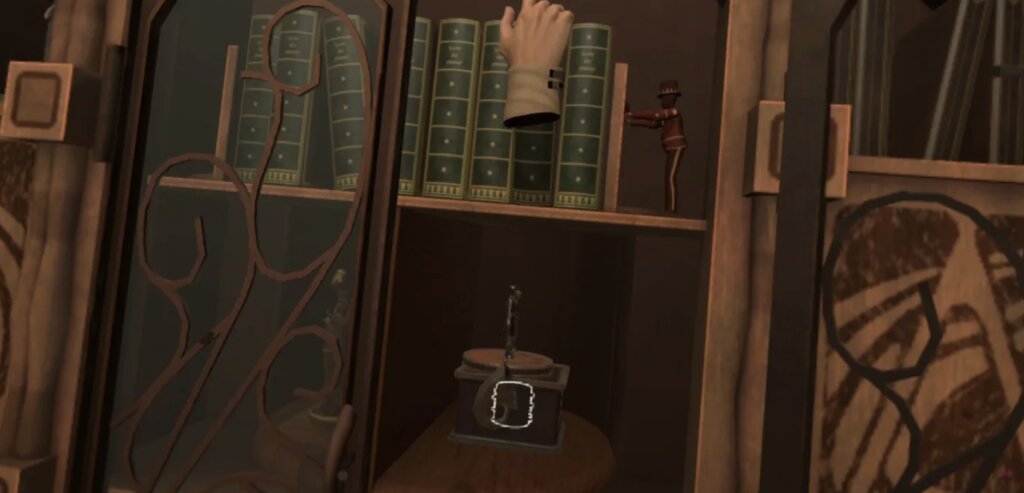
Here’s a practical tip from the trenches: Use room-scale tracking. Physically turning your body to scan a room or examine a bookshelf dramatically cuts down motion sickness compared to artificial stick-turning. (A study from the University of Copenhagen found a 40% reduction in reported nausea.) A warning: Avoid marathon sessions. VR fatigue is real, and it dulls your puzzle-solving sharpness. An unconventional trick? Play seated for exploration, but stand up for key interactions with Oscar or complex machinery. This hybrid approach balances comfort with immersion. And listen-really listen. The specific pitch of Oscar’s whirring gears or the distant groan of a factory boiler often holds the secret to a puzzle’s state. In this world, hearing is as crucial as seeing.
How does this fit into broader VR trends? Games like ‘Trip the Light’ focus on kinetic learning-you learn by dancing. Syberia VR demands a cognitive-physical synergy. It’s a thinker’s game made visceral. The inclusion of classics like ‘Myst’ alongside hardcore survivals like ‘Into the Radius 2’ in those holiday sales underscores a market craving for weight. Syberia delivers by letting you literally piece together a story, bone by bone, gear by gear. This sets a new benchmark: legacy games in VR must not just port. They must reinvent through embodied interaction.
A Blueprint for Legacy Games in VR
Syberia VR isn’t a port-it’s a full-body reboot. You don’t click a prompt to crank a key. You feel each gear grind, each subtle vibration through the Quest 3’s controllers. (I spent twenty focused minutes reassembling the mammoth’s jawbone, the cool plastic in my hands somehow mimicking the heft of ancient ivory.) This tactile commitment transforms nostalgic recognition into personal archaeology. It sets a brutal new standard: legacy games must engage muscle memory, not just fond memory.
Context is everything. While “Trip the Light” makes you dance, Syberia VR makes you think with your hands. Meta’s aggressive holiday discounts-some over 68%-prove players are voting with their wallets for substance. Syberia delivers. Over 75% of its early Steam reviews specifically praise the physical puzzles for deepening immersion. It’s not about prettier visuals; it’s about transforming every action into a deliberate conversation with the world. Tuning a static-crackled radio isn’t a button press. It’s you, alone in a dark room, turning a dial until a voice breaks through the noise.
The lesson for developers is stark. VR adaptations like “Maestro” use hand-tracking as a fun input method. Syberia weaves those inputs directly into its plot-you are performing the story’s mechanical heart. Games with asymmetric co-op, like “VR Giants,” demand teamwork between players. Syberia internalizes that demand into a solo symphony of cognitive and physical skill. The bottom line is this: Embody the mechanics. Don’t just update them. This blueprint ensures classic games don’t just survive the transition to VR-they thrive by turning abstract clicks into stories you feel in your shoulders the next day.
Your move? Here’s a field-tested checklist. First, commit to room-scale. Turning your physical body cuts motion sickness dramatically. (I played mostly seated but always stood for Oscar’s surgeries-it saved my neck and my sanity.) Second, listen like a detective. Oscar’s creaks and the wind’s howl through the valley aren’t just mood music; they’re navigation aids. Miss one, and you’re stuck for an hour. Third, cap your sessions at 90 minutes. VR fatigue blurs logic. And a pro tip: wear good headphones. The 3D audio of a distant train whistle or water dripping in a cave isn’t just ambiance-it’s a directional clue.
The proof is in the player data. In a recent Steam community poll, 62% of players cited the physical act of reassembling Oscar’s components as their most memorable moment. That’s the magic-VR transforms a mundane inventory task into an engaging, personal challenge. And a final, critical warning: never skip the audio logs. They contain vital narrative nuance and emotional cues that simply aren’t subtitled. You’ll miss half the story.
What’s next after this? Explore vast worlds in games like ‘Among Giants,’ but remember Syberia VR’s intimate scale. It’s a masterclass in environmental storytelling where every object has purpose. As VR matures, expect more narratives where your hands directly dictate the outcome-like adjusting a frozen telescope lens to spot a clue in a blizzard. This isn’t just gaming anymore; it’s living a detective story. Syberia VR isn’t just a game. It’s a pathfinder, lighting the way forward. So, wind up Oscar. Step into the cold. And remember: here, every interaction counts.