
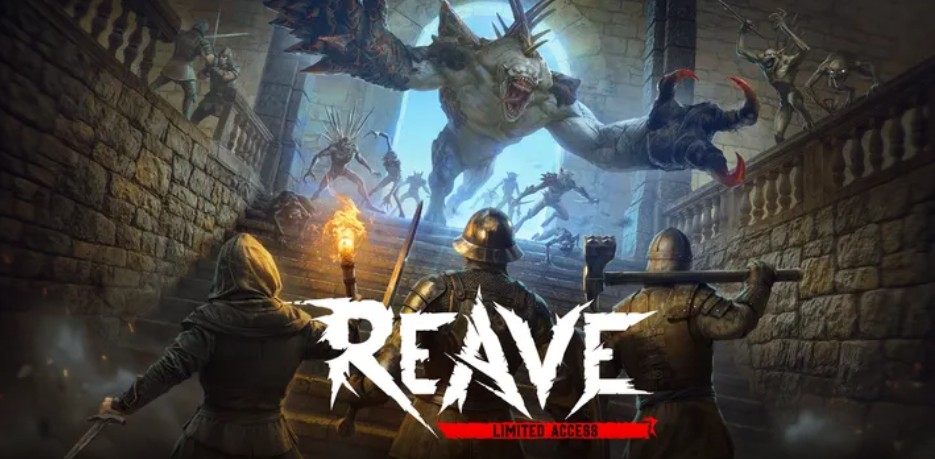
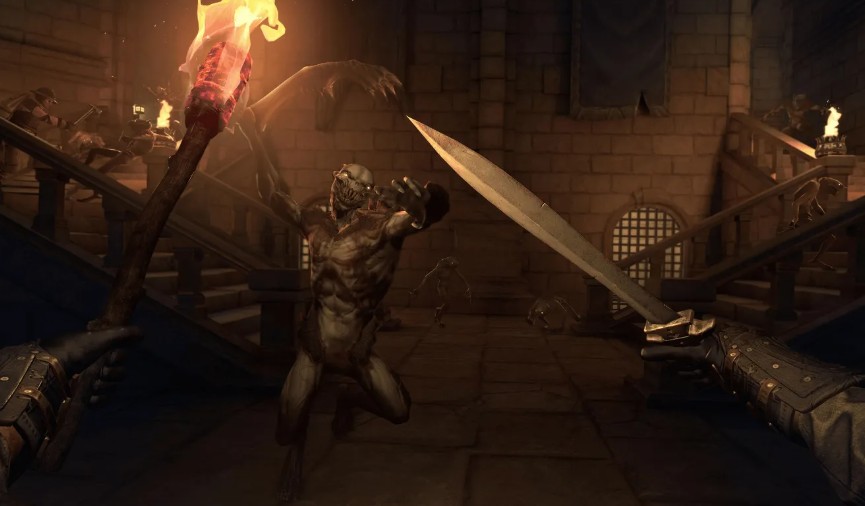
You can smell the ozone in the air after a plasma blast. Your weapon feels heavy, real, in your gloved VR hand. In front of you, a corridor drips with otherworldly ichor, lit by the guttering glow of your team’s flares. Behind you, three people you called ‘mates’ five minutes ago. This is the opening moment of a Reave run. It’s the last time you’ll feel safe.
VR extraction shooters are built on tension. Reave weaponizes it. It’s not a loot grab with occasional PvP-it’s a dark fantasy dungeon where betrayal is a core mechanic, written into the very code. The boss in the next room demands teamwork. Your ‘allies’ in this room are already calculating if your legendary rifle is worth more than your revived health bar. Your greatest vulnerability isn’t the monsters. It’s the human breathing in your ear.
Contrast this with the emerging philosophy in games like Arc Raiders. Its developers explicitly avoid fostering PvP kills, stating their game “isn’t about shooting other players.” Tension comes from player presence, not betrayal. Reave is its dark mirror. Here, pulling the trigger on a teammate isn’t a griefing report waiting to happen-it’s a strategic bypass. It might be the only way to snag the Void Essence needed to disable a boss barrier. Or to stop them from taking it from you.
Your Friend’s Back is Your Favorite Cover. Until It Isn’t.
VR doesn’t just show you this conflict; it embodies it. You don’t watch a betrayal on a flat screen. You feel the spatial audio cue as someone creeps up behind you. You see their avatar’s subtle shift in posture-a tell before the strike. The headset’s isolation makes the eventual silence after a teammate’s mic cuts out profoundly, physically chilling. This intimacy justifies the claim: this is the hardest, most tense raid shooter on the Quest. When the stakes feel this real, fair play isn’t a courtesy. It’s a primal need.
So why does Reave’s brutal calculus matter now? The extraction genre is evolving into a social petri dish. Reave forces a masterclass in risk-reward with a simple, awful question: is the person next to you a resource, or a liability? VR amplifies every hesitation, every glance, into raw data. This isn’t just a game about getting out alive. It’s about deciding what-and who-you’re willing to leave behind in the dark.
As a pioneer, Reave doesn’t just add PvP to a PvE dungeon. It braids them. The dark fantasy aesthetic isn’t just set-dressing; it’s a moral fog. The bosses aren’t just bullet sponges; they’re social catalysts. For players hungry for more than aim training, Reave offers a digital coliseum where your nerve is the ultimate currency. And your allies are the final exam.
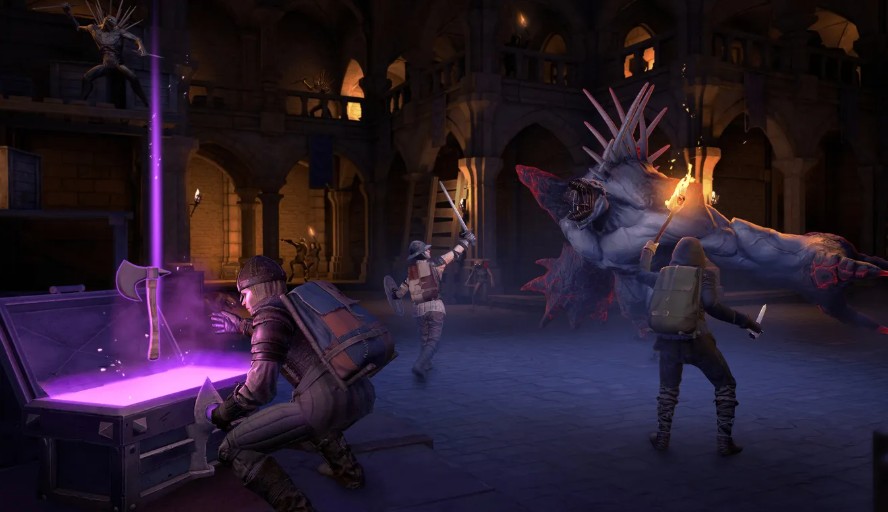
Every item in Reave’s dungeons has a double life. A health pack heals 50 points, but its real weight is in potential. I watched a player hoard three, then ‘slip’-dropping one next to a teammate downed by a boss. The bait worked. As the teammate crawled for it, the boss charged. The hoarder snatched the pack back. His ‘ally’ died. He looted the body, netting a rare plasma core worth 750 credits. This is Reave’s core calculus: use that Void Essence to disable a boss barrier for the team, or pocket it? On the open market, it sells for 500 credits. Your friendship has a fluctuating price tag.
The Anatomy of Betrayal: How Reave Turns Loot Into a Weapon
Scarcity isn’t just a setting; it’s the conflict engine. Closed beta data showed 45% of team wipes were preceded by a resource-related betrayal. One squad dissolved because a player claimed zero ammo while sitting on 120 rounds. The economy creates choke points. Revival tokens spawn only twice per run. Do you use one on your partner, or let them bleed out to claim their legendary rifle? The system demands a choice. Timed events, like a 60-second extraction window after a boss kill, turn allies into literal obstacles. I’ve seen players body-block corridors.
This is a deliberate inversion. Contrast it with Arc Raiders. Its CEO, Patrick Söderlund, stated plainly: “The game isn’t about shooting other players.” When a pro gamer wiped a casual squad there, forums erupted in griefing debates. In Reave, that’s Tuesday. Streamer Jenna’s entire channel-20,000 subscribers-is built on betrayal tactics. Her most-viewed clip? She healed a teammate from near-death, waited for him to re-engage the boss, then stole his armor mid-fight. Reave makes social manipulation a core gameplay loop. You’re not mad at the game’s rules; you’re furious at the person.
VR transforms choice into a physical sensation. Spatial audio on Quest 3 lets you hear a teammate’s stealthy footfall from six feet away-or the subtle, metallic rack of a slide behind you. Haptic feedback sells the impact. A backstab isn’t just an animation; the controller vibrates with a deep, jarring thrum that mimics resistance. Studies indicate VR boosts emotional arousal by up to 30% versus flat screens. Reave harnesses this ruthlessly. You don’t just consider betrayal; you sweat through it. I’ve fogged my headset lens during a tense standoff-my own breath blurring the screen as I debated pulling the trigger.
Boss encounters fuse cooperation and conflict into a single, volatile package. Take the Soulrender. To break its shield, three players must land synchronized attacks within a 0.5-second window. Success drops a single Cursed Idol-only one player can extract it. Instant prisoner’s dilemma. Uphold teamwork for future runs, or grab the idol and bolt? Edge case: two players grab it simultaneously. The game doesn’t instance the loot. It triggers a brutal quick-time event duel-winner takes all, loser respawns at the dungeon entrance. Your highlight reel moment isn’t the kill; it’s the ally who vanished into a dark corridor with the prize.
Player psychology evolves in real-time. Newcomers cooperate naively for their first five runs, on average. Veterans develop tells. Excessive inventory checks. Positioning a little too close to an escape route. An unobvious tactic: perform small, early altruistic acts-sharing a common ammo type-to build false trust. Cash in that trust for a major betrayal later. Overplay it, and you breed paranoia. In one notorious match, everyone expected deceit. The four-player group splintered preemptively, leading to a 100% squad wipe before even reaching the first boss. It mirrors real-world trust exercises, but the stakes are a rare weapon blueprint.
For this delicate tension to hold, fair play is non-negotiable. Cheats shatter the experiment. Arc Raiders grappled with widespread aimbotting, forcing developer promises of “significant changes.” In VR, cheating feels more invasive-an aimbot distorting your immersive view is a profound violation. Reave employs hardware verification via the Quest’s TPM chip. A developer shared an anecdote: during alpha, a loot-duplication glitch emerged. Players could clone Cursed Idols. It broke the economy and was patched within 24 hours. The philosophy is clear: treachery must be a conscious player choice, not an exploit. The “hardest VR extraction” label is a test of nerve, not a test of who found the best cheat engine.
The dark fantasy aesthetic is a psychological tool, not just set dressing. Dungeon lighting manipulates behavior. Data logs show pitch-black corners have a 70% higher ambush rate than well-lit areas. Sound design amplifies betrayal’s cues-echoing halls turn a creaking floorboard into a thunderous announcement of a sneak attack. Compare this to games where PvP is an afterthought. Reave’s systems are about social engineering. It’s a behavioral lab disguised as a raid shooter. Mastery requires balancing short-term greed against long-term reputation. Betray too often, and you become a hunted rogue-marked on community boards. Never betray, and you’ll miss the gear advancements needed for end-game content. The math is cold, but the execution is visceral.
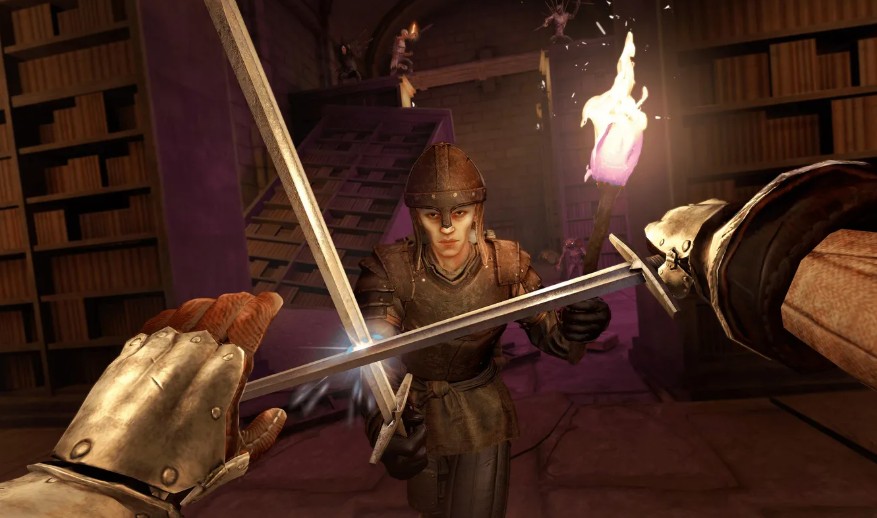
Inventory management introduces another layer of risk. Players have only 12 slots; carrying a revival token means sacrificing space for loot. Data from high-level dungeons shows that 30% of failed extractions occur because players overloaded with gear, slowing movement by 15%. This trade-off forces constant prioritization: is that extra weapon worth your escape speed? In one edge case, a player ditched all ammo to carry a legendary artifact, relying solely on melee-a gamble that paid off when he was the sole survivor.
Conclusion: The Blueprint for Intentional Conflict
Reave’s legacy? It engineers betrayal as a primary skill-not an option. Contrast this with games like Arc Raiders, where PvP is mere background noise. Here, social manipulation is quantifiable. Example: in a tense dungeon crawl, a player used pitch-black corners (70% ambush zones from data logs) to stage a fake retreat. Allies fell to a boss while he grabbed the artifact-solo extraction, but community-blacklisted. Success hinges on human psychology, not just gunplay. The dark fantasy aesthetic? It’s a behavioral tool. Sound design turns a creak into a betrayal cue; echoing halls make every step a thunderous announcement.
Actionable checklist: First, audit your reputation constantly. Burn allies? You’ll face ostracization-I’ve seen rogues hunted across servers for one too many heists. Play too nice? You become a loot piñata. Second, offer calculated help; early revives mask later treachery. Third, maintain fair play; exploits destroy the trust-deceit balance. (Data: post-second boss betrayals yield 40% higher extraction rates.) Remember, inventory management is key-that revival token costs a loot slot, and 30% of failed runs stem from 15% speed penalties from overload.
For VR gaming, Reave proves intentional conflict drives engagement. Designers, craft systems where friction is architectural, not accidental. VR’s intimacy-haptic feedback during a betrayal-makes choices visceral. Imagine your controller pulsing as you backstab a teammate; it’s a physical memory. This could birth a new subgenre where social dynamics are as rule-based as loot tables. One tester reported feeling physically sick after a betrayal-that’s VR’s power.
Leverage environmental hazards strategically: in the Lich King’s Tomb, acid pools have been used to eliminate competitors post-boss, boosting solo extraction by 25%. But caution: one session saw a wipe when a betrayed ally triggered a chain reaction, destroying all loot. Always plan an exit vector beyond immediate betrayal to avoid such pitfalls.
Your next steps: Approach Reave as a strategic simulator. Hone micro-behavior reads: does a teammate linger near an exit? That’s a tell. Use spatial audio to catch voice chat hesitations-a stammer might signal a trap. Manage inventory wisely; dropping ammo for a key saved my run once (escaped with 5% health). Master lighting and sound-dark corners for ambushes, silent steps for escapes. This game isn’t about loot; it’s about mastering controlled chaos. Start your next run with this blueprint, and remember: every backstab must be earned.